


Youth sports are an important part of physical and social development. They help children and teenagers build strength, confidence, teamwork, coordination, and discipline. At the same time, the demands placed on young athletes have increased. Many children now train year-round, specialize in one sport earlier, and participate in sports that require sprinting, jumping, pivoting, cutting, and sudden stopping. These demands can increase the risk of knee injuries, especially injuries to the anterior cruciate ligament, commonly known as the ACL. The ACL is one of the major stabilizing ligaments inside the knee. It helps control forward movement of the shin bone and provides rotational stability to the knee (American Academy of Orthopaedic Surgeons [AAOS], 2026.).
ACL injuries are commonly seen in sports that involve sudden stops, quick changes in direction, jumping, landing, and pivoting. These include soccer, basketball, football, flag football, volleyball, rugby, gymnastics, and skiing. Many ACL tears are non-contact injuries, meaning they can happen without another player directly hitting the knee. Instead, the injury may occur when an athlete lands awkwardly, plants the foot while turning, cuts quickly, or slows down suddenly (Mayo Clinic, 2022). This is why a proper warm-up is not optional. It is part of injury prevention, performance preparation, and long-term athlete development.
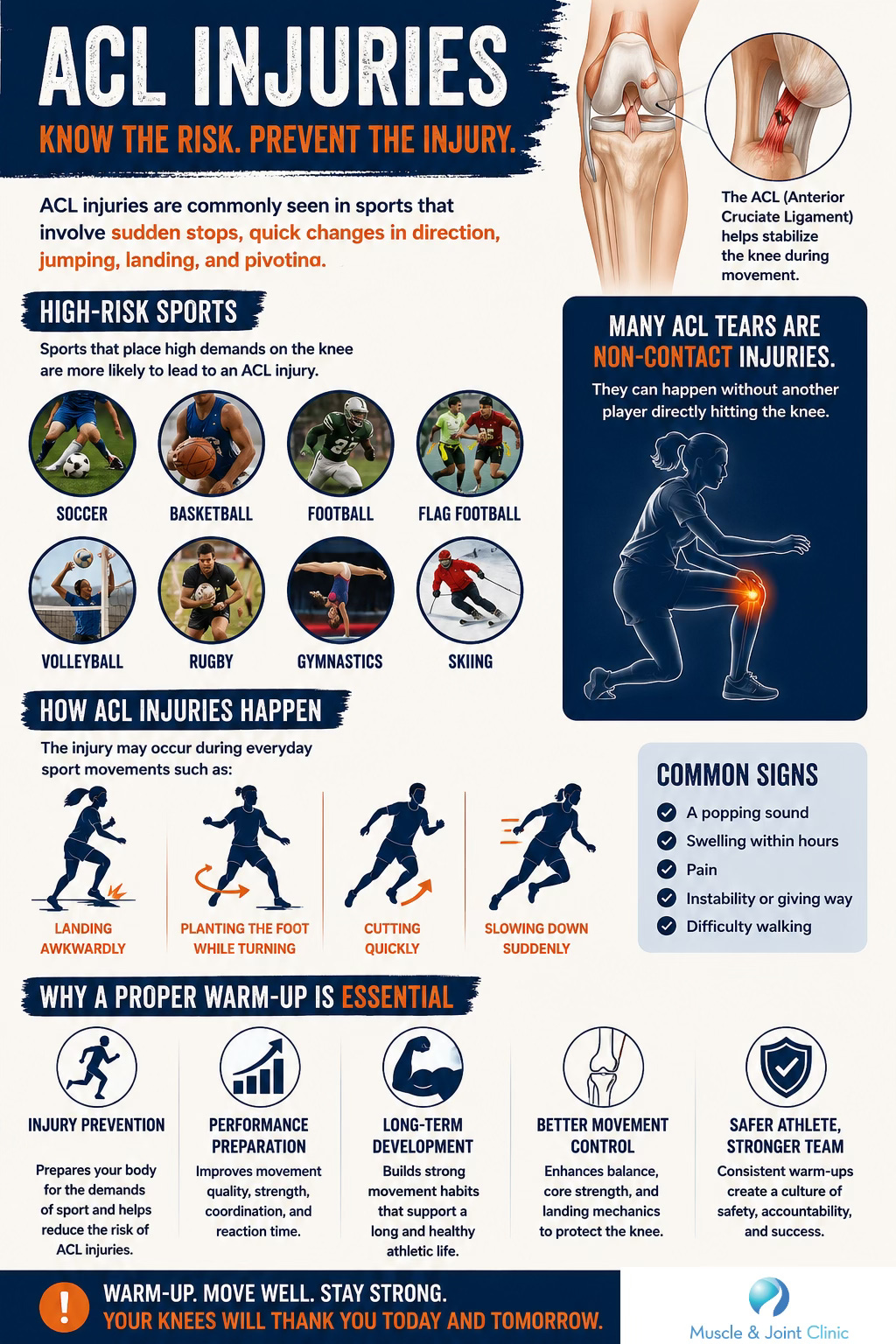
Doctors and sports medicine professionals have expressed concern that ACL injuries in young athletes are becoming increasingly common. One major concern is that some children are being trained like small adults before their bodies are ready. Early sport specialization, high training volume, and insufficient strength and conditioning may contribute to injury risk. Young athletes need a foundation of general movement skills, strength, balance, coordination, and recovery. Playing only one sport year-round can expose the body to repetitive movement patterns and may reduce the development of broader athletic skills.
A major focus in ACL injury prevention is neuromuscular training. Neuromuscular training teaches the brain and body to coordinate movement more effectively. These programs often include dynamic warm-ups, balance training, jumping and landing drills, agility exercises, strengthening, and movement-control work. Research has shown that ACL prevention programs can reduce injury risk when performed consistently, especially in young athletes and female athletes participating in high-risk sports (Petushek et al., 2019). Reuters reported that neuromuscular programs such as FIFA 11+ and knee-control programs may reduce ACL injury rates by as much as 70% when performed consistently two to three times per week across a season, although effectiveness depends heavily on adherence and proper implementation (Reuters, 2025).
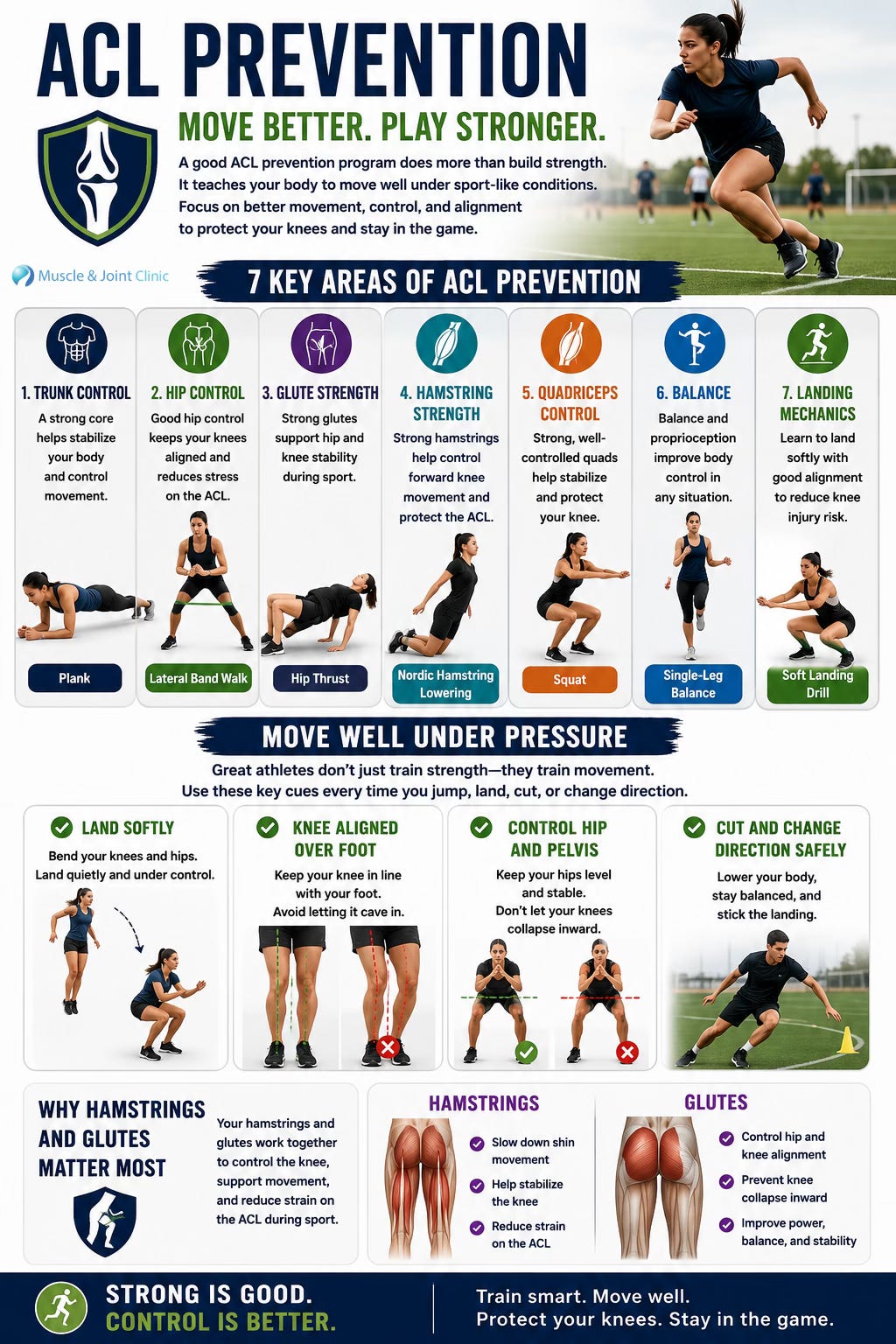
A good ACL prevention program should include exercises that improve trunk control, hip control, glute strength, hamstring strength, quadriceps control, balance, and landing mechanics. The goal is not just to make the athlete stronger, but to help them move better under sport-like conditions. For example, athletes should learn how to land softly, keep the knee aligned over the foot, control the hip and pelvis, and avoid the knee collapsing inward during jumping or cutting. Strengthening the hamstrings and glutes is especially important because these muscles help support knee control and reduce strain on the ACL during sport.
When an ACL injury does occur, treatment depends on the athlete’s age, sport demands, symptoms, goals, associated injuries, and willingness to follow a structured rehabilitation plan. Nonoperative management may be appropriate for a select group of patients, especially those willing to modify their activities to straight-ahead sports such as jogging, cycling, and swimming, while avoiding pivoting, cutting, and jumping sports. Decision-making should be individualized and should consider age, activity level, sport requirements, meniscal or cartilage injury, instability symptoms, and rehabilitation commitment. A small subset of athletes, sometimes called “copers,” may regain enough functional stability to return to higher-level activity without reconstruction, but this does not apply to everyone.
Nonoperative ACL rehabilitation usually includes a supervised physiotherapy program focused on restoring range of motion, reducing swelling, rebuilding quadriceps and hamstring strength, improving hip and core control, and retraining balance and proprioception. Medication may be used for short-term pain and inflammation management when appropriate, but rehabilitation is the foundation of recovery. The patient is usually reassessed after approximately 6 to 12 weeks to determine whether the knee is becoming functionally stable or whether ongoing instability suggests that surgical consultation or delayed reconstruction should be considered. Bracing alone is not considered enough to prevent instability or restore full function.
Clinical trial evidence shows why individualized decision-making is so important. The ACL SNNAP trial compared rehabilitation with surgical reconstruction in people with non-acute ACL injury and persistent instability. The trial found that surgical reconstruction was clinically superior for this group, but also showed that approximately half of the rehabilitation-only group did not require surgery during the study period (Beard et al., 2022). The KANON trial, published in the New England Journal of Medicine, found that early ACL reconstruction and rehabilitation with optional delayed reconstruction produced similar two-year outcomes in many young active adults with acute ACL tears, although about half of those assigned to rehabilitation eventually underwent delayed surgery (Frobell et al., 2010). These studies suggest that some patients can do well with rehabilitation-first care, while others may need reconstruction depending on instability, goals, and sport demands.
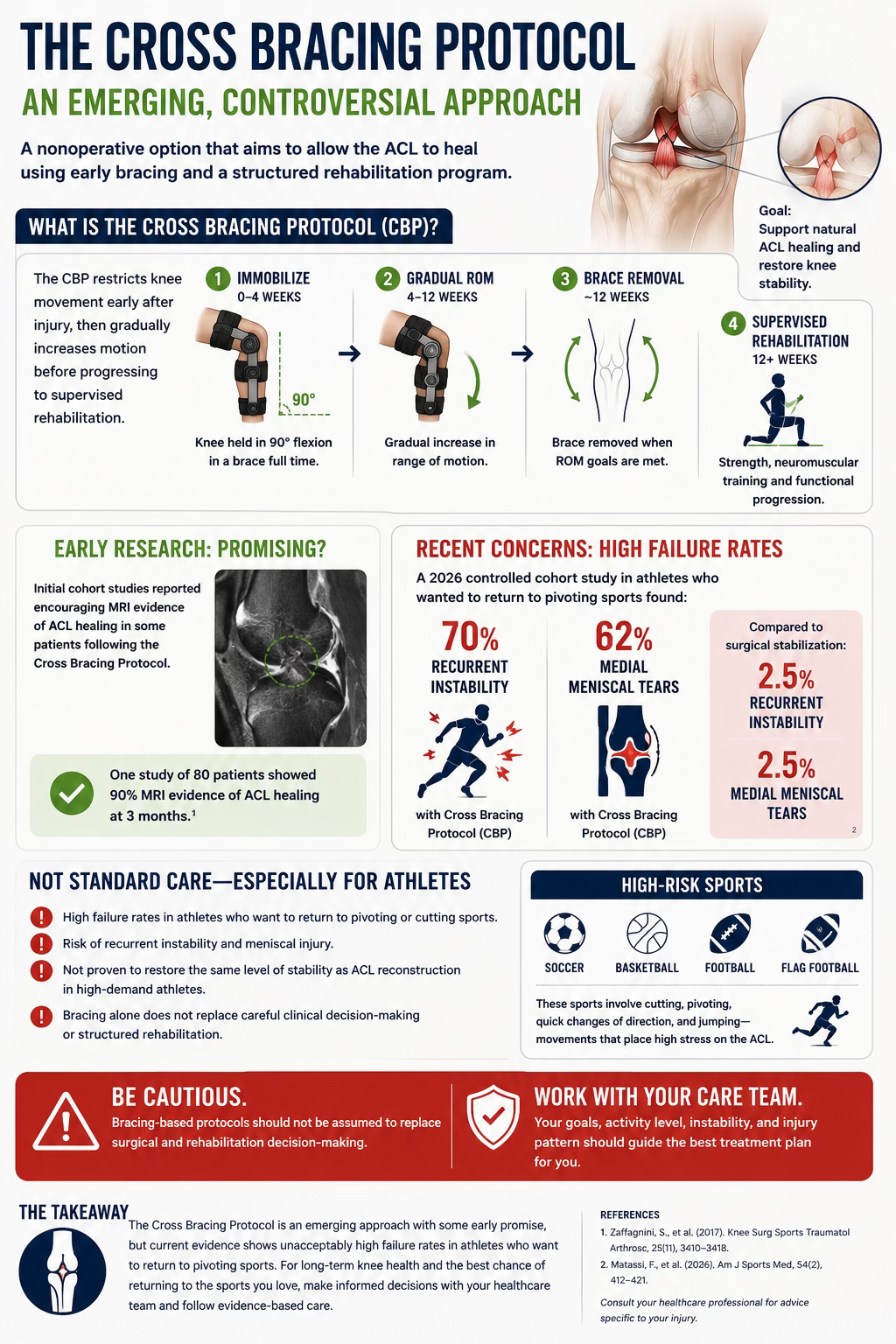
One emerging but controversial nonoperative approach is the Cross Bracing Protocol, which involves immobilizing the knee in a flexed position early after injury, followed by gradual range-of-motion progression and supervised rehabilitation. Early cohort research reported promising MRI evidence of ACL healing in some patients. However, this approach is still not standard care, especially for athletes who want to return to pivoting or cutting sports. More recent concerns include high rates of recurrent instability and associated meniscal injury in high-demand athletes. For that reason, athletes who want to return to sports like soccer, basketball, football, or flag football should be cautious about assuming that bracing-based protocols can replace careful surgical and rehabilitation decision-making.
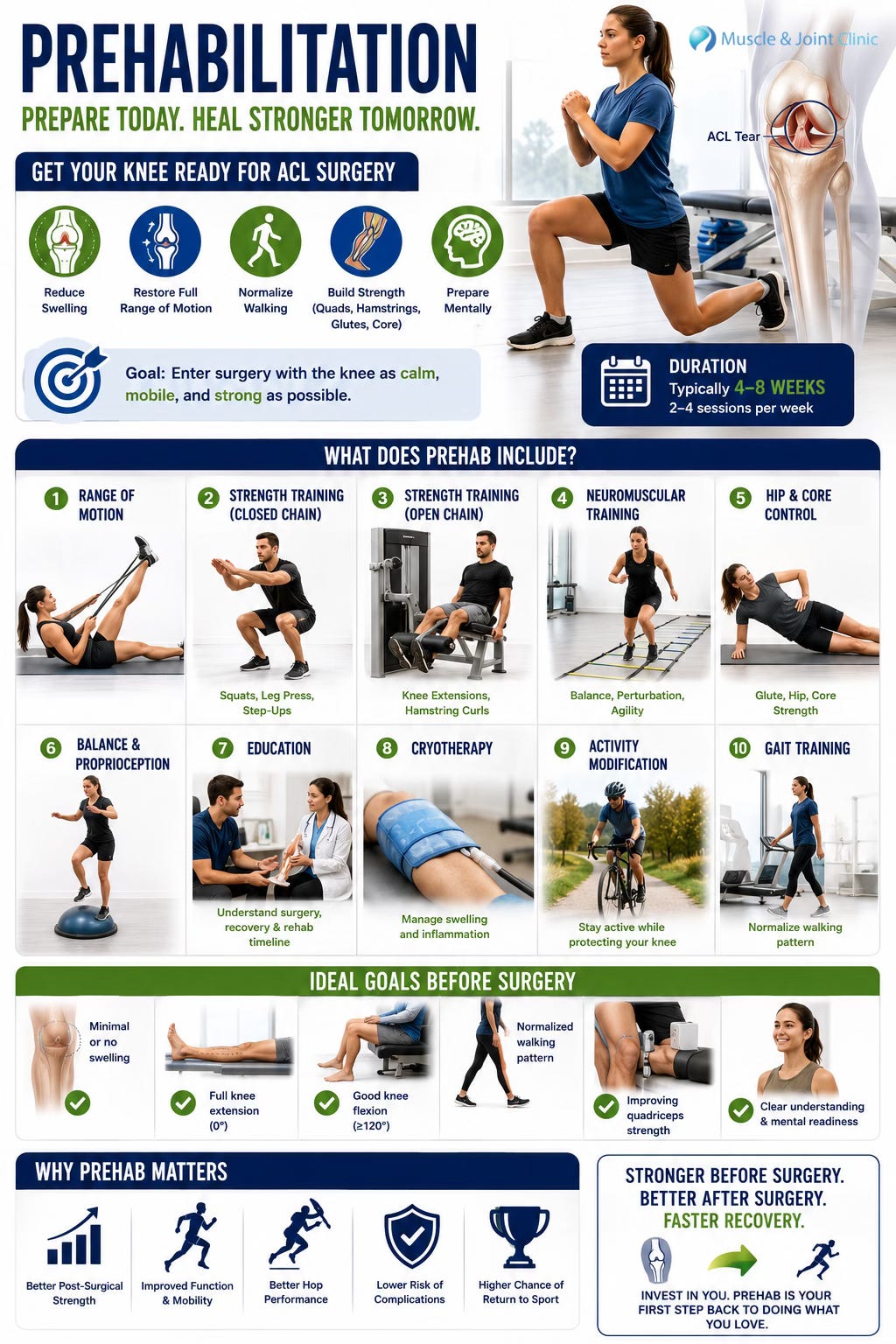
For patients who are planning ACL reconstruction, prehabilitation is very important. Prehabilitation means completing structured rehabilitation before surgery. The goal is to enter surgery with the knee as calm, mobile, and strong as possible. A good prehabilitation program focuses on reducing swelling, restoring full knee extension, improving knee flexion, normalizing walking, strengthening the quadriceps and hamstrings, improving hip and core control, and preparing the patient mentally for the recovery process. Research suggests that prehabilitation can improve postoperative strength, function, hop performance, and return-to-sport outcomes compared with limited preparation before surgery.
Prehabilitation is usually performed for approximately 4 to 8 weeks, depending on the patient and surgical timeline. It may include neuromuscular training, balance exercises, perturbation training, progressive strengthening, closed-chain exercises such as squats and leg press, appropriately progressed open-chain exercises such as knee extensions when suitable, range-of-motion work, education, cryotherapy, and activity modification. Ideally, before surgery, the patient should have minimal swelling, full knee extension, good knee flexion, a normalized walking pattern, improving quadriceps strength, and a clear understanding of the rehabilitation process.
After ACL reconstruction, rehabilitation is usually criterion-based rather than purely time-based. This means the patient progresses when they meet specific physical milestones, not simply because a certain number of weeks have passed. The early phase, often the first 6 weeks, focuses on pain and swelling control, restoring knee motion, regaining quadriceps activation, improving walking, and protecting the surgical graft. Neuromuscular electrical stimulation may be used early to help improve quadriceps activation. The intermediate phase builds strength, balance, and movement control. Later phases include running progression, landing mechanics, jumping, sprinting, deceleration, agility, and sport-specific drills. Many athletes require 9 to 12 months or longer before full return to sport, and younger athletes may require even more caution.
Return to sport after ACL reconstruction should not be based only on time. A safer return-to-sport decision should include strength testing, hop testing, movement-quality assessment, absence of pain and swelling, sport-specific readiness, and psychological readiness. Many guidelines recommend that quadriceps and hamstring strength should reach at least 90% of the opposite side, and hop testing should also reach at least 90% limb symmetry before return to high-risk sport. The athlete should also demonstrate good landing mechanics, confidence, and no reactive swelling after training.
Psychological readiness is an important but sometimes overlooked part of ACL recovery. Some athletes regain strength but still do not trust the knee. Others may feel anxious about re-injury or hesitant during cutting, jumping, or contact situations. The ACL-Return to Sport after Injury scale, known as the ACL-RSI, is commonly used to assess emotions, confidence, and risk appraisal after ACL reconstruction. Higher scores suggest greater psychological readiness. Research has shown that psychological readiness can help predict return-to-sport success and should be monitored throughout rehabilitation, not only at the final clearance visit.
ACL rehabilitation should also consider the athlete’s full context. A teenager recovering from an ACL injury is not just healing a ligament. They may be missing their team, losing confidence, feeling frustrated, or worrying about falling behind. Good rehabilitation should include education, gradual goal-setting, objective testing, reassurance, and communication with parents, coaches, physicians, and therapists. The goal is not simply to “get back fast,” but to return safely, confidently, and with a lower risk of re-injury.
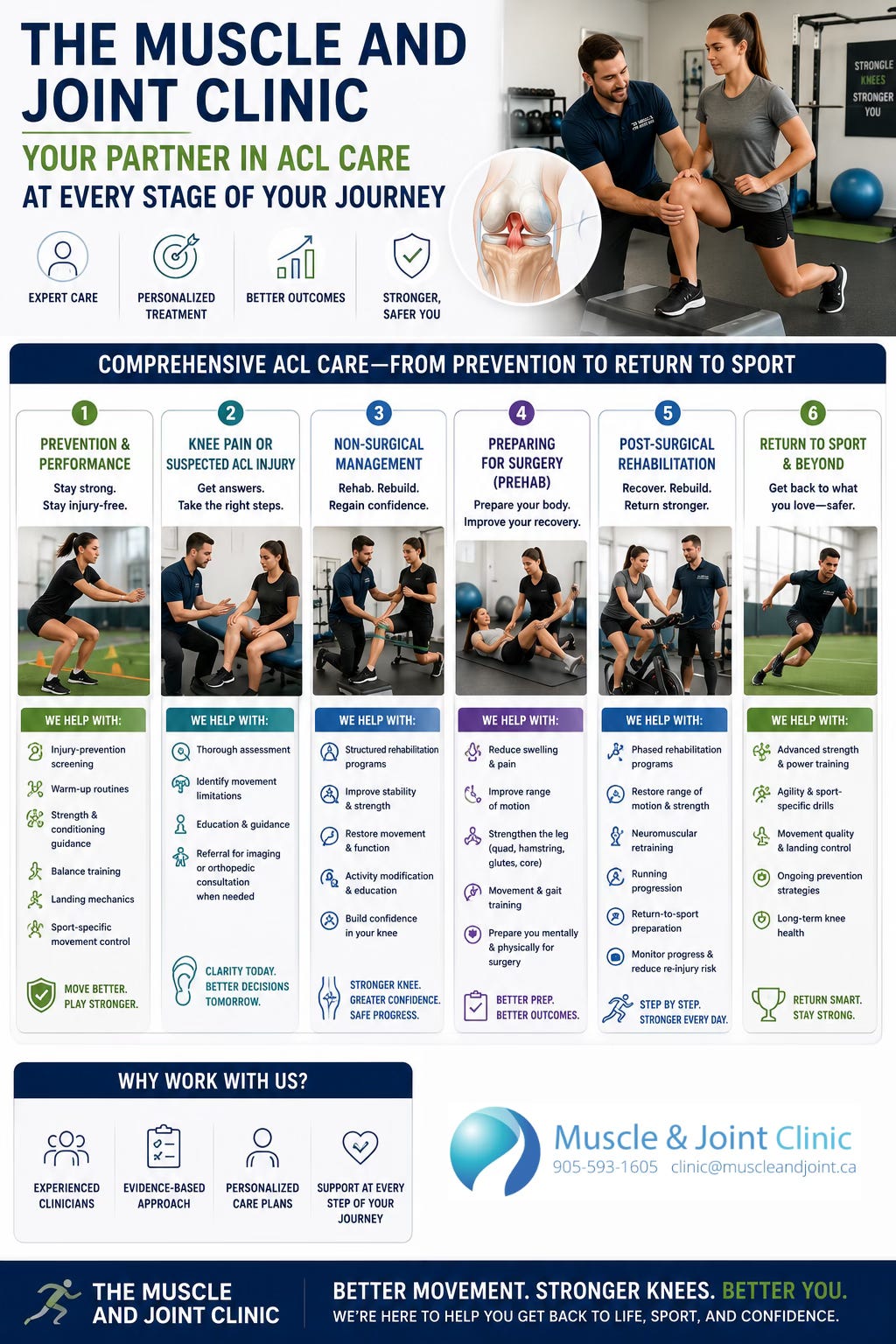
The Muscle and Joint Clinic can help athletes and active individuals at several stages of ACL care. For athletes who have not been injured, the clinic can help with injury-prevention screening, warm-up routines, strength and conditioning guidance, balance training, landing mechanics, and sport-specific movement control. For those with knee pain or a suspected ACL injury, the clinic can provide an assessment, identify movement limitations, and help guide the next steps, including referral for imaging or orthopedic consultation when appropriate. For patients managing an ACL injury without surgery, the clinic can provide structured rehabilitation focused on stability, strength, confidence, and safe activity modification. For patients preparing for surgery, prehabilitation can help improve range of motion, reduce swelling, strengthen the leg, and prepare the patient for a better recovery. After surgery, the clinic can support phased rehabilitation, progressive strengthening, neuromuscular retraining, running progression, return-to-sport preparation, and ongoing prevention strategies.
ACL injuries can be serious, but they are not hopeless. With proper warm-ups, strength training, movement-control work, early assessment, structured rehabilitation, and careful return-to-sport planning, athletes can reduce injury risk and improve long-term knee health. For young athletes, prevention should become part of the culture of sport: warm up properly, build strength, move well, recover properly, and take knee symptoms seriously.
References
American Academy of Orthopaedic Surgeons. (n.d.). Anterior cruciate ligament (ACL) injuries. OrthoInfo. https://orthoinfo.aaos.org/en/diseases–conditions/anterior-cruciate-ligament-acl-injuries/
Beard, D. J., Davies, L., Cook, J. A., MacLennan, G., Price, A., Kent, S., Hudson, J., Carr, A., Campbell, M. K., & the ACL SNNAP Study Group. (2022). Rehabilitation versus surgical reconstruction for non-acute anterior cruciate ligament injury (ACL SNNAP): A pragmatic randomised controlled trial. The Lancet, 400(10352), 605–615. https://doi.org/10.1016/S0140-6736(22)01424-6
Crossley, K. M., Patterson, B. E., Culvenor, A. G., Bruder, A. M., Mosler, A. B., & Mentiplay, B. F. (2020). Making football safer for women: A systematic review and meta-analysis of injury prevention programmes in 11,773 female football players. British Journal of Sports Medicine, 54(18), 1089–1098. https://doi.org/10.1136/bjsports-2019-101587
Frobell, R. B., Roos, E. M., Roos, H. P., Ranstam, J., & Lohmander, L. S. (2010). A randomized trial of treatment for acute anterior cruciate ligament tears. The New England Journal of Medicine, 363(4), 331–342. https://doi.org/10.1056/NEJMoa0907797
Mayo Clinic. (2022). ACL injury: Symptoms and causes. https://www.mayoclinic.org/diseases-conditions/acl-injury/symptoms-causes/syc-20350738
National Athletic Trainers’ Association. (2018). Prevention of anterior cruciate ligament injury: Clinical practice position statement. https://www.nata.org/
Petushek, E. J., Sugimoto, D., Stoolmiller, M., Smith, G., & Myer, G. D. (2019). Evidence-based best-practice guidelines for preventing anterior cruciate ligament injuries in young female athletes: A systematic review and meta-analysis. The American Journal of Sports Medicine, 47(7), 1744–1753. https://doi.org/10.1177/0363546518782460
Reuters. (2025, June 30). Can training and technology solve the ACL crisis in women’s football?https://www.reuters.com/sports/soccer/can-training-technology-solve-acl-crisis-womens-football-2025-06-30/