


Low back pain is one of the most common reasons people seek care. For some people, it comes on after lifting, bending, prolonged sitting, yard work, sports, or a busy work week. For others, it seems to return again and again without one clear cause.
Most low back pain is considered nonspecific low back pain, meaning the pain is not clearly explained by one serious underlying condition such as fracture, infection, cancer, inflammatory disease, or major nerve compression. In these cases, pain may be influenced by muscles, joints, discs, ligaments, posture, activity level, stress, sleep, strength, movement habits, and overall health.
A recent randomized clinical trial published in JAMA Network Open looked at whether adding a nonrigid lumbar beltto usual care could help adults with nonspecific low back pain lasting one to six months. The findings are interesting because lumbar belts are commonly used, but guidelines have often been cautious because the evidence has been mixed.
What Kind of Belt Was Studied?
The study did not use a rigid brace. It used an adjustable, nonrigid lumbar belt called LombaStab by Thuasne. The belt was described as having two back panels connected to front panels by elasticated fabric, with handles to adjust tightness. In simple terms, this was a flexible lumbar support designed to provide comfortable support rather than fully immobilize the spine.
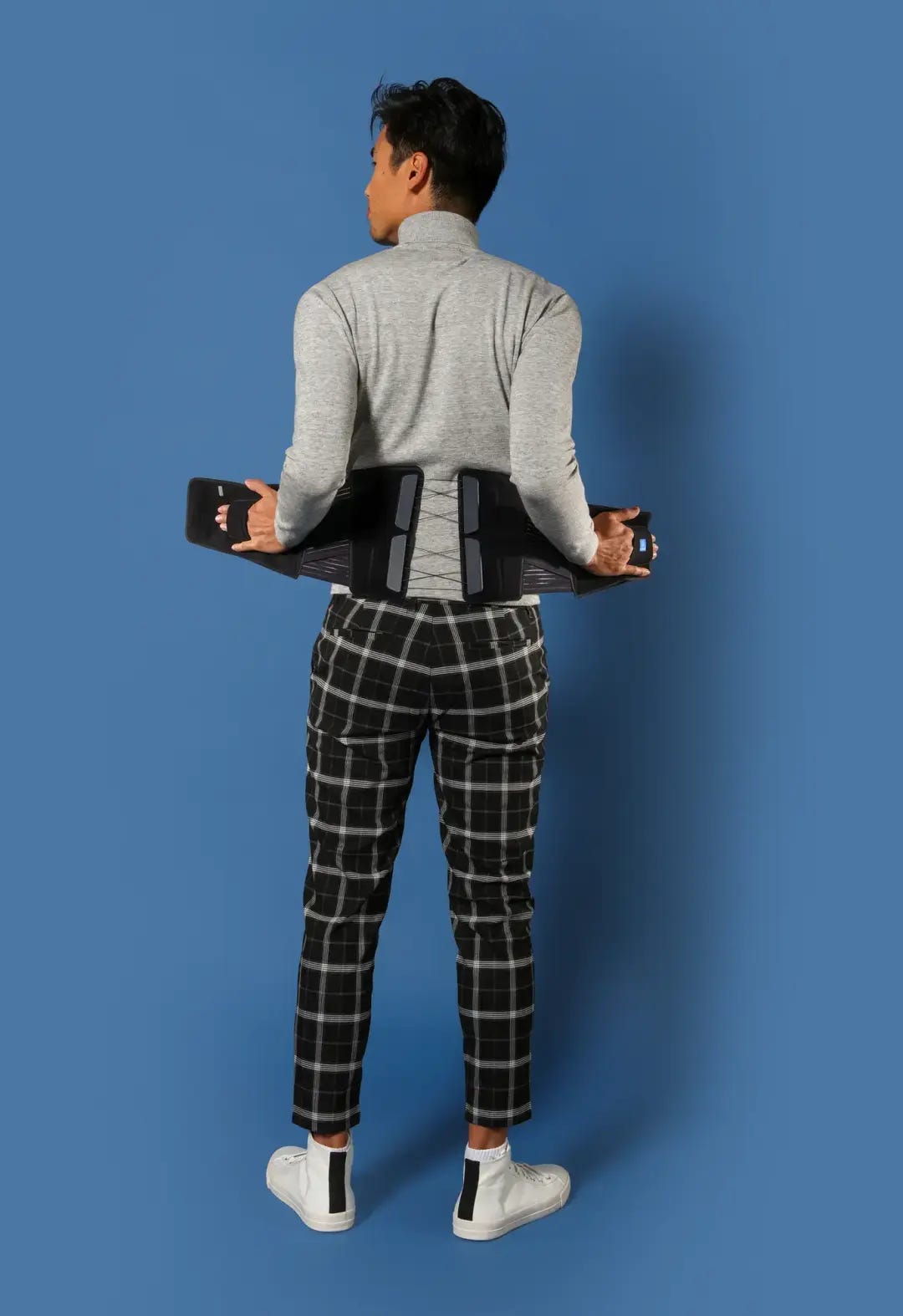
This distinction matters. When many people think of a back brace, they imagine something stiff, bulky, and restrictive. The belt used in this study was different. It was a soft, adjustable support intended to be worn during daytime activities.
Patients in the belt group were instructed to wear it for 4 to 8 hours per day during the day for 12 weeks. They were told to adjust it so that it felt supportive but not excessively tight, and they were instructed not to wear it while sleeping. Both groups were also advised to remain physically active and continue usual care.
What Did the Study Find?
The trial included 168 adults with nonspecific low back pain lasting one to six months. Patients were randomly assigned either to usual care alone or to usual care plus the lumbar belt.
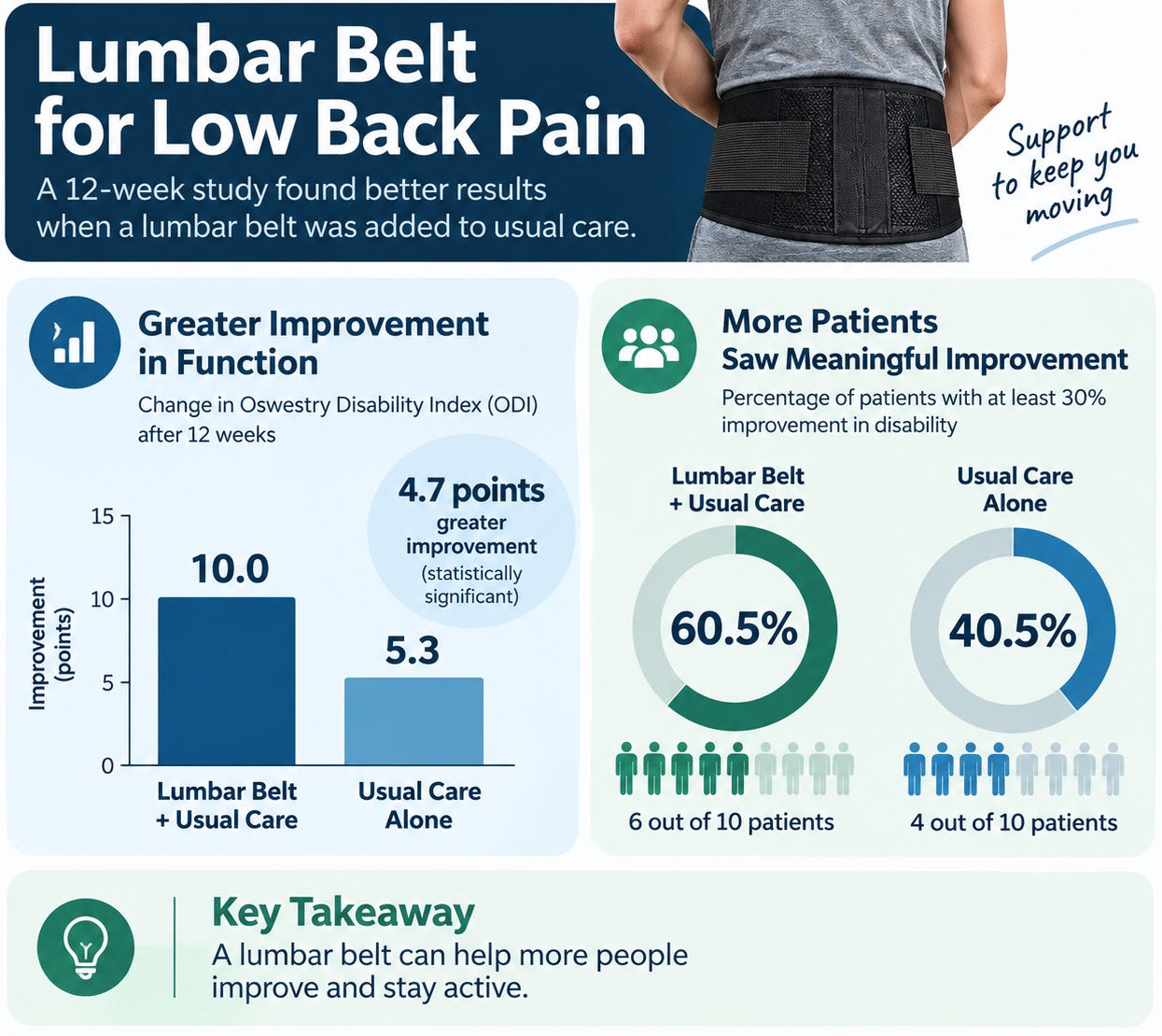
After 12 weeks, the group using the lumbar belt had greater improvement in function compared with the usual-care group. Function was measured using the Oswestry Disability Index, a commonly used questionnaire for low back pain-related disability.
The belt group improved by about 10 points, while the control group improved by about 5.3 points. The difference between groups was 4.7 points. This was statistically significant, although smaller than the 10-point difference the researchers had originally used for their study design.
The study also found that 60.5% of patients in the belt group achieved at least a 30% improvement in disability, compared with 40.5% in the control group. That is clinically relevant because it suggests more patients experienced meaningful improvement when the belt was added to usual care.
Pain also improved more in the belt group. At 12 weeks, mean pain at rest and mean pain during activity decreased more in the belt group compared with the control group. Pain during activity is especially important because movement-related pain can make people avoid bending, walking, lifting, working, or exercising. If a support helps reduce pain during activity, it may help some patients stay more active during recovery.
Did People Use Less Medication?
One of the interesting findings was that fewer people in the belt group used medication for low back pain during the study period. About 50.6% of patients in the belt group used low back pain medication compared with 67.6% in the control group. NSAID use was also lower in the belt group.
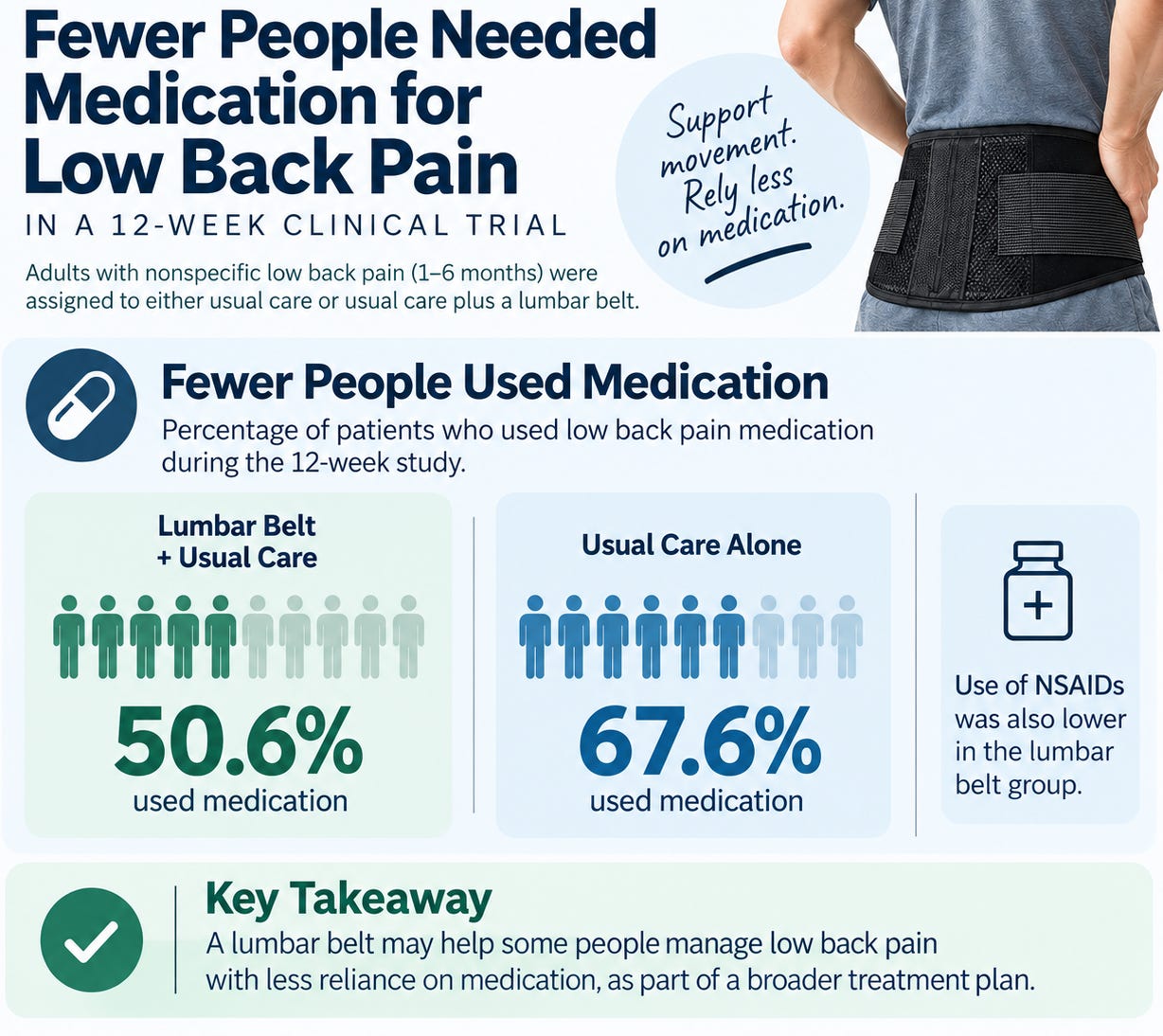
This does not mean a lumbar belt replaces medical care or medication when medication is appropriate. But it does suggest that, for some patients, a lumbar belt may be a useful non-drug option as part of a broader low back pain plan.
How Might a Lumbar Belt Help?
A lumbar belt does not “fix” the spine. It does not put discs back in place, cure arthritis, or permanently correct posture. Its role is more practical.
A nonrigid lumbar belt may help by providing a sense of support, improving body awareness, offering proprioceptive feedback, and reducing the feeling of strain during movement. Some people feel more confident bending, walking, standing, or doing daily activities when the low back feels supported.
The study authors discussed possible mechanisms such as improved postural control, proprioceptive feedback, and reduced mechanical load, while also noting that the exact clinical importance of these mechanisms is still uncertain.
For patients, the simple explanation is this: a lumbar belt may help some people feel supported enough to move more comfortably while their back settles down.
A Belt Should Not Replace Movement
One of the most important messages is that a lumbar belt should not be used as a reason to stop moving.
Current low back pain care generally emphasizes education, staying active, exercise, physical therapy, and addressing lifestyle and psychosocial factors where relevant. The study also notes that low back pain is influenced by biological, psychological, social, and lifestyle factors.
This is why a lumbar belt should be viewed as an adjunct, not a standalone solution. It may help reduce pain during activity, but the long-term goal is still to restore movement, confidence, strength, mobility, and function.
In other words, the belt may help you get through the painful phase, but your body still needs appropriate exercise, gradual loading, and good movement habits.
Should Everyone With Low Back Pain Wear One?
No. A lumbar belt is not necessary for every case of low back pain.
The study looked at adults with nonspecific low back pain lasting one to six months. It excluded people with lumbar radicular syndrome, recent spinal or lower-limb surgery, pregnancy, certain contraindications, and other factors. That means the findings apply best to people with nonspecific low back pain similar to the patients included in the study.
A belt may be more useful for people who feel worse during activity, have difficulty with daily tasks, need temporary support during work or movement, or are trying to stay active while symptoms improve.
A belt may be less appropriate if pain is severe and unexplained, associated with neurological symptoms, related to a specific medical condition, or if the person becomes fearful of moving without it.
What About Dependence or Weakness?
A common concern is that wearing a lumbar belt will make the back weak. This is one reason some guidelines have been cautious about recommending belts routinely, especially for chronic low back pain.
The article notes that concerns about lumbar supports causing muscle weakness or delayed recovery have not been consistently supported, but it also acknowledges potential concerns with long-term routine use, including dependence, fear avoidance, and deconditioning.
This is why the way a belt is used matters. The study used the belt for a defined period of 12 weeks, during daytime activities, for several hours per day. It was not used as a permanent brace and was not worn while sleeping.
Clinically, this is the most reasonable way to think about lumbar belts: temporary support during the painful phase, paired with activity and rehabilitation.
What Were the Limitations of the Study?
The study is useful, but it should not be overinterpreted.
It was an open-label trial, meaning patients knew whether they were wearing a belt. There was no sham belt. That means placebo effects, expectation effects, or the reassurance of receiving a device could have influenced results.
The study also did not prove that every type of lumbar belt will work the same way. Device type matters. A soft, adjustable, nonrigid belt may not have the same effects as a rigid brace or a poorly fitted support.
The researchers also noted that the main disability improvement was statistically significant but smaller than the 10-point target difference used when planning the trial. Secondary outcomes, such as pain measures, were supportive but should still be interpreted with some caution.
So the best interpretation is balanced: this study suggests that a nonrigid lumbar belt may help selected patients with nonspecific low back pain, but it should be used appropriately and as part of a broader care plan.
How We May Use This Information in Clinic
At The Muscle and Joint Clinic, we often see patients with nonspecific low back pain. Some patients are dealing with a new flare-up. Others have recurrent episodes. Some feel pain during work, lifting, standing, walking, bending, or getting in and out of chairs.
For the right patient, a lumbar belt may be considered as one part of care. It may be helpful during painful activities, work demands, travel, flare-ups, or periods where the person is trying to remain active but needs temporary support.
However, we would not want patients to rely on a belt alone. A proper low back pain plan may include assessment, education, chiropractic care, physiotherapy, soft tissue therapy, mobility work, strengthening, ergonomic advice, activity modification, and a gradual return to normal activity.
The goal is not to make someone dependent on a support. The goal is to help them move better, feel better, and return to function with more confidence.
Practical Advice for Patients
If a lumbar belt is recommended, it should fit comfortably and provide support without being overly tight. It should not cause numbness, tingling, skin irritation, breathing restriction, increased pain, or discomfort.
It is usually best used during activity rather than while resting all day. The study instructed patients to wear the belt during daytime activities and not while sleeping. That is a useful practical guideline.
Patients should also continue moving within tolerance. Short walks, gentle mobility, progressive strengthening, and avoiding prolonged bed rest are still important for most nonspecific low back pain presentations.
If the belt helps you move with less pain, that can be useful. But if you feel you cannot move without it, or you become afraid to take it off, it is time to reassess the plan.
When to Get Assessed
Low back pain should be assessed if it is severe, worsening, persistent, recurrent, or affecting work, sleep, walking, or daily activities.
Seek medical attention promptly if low back pain is associated with new bowel or bladder changes, saddle numbness, progressive leg weakness, fever, unexplained weight loss, history of cancer, major trauma, night pain that does not ease, or significant neurological symptoms such as numbness, tingling, or radiating leg pain that is worsening.
A lumbar belt may help some patients, but it should not be used to cover up symptoms that need proper evaluation. This does not mean everyone with low back pain needs a belt. It also does not mean a belt should replace exercise, treatment, movement, or proper assessment.
But for selected patients, a soft adjustable lumbar belt may be a reasonable short-term tool to help manage symptoms, reduce activity-related pain, and support function while the back recovers.
At The Muscle and Joint Clinic, we believe the best approach is individualized care. For some patients, that may include temporary lumbar support. For others, the focus may be mobility, strengthening, hands-on care, education, or a combination of strategies.
The key is using the right tool for the right person at the right time.
Disclaimer
This article is for general educational purposes only and is not a substitute for medical advice, diagnosis, or treatment. Low back pain can have many causes, and treatment should be based on an individualized assessment. If you have severe, worsening, persistent, unusual, or concerning symptoms, please seek care from a qualified healthcare professional.
Reference
Grange, L., Calmels, P., Pers, Y.-M., Laustriat, G., Wieczorek, V., Saih, N., De-Sèze, M., Nguyen, C., Daste, C., Fayolle-Minon, I., Coudeyre, E., & Rannou, F. (2026). Lumbar belt for nonspecific low back pain: A randomized clinical trial. JAMA Network Open, 9(8), e2629793. https://doi.org/10.1001/jamanetworkopen.2026.29793