


Lower back pain can develop unexpectedly. You might feel a sudden tightening in your back while lifting something, experience discomfort after a long day of yard work, or wake up one morning struggling to bend, sit, or stand comfortably.
For some people, the pain is mild and settles within a few days. For others, it can interfere with walking, working, driving, sleeping, and completing ordinary household activities.
When lower back pain becomes particularly uncomfortable, many people look for ways to support their backs while continuing their daily routines. One common option is a lumbar support belt, sometimes called a back brace.
These braces have been available for decades, but opinions about their usefulness have varied. Some patients report that wearing a belt makes it easier to stand, walk, or perform daily activities. Others have been advised to avoid them because of concerns that their back muscles could become weak or dependent on external support.
A new clinical trial published in JAMA Network Open in August 2026 provides useful evidence that may change how some healthcare professionals think about soft lumbar support belts.
The study found that adding a nonrigid lumbar belt to usual care helped some people with lower back pain achieve greater improvements in pain and everyday function compared with usual care alone (Grange et al., 2026).
Harvard Health Publishing highlighted these findings in October 2026, suggesting that soft, adjustable lumbar belts may be a reasonable, non-drug addition to established lower back pain treatments (Christensen, 2026).
But when should someone consider using a back brace? Can wearing one during an acute episode help? Does bracing weaken the muscles supporting the spine? And how should it fit into a broader recovery plan?
Understanding the potential benefits and limitations can help patients make more informed decisions about managing lower back pain.
Understanding Lower Back Pain and Why It Can Be So Disruptive
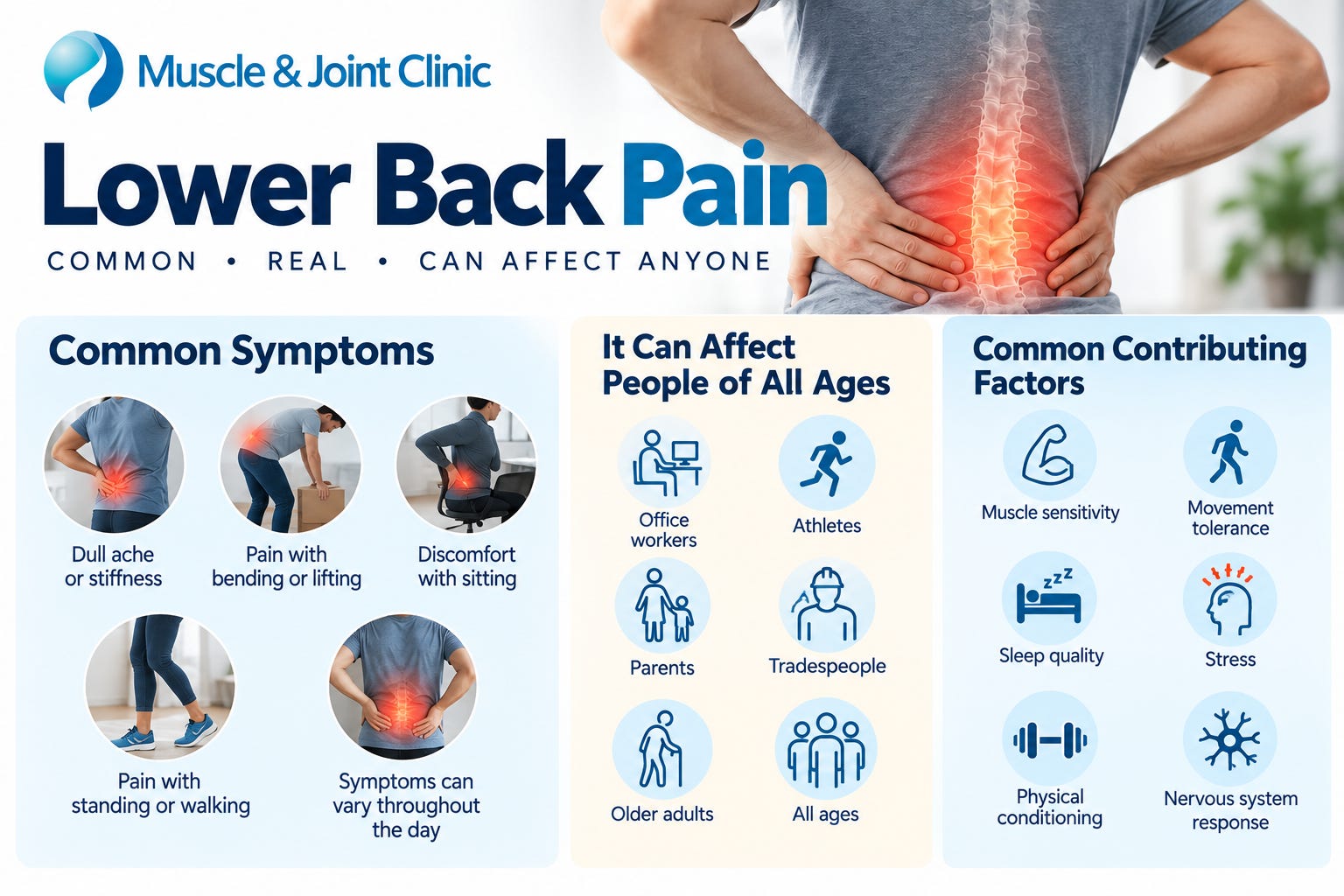
Lower back pain is one of the most common musculoskeletal complaints worldwide. It can affect people of all ages, including office workers, athletes, parents, tradespeople, and older adults.
Symptoms may range from a dull ache across the lower back to more intense discomfort that makes everyday movements difficult.
Some people experience pain primarily when bending or lifting. Others notice discomfort after prolonged sitting, standing, or walking. The pain may also vary throughout the day, sometimes becoming more noticeable after physical activity or following extended periods of inactivity.
In many cases, healthcare professionals classify the condition as nonspecific lower back pain. This means the symptoms cannot be confidently attributed to one identifiable structural cause, such as a fracture, infection, or another specific disease.
Importantly, nonspecific does not mean the pain is imaginary or unimportant. The symptoms are real, and they can substantially affect a person’s quality of life.
Pain can be influenced by several factors, including muscle sensitivity, movement tolerance, sleep, stress, previous injuries, physical conditioning, and the nervous system’s response to discomfort.
This is one reason lower back pain treatment often involves several approaches rather than relying on one particular intervention.
What Is a Lumbar Support Belt?
A lumbar support belt is a device worn around the lower back and abdomen to provide external support and compression.
There are several types of lumbar braces, ranging from soft, flexible belts to more rigid orthotic devices.
Soft lumbar belts are generally made from elastic or flexible materials and can be adjusted to fit comfortably around the waist.
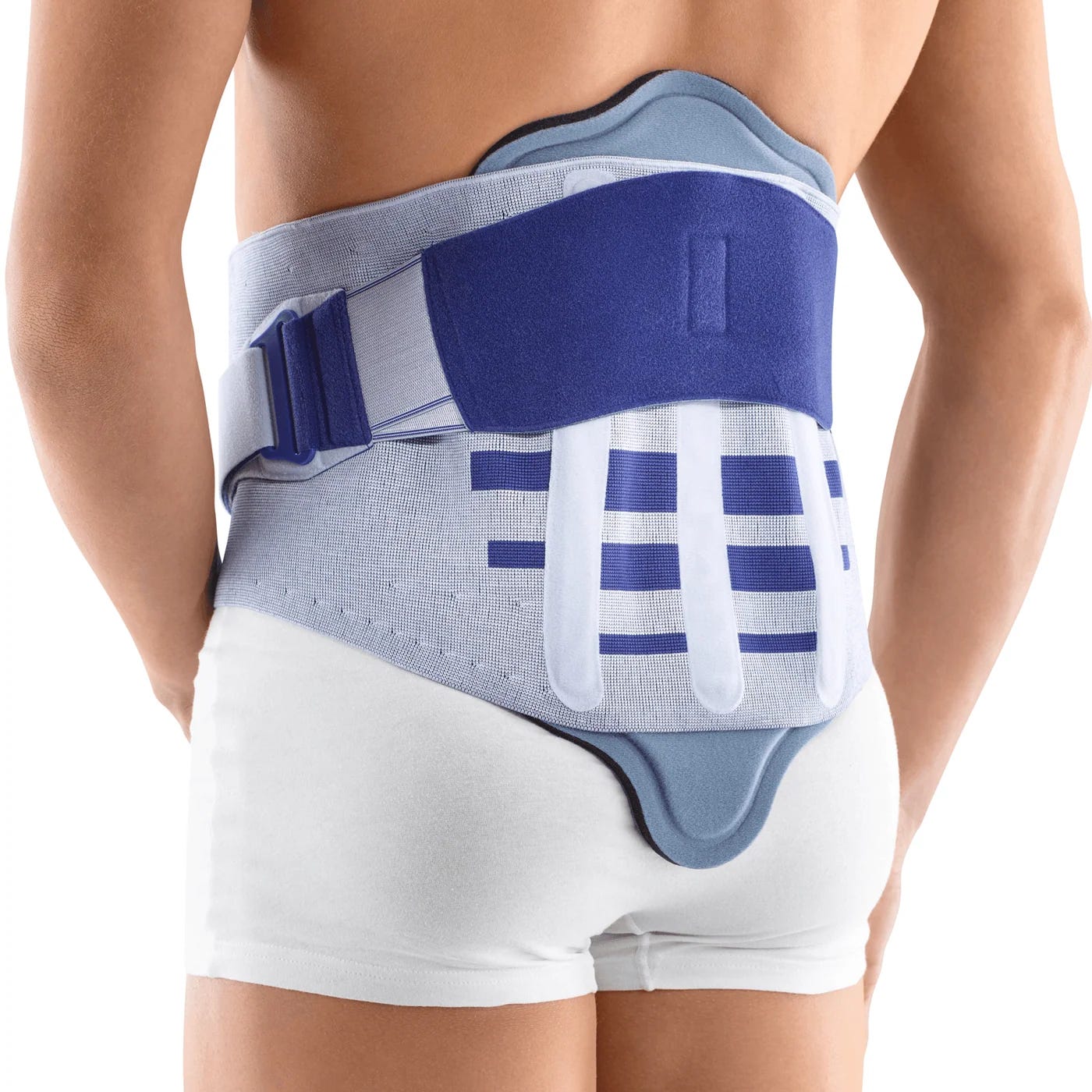
Unlike rigid spinal braces, which may be prescribed for specific medical conditions or following certain injuries or surgeries, nonrigid lumbar belts are designed to provide support while still allowing movement.
Some people wear them during activities that aggravate their symptoms, such as standing for longer periods, completing household tasks, or returning to light physical activity.
A properly fitted belt should feel supportive without being excessively tight or restricting normal breathing.
Its purpose is not to completely immobilize the spine.
Instead, it may provide a temporary sense of support and comfort while a person continues managing their lower back pain.
What Did the New 2026 Research Find?
In August 2026, researchers published a randomized clinical trial titled Lumbar Belt for Nonspecific Low Back Pain in JAMA Network Open.
The study included 168 adults with nonspecific lower back pain that had lasted between one and six months.
Participants were divided into two groups. Both groups received usual care, including advice to remain active and other appropriate treatments. One group was also instructed to wear an adjustable, nonrigid lumbar belt for four to eight hours per day over a 12-week period.
Researchers measured how much lower back pain affected participants’ daily activities using the Oswestry Disability Index, a questionnaire that evaluates difficulties with activities such as walking, sitting, lifting, standing, and personal care.
Both groups improved, but the people who wore lumbar belts experienced greater average improvements.
After 12 weeks, disability scores improved by approximately 10 points in the belt group, compared with 5.3 points in the group receiving usual care alone.
Approximately 61% of participants wearing the belt achieved at least a 30% improvement in their disability score, compared with approximately 41% in the usual-care group.
Participants wearing the belt also reported greater reductions in pain both at rest and during activity. They were less likely to report using pain medication during the study (Grange et al., 2026).
These findings suggest that a soft lumbar belt may offer additional symptom relief for some people when used alongside other treatments.
However, the average difference in disability improvement between groups was relatively modest. The study was also not blinded, meaning participants knew whether they were wearing a brace, and expectations may have influenced their reported outcomes.
The research was funded by the brace manufacturer, and some investigators disclosed financial relationships with the company. These details do not invalidate the findings, but they are important when interpreting the results.
Overall, the study supports considering lumbar belts as an additional treatment option rather than viewing them as a replacement for established care.
Can a Back Brace Help During an Acute Episode of Lower Back Pain?
This is where lumbar braces may have a practical role for selected patients.
Acute lower back pain generally refers to symptoms that have developed recently, often within the previous six weeks.
Someone experiencing a painful flare-up may find that everyday movements suddenly become more uncomfortable. Getting out of bed, walking through the grocery store, standing at work, or completing household tasks may require more effort.
During these situations, a soft lumbar belt may provide temporary comfort and a greater sense of support.
For example, a patient who develops lower back discomfort after lifting a heavy object may find it easier to continue short periods of walking or standing while wearing a comfortably fitted support.
Similarly, someone experiencing a flare-up of recurrent lower back pain may choose to wear a belt temporarily during activities that would otherwise be difficult.
The important distinction is that the August 2026 trial examined lower back pain lasting one to six months. It did not directly establish the effectiveness of lumbar belts for newly developed pain in the first few days after an injury.
Therefore, recommending a belt for an acute episode is best understood as an individualized symptom-management option rather than a treatment conclusively proven to accelerate healing.
If a brace helps someone remain reasonably active during a painful period, that may be useful. However, it should not encourage them to push through severe pain, attempt excessively heavy lifting, or ignore concerning symptoms.
How Might a Back Brace Reduce Pain?
Researchers have proposed several mechanisms that could explain why lumbar support belts help some individuals.
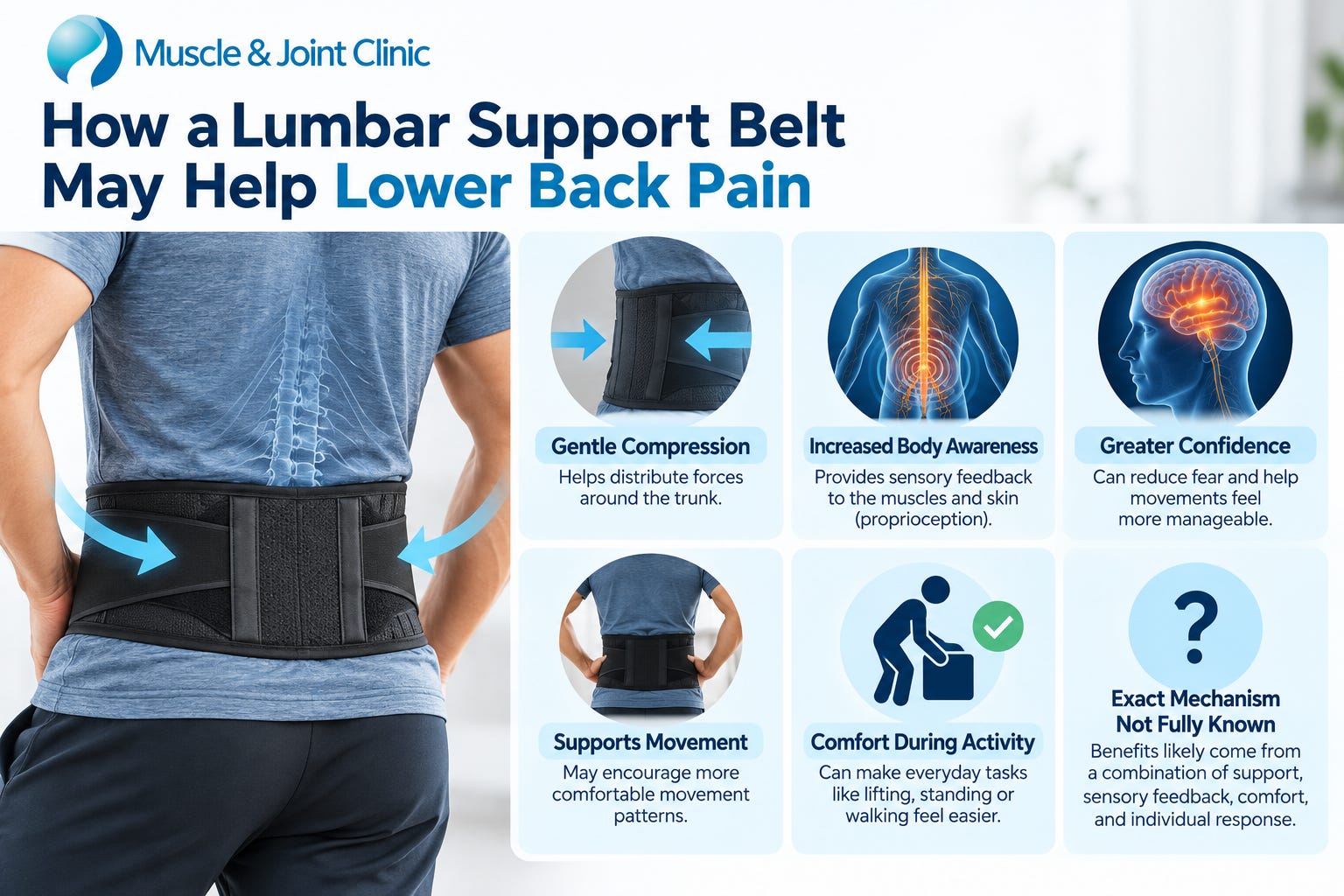
One possibility is that the belt provides gentle compression and changes how forces are distributed around the trunk during movement.
Another is that it increases sensory feedback from the muscles and skin surrounding the lower back.
This sensory feedback, sometimes called proprioceptive input, contributes to the nervous system’s awareness of body position and movement.
A person wearing a lumbar belt may become more aware of how their trunk is moving, potentially helping them find more comfortable movement patterns.
The belt may also provide a sense of reassurance during activities that previously felt painful or difficult.
These effects could make certain movements feel more manageable without requiring the spine to become completely rigid.
However, the exact mechanisms remain uncertain, and it is not established that lumbar belts work primarily by mechanically unloading or stabilizing the spine.
Pain relief may result from a combination of physical support, sensory feedback, comfort, and the individual’s response to wearing the device.
Will Wearing a Back Brace Weaken Your Core Muscles?
One of the most common concerns about lumbar belts is whether the muscles supporting the spine become weaker when external support is used.
Patients may worry that wearing a brace will cause their abdominal or back muscles to stop working, leading to muscle atrophy or dependence.
The available research does not consistently support the idea that wearing a nonrigid lumbar brace automatically causes muscle weakness.
A systematic review published in The Spine Journal examined the relationship between lumbosacral orthoses and trunk muscle function. The authors found no consistent evidence that these devices caused weakening of the trunk muscles (Azadinia et al., 2017).
A separate study published in Brain Sciences in 2024 examined patients receiving both lumbar bracing and physiotherapy for chronic lower back pain.
The researchers reviewed 199 patients and found improvements in reported pain and disability following treatment (Vick et al., 2024).
However, because the study was retrospective and did not include a comparison group receiving physiotherapy alone, it could not determine how much of the improvement was attributable specifically to the brace.
These findings are encouraging, but they do not mean that wearing a brace continuously is necessary or beneficial for everyone.
Muscle strength and physical conditioning still matter.
If someone stops exercising, avoids normal movement, and relies exclusively on a brace for comfort, their physical capacity may decline because of reduced activity rather than because the brace itself directly weakens the muscles.
The more useful approach is to view bracing as an optional support while maintaining or gradually rebuilding normal movement and strength.
Should You Wear a Back Brace All Day?
There is no universal wearing schedule appropriate for every person with lower back pain.
In the 2026 clinical trial, participants were instructed to wear their lumbar belts for four to eight hours per day, generally during daytime activities, over 12 weeks.
They were advised not to wear the belt while sleeping (Grange et al., 2026).
This schedule was part of the study protocol. It should not be interpreted as a recommendation that everyone with back pain should wear a brace for several hours every day.
For someone experiencing an acute flare-up, shorter periods of use during particularly uncomfortable activities may be reasonable if a healthcare professional considers a brace appropriate.
For example, a patient might wear the belt while walking, standing, or performing light household tasks, then remove it when resting or when support is no longer needed.
A brace should be comfortably fitted and should not cause skin irritation, numbness, difficulty breathing, or increased pain.
Patients should also understand that a soft lumbar belt is different from a rigid brace prescribed following a spinal fracture or surgery. Those devices may have specific wearing requirements that must be followed.
The goal with a soft lumbar belt is to provide support when useful—not necessarily to wear it continuously.
When Might a Lumbar Brace Be Worth Considering?
A lumbar support belt may be worth discussing with a healthcare professional when lower back pain is interfering with daily movement despite appropriate self-management.
Someone with recurrent nonspecific lower back pain may find that a brace helps them complete ordinary tasks more comfortably during a flare-up.
Another patient may experience pain that becomes more noticeable after prolonged standing or walking and may benefit from temporary support during those activities.
For people with subacute lower back pain, particularly when symptoms have persisted for several weeks, the 2026 clinical trial provides direct evidence that a nonrigid belt may offer additional benefit alongside usual care.
However, back braces are not appropriate for every diagnosis.
Patients with significant neurological symptoms, suspected spinal fractures, certain postoperative restrictions, or other serious spinal conditions require an individualized medical assessment.
People experiencing substantial radiating leg pain, progressive weakness, or unexplained symptoms should not assume that a brace is the correct treatment.
A brace may help manage discomfort in selected circumstances, but it cannot replace an accurate diagnosis.
Why Exercise and Movement Still Matter
One of the most important messages in lower back pain management is that the spine is designed to move.
Although a painful episode may temporarily reduce someone’s ability to bend, lift, or exercise, avoiding normal movement for extended periods can contribute to stiffness, reduced strength, and declining confidence.
For most people with uncomplicated lower back pain, remaining active within their tolerance is preferable to prolonged bed rest.
Walking, gentle mobility exercises, and gradually returning to normal activities can help maintain function during recovery.
As pain becomes more manageable, strengthening and conditioning exercises may help improve physical capacity and tolerance for daily tasks.
A person who repeatedly develops lower back pain during lifting may benefit from progressive exercises that build their ability to bend, carry, and manage increasingly demanding loads.
Someone whose symptoms become worse after prolonged sitting may benefit from movement breaks and improving overall activity tolerance.
A lumbar belt may make certain activities more comfortable, but it does not replace the benefits of movement and rehabilitation.
The most useful role for a brace is often to make participation in normal activities easier while the person continues working toward improved strength and function.
Can Back Bracing Reduce the Need for Pain Medication?
Another interesting finding from the 2026 study involved medication use.
Over the 12-week trial, approximately 51% of participants in the belt group reported using medication for lower back pain, compared with approximately 68% in the usual-care group.
The difference was particularly noticeable for nonsteroidal anti-inflammatory drugs, commonly called NSAIDs (Grange et al., 2026).
This suggests that improved symptom control with a brace may reduce the need for some pain medications in selected patients.
However, the study does not establish that lumbar belts should replace prescribed medication, nor does it mean that every person using a brace will be able to reduce medication.
Medication decisions should be made with the prescribing healthcare professional.
For patients who cannot tolerate certain pain medications or prefer additional non-drug approaches, appropriately selected lumbar support may be one option worth discussing.
What Is the Difference Between a Lumbar Belt and a Rigid Back Brace?
Not all back braces are designed for the same purpose.
A soft lumbar belt is generally flexible and adjustable. It may provide compression, sensory feedback, and temporary support while allowing movement.
A more rigid spinal orthosis may contain plastic or metal components designed to restrict certain movements.
Rigid braces are sometimes used for specific medical indications, including certain fractures, spinal conditions, or postoperative management.
These devices should not be used interchangeably.
The positive findings from the 2026 trial relate specifically to a nonrigid, adjustable lumbar belt.
They should not be assumed to apply equally to rigid spinal braces, weightlifting belts, or every support sold as a back brace.
Choosing the correct type of support depends on the patient’s symptoms, diagnosis, goals, and medical history.
What Do Current Clinical Guidelines Say About Back Braces?
Although newer research has produced encouraging findings, clinical guidelines have generally been cautious about recommending lumbar belts for routine treatment.
The World Health Organization’s 2023 guideline for chronic primary lower back pain conditionally recommended against routinely using lumbar braces, belts, and supports because of uncertainty about long-term benefits and potential disadvantages.
That recommendation applies to chronic primary lower back pain and should not automatically be extended to every short-term flare-up or specific spinal diagnosis.
The recent randomized trial adds evidence that selected patients with nonspecific lower back pain lasting one to six months may benefit from a soft lumbar belt.
These positions are not necessarily contradictory. Evidence continues to develop, and treatment decisions should account for the population studied, the type of support used, the duration of symptoms, and the patient’s individual circumstances.
For now, the most reasonable interpretation is that lumbar belts may help some patients but should not be prescribed routinely to everyone with back pain.
When Lower Back Pain Requires Further Assessment
Most uncomplicated episodes of lower back pain improve over time, but some symptoms require assessment rather than continued self-treatment.
Persistent pain that interferes with walking, working, sleeping, or performing everyday activities deserves attention.
Pain extending into the leg, significant numbness, or new weakness may indicate nerve involvement that requires further evaluation.
Urgent medical care is necessary for new loss of bladder or bowel control, numbness around the groin or saddle region, or significant or progressive leg weakness.
Severe back pain following substantial trauma, or pain accompanied by fever or unexplained systemic illness, may also require prompt medical assessment.
A lumbar brace should never be used to mask concerning symptoms or delay appropriate care.
How The Muscle and Joint Clinic Can Help With Lower Back Pain
At The Muscle and Joint Clinic, we recognize that lower back pain can affect nearly every part of daily life.
Some patients develop pain suddenly after lifting or performing an unfamiliar activity. Others experience recurring episodes or discomfort that persists for weeks or months.
Our approach begins with a detailed assessment to better understand the symptoms, identify functional limitations, and determine whether conservative care is appropriate.
Depending on the findings, treatment may involve chiropractic care, physiotherapy, massage therapy, exercise rehabilitation, and education about managing symptoms during everyday activities.
Chiropractic Care for Lower Back Pain
Chiropractors are trained to assess and manage musculoskeletal conditions affecting the spine and related structures.
For appropriate patients, chiropractic treatment may include spinal manipulation or mobilization, soft tissue techniques, mobility exercises, and advice about returning to normal activities.
A chiropractor can also help determine whether a lumbar support belt may be useful during a painful episode.
The goal is not simply to provide temporary relief. It is to help patients understand their symptoms, regain comfortable movement, and return to meaningful activities.
A brace may sometimes make that process easier, but it should not be viewed as a replacement for appropriate assessment and care.
Physiotherapy for Strength and Rehabilitation
Physiotherapy is an important component of lower back pain management, particularly when symptoms are associated with reduced physical capacity, movement limitations, or recurring episodes.
A physiotherapist may assess trunk and hip strength, mobility, movement tolerance, balance, and activities that aggravate symptoms.
Treatment may include progressive strengthening, mobility exercises, movement retraining, and graded return to activities such as walking, lifting, exercising, or working.
For patients using a lumbar belt, physiotherapy can help maintain activity and build the physical capacity needed to manage everyday tasks comfortably, whether or not a brace is being worn.
The long-term objective is to improve confidence, function, and independence.
Massage Therapy for Associated Muscle Discomfort
Lower back pain is often accompanied by muscle tenderness or tightness around the back, hips, or gluteal region.
Massage therapy may provide short-term relief from associated muscle discomfort and help patients feel more comfortable.
For some individuals, reducing muscle tension may make it easier to participate in gentle movement or rehabilitation exercises.
However, massage does not replace assessment or exercise-based management when these are indicated.
A Combined Approach to Back Pain Management
For some patients, treatment may involve a combination of manual therapy, exercise, education, and short-term symptom-management strategies.
A lumbar brace may be one of those strategies when appropriate.
For example, a patient experiencing a painful flare-up may temporarily use a soft support belt to make standing or walking more comfortable while receiving guidance on gradual activity and strengthening.
As symptoms improve, the need for external support can be reassessed.
The objective is not to make someone dependent on a device or repeated treatment, but to help them remain active and develop the ability to manage their back pain more confidently.
The Take-Home Message: A Back Brace Can Be Helpful, but It Is Not the Whole Treatment
The latest research suggests that soft lumbar support belts deserve consideration as an additional option for managing certain forms of nonspecific lower back pain.
A 2026 randomized clinical trial found that participants wearing nonrigid lumbar belts alongside usual care experienced greater improvements in pain and function than those receiving usual care alone (Grange et al., 2026).
These findings are encouraging, particularly for people whose lower back pain makes everyday movement difficult.
During an acute flare-up, some patients may also find that temporary lumbar support makes activities such as standing, walking, or completing household tasks more comfortable. However, direct evidence for newly developed acute pain remains less certain than the evidence for the one-to-six-month symptoms studied in the trial.
A brace does not need to be viewed as harmful simply because it provides support, but it should not replace normal movement, strengthening, and appropriate rehabilitation.
The best approach depends on the individual, the cause of the symptoms, and the activities they are trying to return to.
At The Muscle and Joint Clinic, our chiropractic, physiotherapy, and massage therapy teams can help assess lower back pain, discuss whether lumbar bracing is appropriate, and develop a personalized treatment plan focused on improving movement and function.
Book Your Free Consultation at The Muscle and Joint Clinic
References
Azadinia, F., Ebrahimi, E., Kamyab, M., Parnianpour, M., Cholewicki, J., & Maroufi, N. (2017). Can lumbosacral orthoses cause trunk muscle weakness? A systematic review of literature. The Spine Journal, 17(4), 589–602. https://doi.org/10.1016/j.spinee.2016.12.005
Christensen, L. (2026, October 16). A lumbar belt may help ease low back pain. Harvard Health Publishing. https://www.health.harvard.edu/bones-and-joints/a-lumbar-belt-may-help-ease-low-back-pain
Grange, L., Calmels, P., Pers, Y.-M., Laustriat, G., Wieczorek, V., Saih, N., De-Sèze, M., Nguyen, C., Daste, C., Fayolle-Minon, I., Coudeyre, E., & Rannou, F. (2026). Lumbar belt for nonspecific low back pain: A randomized clinical trial. JAMA Network Open, 9(8), Article e2629793. https://doi.org/10.1001/jamanetworkopen.2026.29793
Vick, J. S., Zimmerman, J., Hicks, S., Biekert, A., & Abd-Elsayed, A. (2024). Efficacy of back bracing in treating chronic low back pain. Brain Sciences, 14(11), Article 1100. https://doi.org/10.3390/brainsci14111100
World Health Organization. (2023). WHO guideline for non-surgical management of chronic primary low back pain in adults in primary and community care settings. https://www.who.int/publications/i/item/9789240081789
This article is intended for general patient education and does not replace individualized medical advice, assessment, diagnosis, or treatment.