


As the temperatures begin to fall across Ontario, many people notice something familiar happening to their bodies. Their knees feel stiffer when they first get out of bed. Their hands ache when they step outside. Their hips, shoulders, or lower back seem more uncomfortable than they were during the warmer summer months.
For some, the change is so noticeable that they believe they can predict the weather based on how their joints feel. They may experience more discomfort before it rains, when the air becomes damp, or during sudden temperature changes.
It is a common experience among people living with arthritis, but it also raises an interesting question: does cold weather actually make arthritis worse, or is something else happening?
The answer is more complicated than a simple yes or no.
Research suggests that certain weather conditions may influence how painful or stiff joints feel, particularly in people with osteoarthritis. However, the relationship varies between individuals, and colder temperatures do not necessarily mean that arthritis is getting worse or that joints are becoming more damaged.
Understanding why your joints may become more uncomfortable during autumn and winter can help you manage symptoms, maintain mobility, and remain active throughout the colder months.
Understanding Arthritis and Why Joints Become Painful
Arthritis is not a single disease. It is a broad term describing many conditions affecting joints and the tissues surrounding them.
One of the most common forms is osteoarthritis, which frequently affects the knees, hips, hands, and spine.
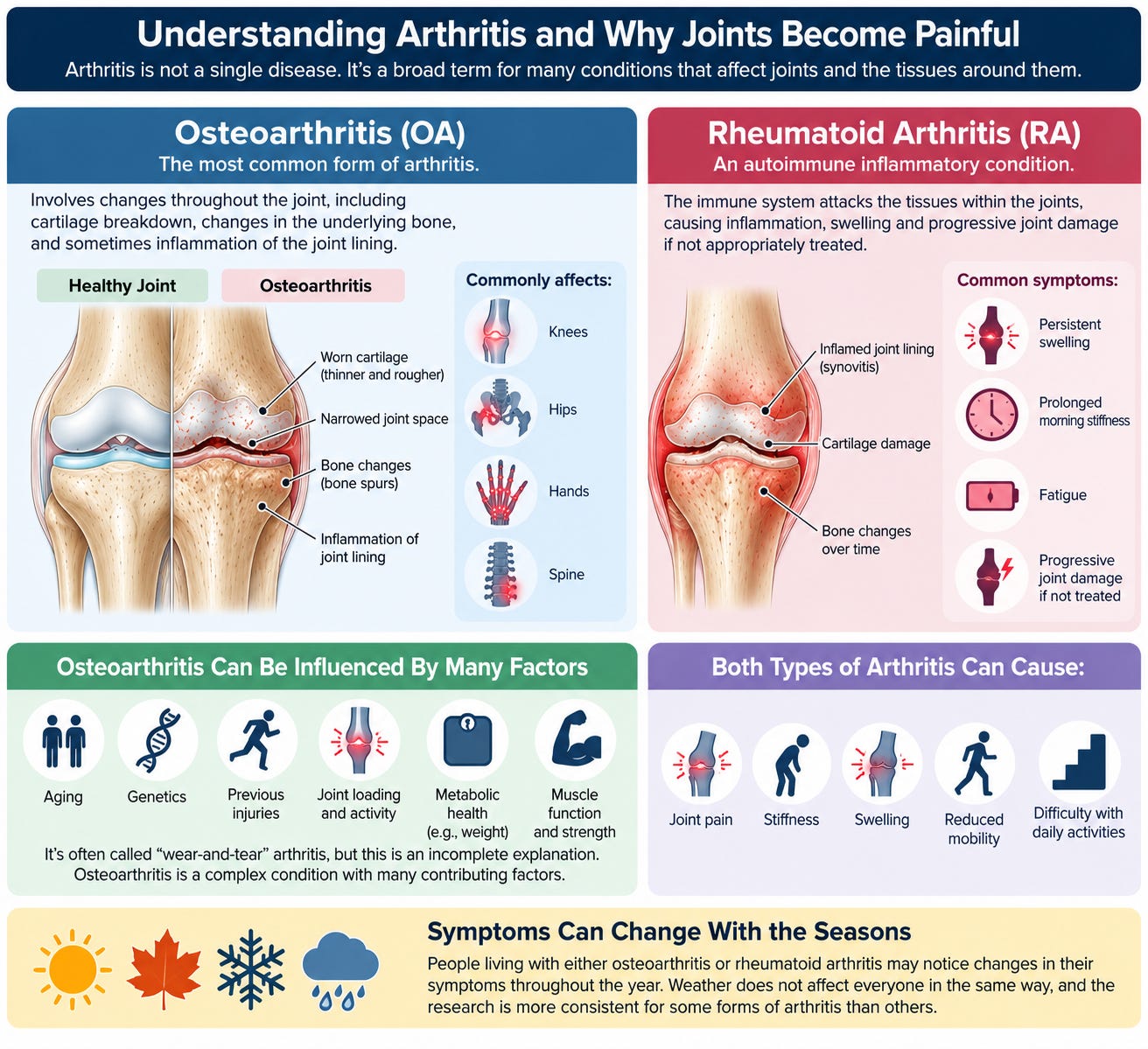
Osteoarthritis involves changes throughout the joint, including deterioration of cartilage, changes in the underlying bone, and sometimes inflammation of the joint lining. These changes can contribute to pain, stiffness, swelling, and reduced mobility.
Although osteoarthritis is often described as wear-and-tear arthritis, this is an incomplete explanation. The condition is influenced by several factors, including genetics, aging, previous injuries, joint loading, muscle function, and metabolic health.
Rheumatoid arthritis is different. It is an autoimmune inflammatory condition in which the immune system attacks tissues within the joints. It can cause persistent swelling, prolonged morning stiffness, fatigue, and progressive joint damage if not appropriately treated.
People living with either condition may notice changes in their symptoms throughout the year. However, weather does not affect everyone in the same way, and the research is more consistent for some forms of arthritis than others.
So, Does Cold Weather Really Make Arthritis Hurt More?
For some people, the answer appears to be yes.
A systematic review and meta-analysis published in Annals of Medicine examined 14 studies investigating the relationship between weather conditions and osteoarthritis pain.
Researchers found that lower temperatures were associated with greater osteoarthritis pain. Changes in barometric pressure also showed a relationship with symptoms, while humidity had a weaker association (Wang et al., 2023).
Other research has identified similar patterns, although the findings have not always been consistent.
In an article published by Harvard Health Publishing, rheumatologist Dr. Robert Shmerling reviewed studies examining weather-related arthritis symptoms. He noted that although several studies found associations between weather and joint discomfort, researchers were still unable to identify one clear explanation for why symptoms change (Shmerling, 2020).
The Canadian Chiropractic Association also addressed this topic in December 2025, explaining that people living with osteoarthritis or previous joint injuries may experience increased discomfort during cold or changing weather conditions (Canadian Chiropractic Association, 2025).
However, a 2024 review of studies examining pain flare-ups found no consistent relationship between common weather conditions and new episodes of knee pain, lower back pain, or rheumatoid arthritis pain (Ferreira et al., 2024).
Taken together, these findings suggest that weather may influence how uncomfortable some joints feel, but its effects are variable and generally modest.
The important message is that weather-related pain is possible, but it is not inevitable, and it does not mean your joints are necessarily deteriorating.
Why Do Joints Feel Stiffer When It Is Cold?
Although researchers have not identified one definitive explanation, several factors may help explain why people experience increased stiffness and discomfort during colder months.
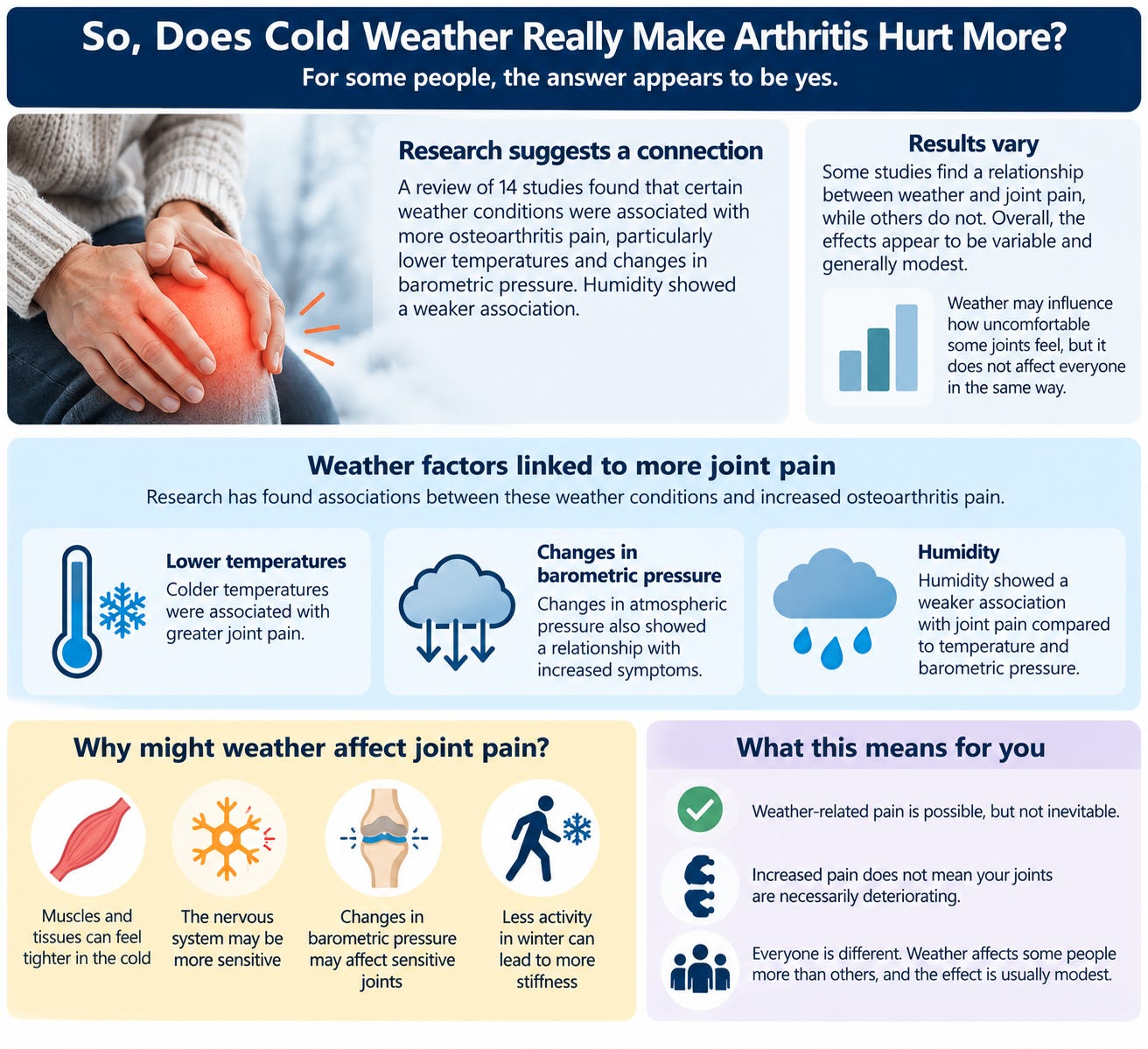
Cold Temperatures May Increase Muscle and Soft Tissue Stiffness
When temperatures fall, the muscles and connective tissues surrounding joints may feel tighter or less comfortable.
For someone who already has osteoarthritis, limited mobility, or a previous injury, this added sensation of stiffness can make everyday movement more difficult.
Consider someone with knee osteoarthritis who wakes up on a cold morning. Their first few steps may feel uncomfortable, and bending the knee to walk downstairs might be more difficult than usual.
After moving around for several minutes, the knee may begin to feel better.
This improvement is common because gentle movement increases muscle activity and helps joints move through their available range of motion.
A small 2024 study involving older adults with knee osteoarthritis found that pain, stiffness, and joint movement varied with season and time of day (Iconaru et al., 2024).
These findings help illustrate why symptoms can fluctuate, even when the underlying joint condition has not meaningfully changed.
Changes in Barometric Pressure May Influence Sensitive Joints
Barometric pressure refers to the pressure exerted by the atmosphere. It changes as weather systems move through an area.
Some people report increased joint discomfort just before rain or when a storm approaches.
One proposed explanation is that changes in atmospheric pressure may affect mechanical conditions in tissues surrounding a joint, potentially increasing discomfort in structures that are already sensitive.
However, this theory has not been definitively proven.
In fact, studies have produced conflicting findings about whether rising or falling barometric pressure is more closely associated with arthritis pain.
What researchers do know is that some people experience meaningful symptom changes during weather transitions, even though the precise biological mechanism remains uncertain.
Your Nervous System May Become More Sensitive
Pain is not determined solely by the amount of cartilage loss or structural change within a joint.
The nervous system plays a major role in how pain is experienced.
People living with chronic arthritis may have increased sensitivity to movement, pressure, temperature, and other sensory signals.
This sensitivity can be influenced by sleep, stress, previous injuries, inflammation, physical activity, and general health.
For someone whose joints are already uncomfortable, cold weather or sudden changes in environmental conditions may make symptoms more noticeable.
This also helps explain why two people with similar arthritis findings on X-rays may experience very different levels of pain.
One person may have substantial osteoarthritis changes with relatively little discomfort, while another may experience frequent pain despite less pronounced structural findings.
Does Cold Weather Actually Damage Your Joints?
This is one of the most important questions patients ask.
The reassuring answer is that feeling more pain during cold weather does not necessarily mean your arthritis is progressing.
Osteoarthritis develops through complex structural and biological changes over time. These changes are influenced by genetics, previous injury, joint loading, age, muscle strength, and metabolic factors.
There is no convincing evidence that ordinary exposure to colder seasonal weather directly causes cartilage to deteriorate more rapidly.
Someone may experience greater knee stiffness in December than in July without having any meaningful change in the condition of their cartilage or bones.
Similarly, if a warm shower or heating pad makes the knee feel better, that does not mean the underlying osteoarthritis has disappeared.
Pain and structural joint changes are connected, but they are not the same thing.
Understanding this distinction can help reduce unnecessary fear about movement.
A temporary increase in discomfort should be taken seriously, but it should not automatically be interpreted as additional joint damage.
Why Less Movement During Winter Can Make Joint Pain Worse
One of the most overlooked contributors to winter joint discomfort is reduced physical activity.
During the warmer months, people tend to spend more time walking outdoors, cycling, gardening, golfing, swimming, or participating in recreational activities.
As autumn progresses into winter, those routines often change.
Cold temperatures, icy sidewalks, shorter daylight hours, and poor weather can make outdoor activities more difficult.
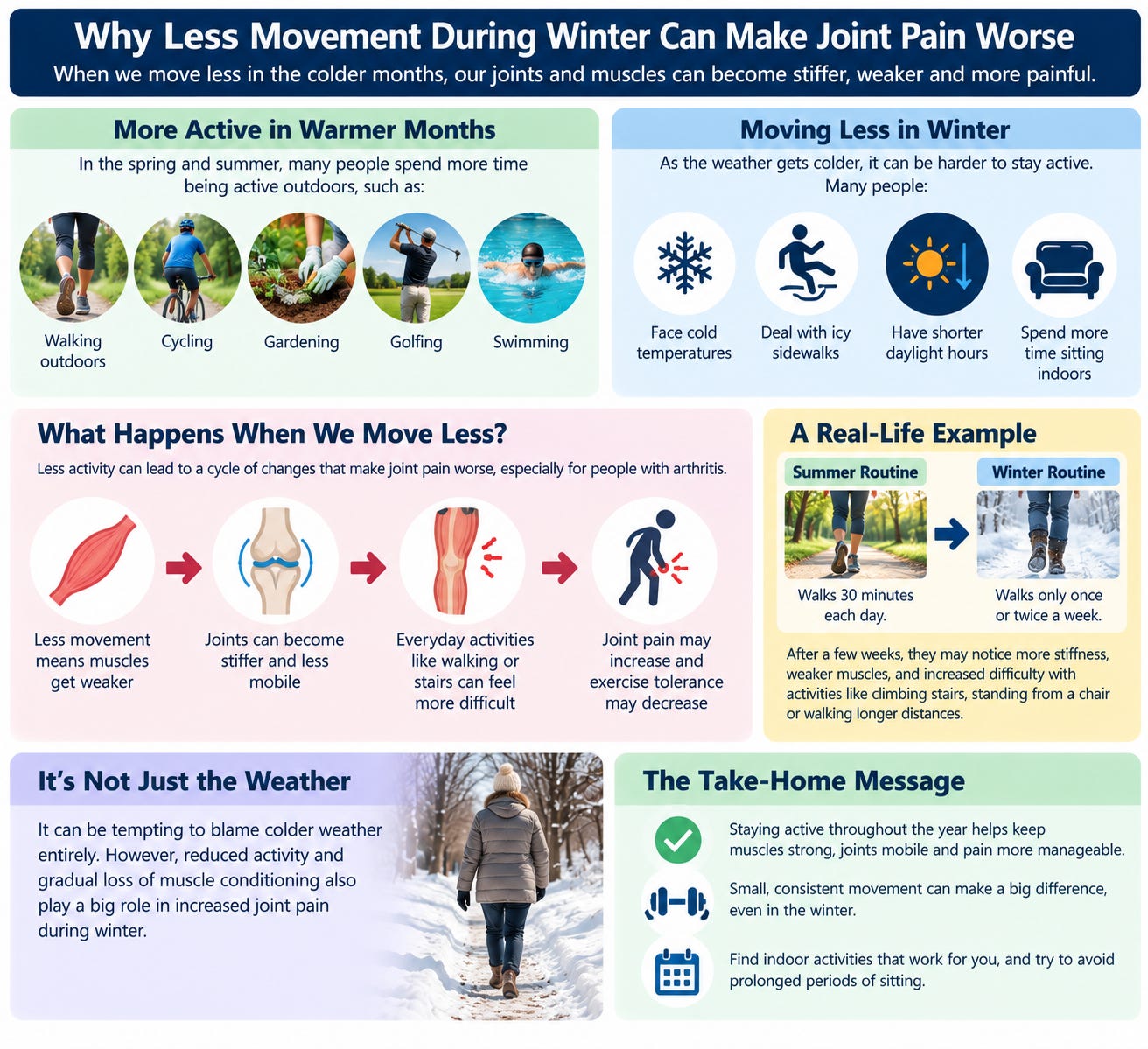
People may spend more time sitting indoors and less time using their muscles and joints.
For someone with arthritis, this reduction in movement can contribute to increased stiffness, reduced muscle strength, and lower exercise tolerance.
Imagine a person with knee osteoarthritis who walks 30 minutes each day during the summer. When winter arrives, they begin walking only once or twice a week.
After several weeks, they may notice increased difficulty climbing stairs, standing from a chair, or walking longer distances.
It may be tempting to blame the colder weather entirely. However, part of the change may be related to reduced activity and the gradual loss of muscle conditioning.
This is why maintaining appropriate movement throughout the year is so important.
Why Exercise Is One of the Best Things You Can Do for Arthritis
When joints hurt, resting often feels like the natural solution.
Although short periods of reduced activity may be appropriate during a painful flare-up, prolonged inactivity can contribute to weakness, stiffness, and reduced physical function.
Regular exercise is one of the most consistently recommended treatments for osteoarthritis.
The National Institute for Health and Care Excellence recommends therapeutic exercise, including local muscle strengthening and aerobic activity, as a core component of osteoarthritis management (NICE, 2022).
Exercise helps maintain the strength of muscles surrounding joints, improve mobility, support balance, and make everyday tasks easier.
For someone with knee arthritis, stronger quadriceps and hip muscles can help improve the ability to walk, climb stairs, and get out of a chair.
For someone with hip arthritis, improving hip strength and movement control may make walking and other weight-bearing activities more manageable.
Exercise can also improve cardiovascular health, sleep, confidence, and general well-being.
Importantly, exercise does not need to be intense to be helpful.
Walking indoors, stationary cycling, swimming, resistance-band exercises, and gentle strengthening can all be useful options depending on the individual’s condition.
The goal is to find activities that are tolerable, appropriate, and sustainable.
Can Heat Therapy Help With Arthritis and Joint Stiffness?
Many people living with arthritis find that warmth provides temporary relief.
A warm shower in the morning may make stiff joints feel easier to move. A heating pad applied to the lower back or knees may help relax surrounding muscles. A warm compress before exercise may make the first few movements more comfortable.
Heat therapy can be a useful part of managing arthritis-related stiffness, particularly when symptoms become more noticeable during colder weather.
However, heat should be used appropriately.
Heating pads should not be excessively hot or applied directly against unprotected skin for prolonged periods. People with reduced sensation, circulation problems, or certain medical conditions should be particularly cautious.
Cold therapy may be more comfortable for some episodes of swelling or acute irritation.
A joint that becomes suddenly very hot, red, swollen, or severely painful should be medically assessed rather than simply treated with heat or ice.
For many people with chronic joint stiffness, a combination of comfortable warmth followed by gentle movement can be a practical way to begin the day.
How to Keep Your Joints Comfortable During Autumn and Winter
Managing arthritis during colder weather often involves small, consistent changes rather than major lifestyle adjustments.
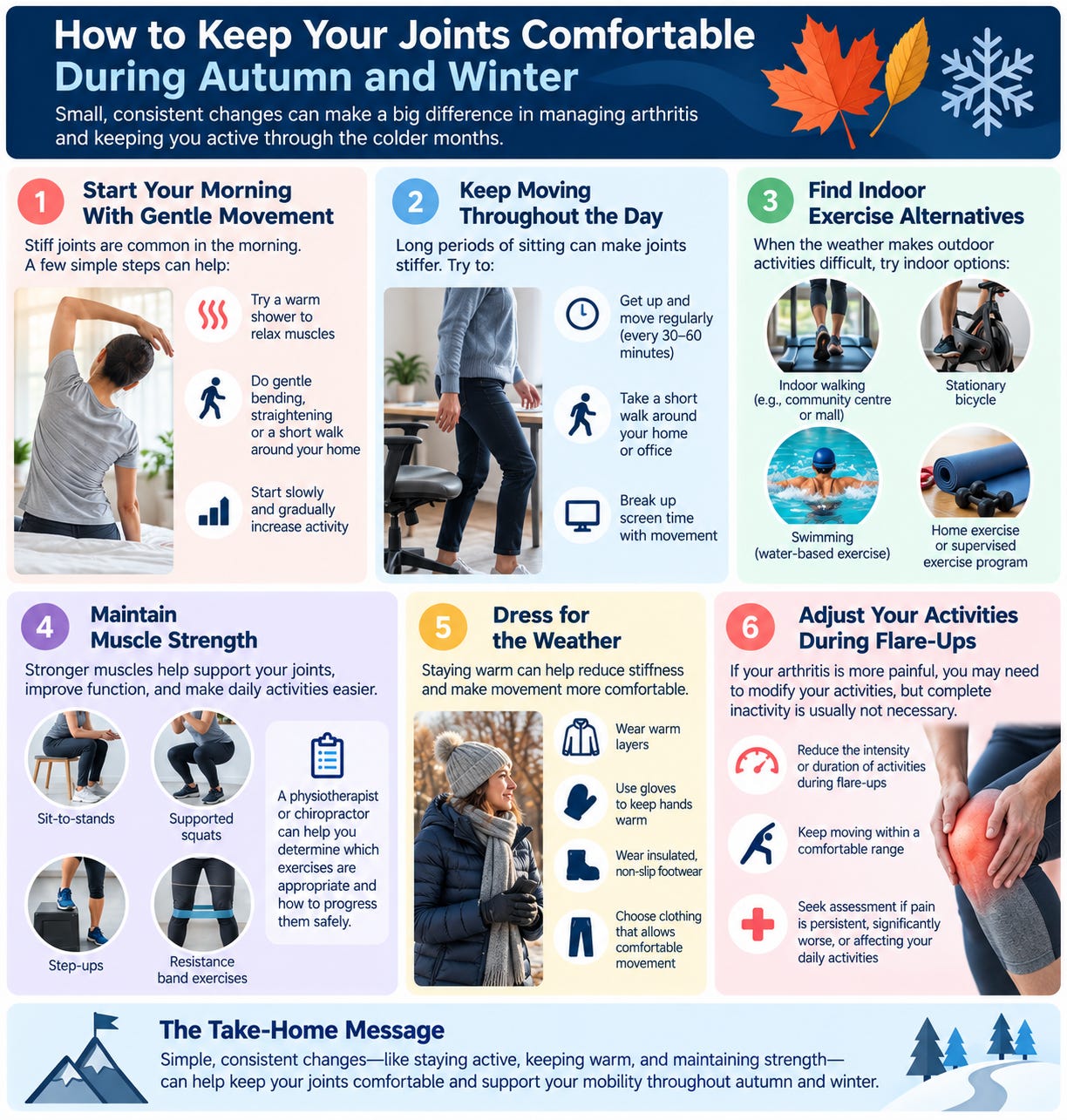
Start Your Morning With Gentle Movement
If your knees, hips, hands, or back feel particularly stiff when you wake up, try beginning the day with slow, comfortable movements.
A warm shower followed by gentle bending, straightening, or walking around your home may help reduce the sensation of stiffness.
Avoid forcing joints into painful positions. Start slowly and gradually increase your activity as your body becomes more comfortable.
Keep Moving Throughout the Day
Long periods of sitting can make already-sensitive joints feel stiffer.
If you work at a desk, watch television for long periods, or spend much of the day sitting, make a habit of getting up and moving regularly.
Even a short walk around the house or office can help interrupt prolonged inactivity.
The important factor is consistency.
Find Indoor Exercise Alternatives
When outdoor conditions become unsafe or uncomfortable, consider indoor options.
Walking at a community centre, exercising at home, using a stationary bicycle, or attending a supervised exercise program can help maintain activity without requiring long periods outdoors.
For people with hip or knee osteoarthritis, water-based exercise may also be an option.
Maintain Muscle Strength
Strengthening exercises are particularly important for individuals living with arthritis.
Depending on your condition, these may include sit-to-stands, supported squats, step-ups, resistance-band exercises, or other movements designed to improve muscle strength and joint function.
A physiotherapist or chiropractor can help determine which exercises are appropriate and how to progress them safely.
Dress for the Weather
Keeping comfortable outdoors may help reduce the sensation of cold-related stiffness.
Warm layers, gloves, insulated footwear, and clothing that allows unrestricted movement can make winter activities more manageable.
Proper footwear is especially important during Ontario winters, when ice and snow increase the risk of falls.
Adjust Your Activities During Painful Flare-Ups
If your arthritis becomes more painful, you may need to temporarily reduce the intensity or duration of certain activities.
However, complete inactivity is not always necessary.
Gentle movement within a comfortable range may help maintain mobility while symptoms settle.
Persistent or significant worsening of symptoms should be assessed by a healthcare professional.
Why Some People Feel Weather Changes More Than Others
Not everyone with arthritis experiences seasonal fluctuations in pain.
Some people notice a clear pattern between damp weather and increased stiffness. Others experience symptoms that remain relatively unchanged throughout the year.
Several factors may contribute to these differences, including the location and severity of arthritis, previous injuries, muscle strength, physical activity, sleep quality, and individual pain sensitivity.
For example, a person with longstanding knee osteoarthritis and reduced quadriceps strength may respond differently to a cold, inactive day than someone who exercises regularly and has relatively good joint function.
Previous injuries may also influence how joints feel.
Someone who sustained a significant ankle injury years ago may continue to experience intermittent stiffness or discomfort during certain activities or environmental conditions.
These individual differences are one reason arthritis treatment should not follow a one-size-fits-all approach.
Should You Track Your Joint Pain and the Weather?
If you consistently notice increased symptoms during certain weather conditions, keeping a simple diary may help identify patterns.
Over several weeks, you can record when your joints feel painful or stiff, how much physical activity you performed, how well you slept, and what the weather was like.
You may discover that symptoms are more closely associated with prolonged sitting, poor sleep, or a reduction in exercise than with temperature alone.
Alternatively, you may notice a consistent pattern of increased discomfort during cold or damp conditions.
Understanding these patterns can help you make practical adjustments and discuss your symptoms more effectively with your healthcare provider.
The goal is not to become overly focused on the weather. It is to better understand which factors influence your comfort and what you can do to manage them.
When Joint Pain Should Be Assessed
Although arthritis symptoms commonly fluctuate, not every episode of increased pain should be blamed on colder weather.
If you develop persistent swelling, substantial changes in mobility, worsening pain, or difficulty performing normal activities, a proper assessment is important.
A joint that suddenly becomes extremely painful, hot, red, or swollen requires prompt medical evaluation, particularly if accompanied by fever.
Prolonged morning stiffness, swelling involving several joints, or unexplained fatigue may also suggest an inflammatory condition requiring medical attention.
An accurate diagnosis helps determine whether symptoms are related to osteoarthritis, inflammatory arthritis, injury, or another musculoskeletal condition.
How The Muscle and Joint Clinic Can Help
At The Muscle and Joint Clinic, we understand that joint pain and stiffness can interfere with everyday life, particularly during the colder months.
Whether you have difficulty walking because of knee arthritis, experience hip stiffness after sitting, or notice recurring discomfort around an old injury, our goal is to help identify the factors contributing to your symptoms and develop an appropriate management plan.
Rather than assuming that the weather is responsible for every increase in pain, we assess how your joints move, how your muscles function, and which activities are becoming difficult.
Our multidisciplinary team offers chiropractic care, physiotherapy, and massage therapy, allowing treatment to be tailored to the individual’s condition and goals.
Chiropractic Care for Joint Stiffness and Mobility
Chiropractors assess musculoskeletal conditions involving the spine and peripheral joints.
For appropriate patients, chiropractic care may include gentle joint mobilization, selected manual therapy techniques, mobility exercises, soft tissue treatment, and advice on modifying activities.
The Canadian Chiropractic Association identifies maintaining joint mobility, targeted exercise, strengthening, and activity education as strategies chiropractors may use to support people experiencing cold-weather joint discomfort (Canadian Chiropractic Association, 2025).
Chiropractic care does not reverse cartilage loss or cure arthritis. However, it may help address associated musculoskeletal restrictions and discomfort as part of a broader treatment plan.
Physiotherapy for Strength, Balance, and Function
Physiotherapy plays an important role in helping people with arthritis maintain strength and independence.
A physiotherapist can assess joint mobility, muscle weakness, balance, walking patterns, and functional limitations before developing an individualized rehabilitation program.
Treatment may include targeted strengthening, mobility exercises, gait training, balance exercises, and gradual progression of physical activity.
For appropriate patients with knee or hip osteoarthritis, The Muscle and Joint Clinic also offers the GLA® program, an education and exercise-based approach focused on improving function and helping people manage their condition.
Exercise-based management is particularly important because stronger muscles and improved physical capacity can make daily activities more manageable throughout the year.
Massage Therapy for Associated Muscle Discomfort
Arthritis-related pain is not always isolated to the joint itself.
People with knee osteoarthritis may experience muscle tightness in the thighs or calves. Those with hip arthritis may develop discomfort in the gluteal muscles or lower back.
Massage therapy may help reduce associated muscle tension and provide temporary symptom relief, making movement more comfortable for some patients.
Although massage does not reverse arthritic joint changes, it can be considered as part of a broader approach that includes exercise and self-management strategies.
An Individualized Approach to Arthritis Care
Every patient experiences arthritis differently.
Some people primarily need help improving joint mobility. Others benefit most from strengthening, balance exercises, activity modification, or education about managing flare-ups.
Our approach focuses on understanding your symptoms, identifying movement limitations, and helping you stay active in ways that are safe and appropriate for your condition.
Where symptoms suggest inflammatory arthritis or another condition requiring medical management, referral or coordination with the appropriate healthcare provider is important.
The Take-Home Message
Cold weather may make arthritis and joint pain feel worse for some people, but it does not affect everyone in the same way.
Research suggests that lower temperatures and changes in atmospheric pressure may be associated with increased osteoarthritis pain. However, the effects are generally modest, and the exact reasons remain uncertain (Shmerling, 2020; Wang et al., 2023).
What is more important is understanding that greater pain during colder weather does not necessarily mean greater joint damage.
Muscle stiffness, reduced physical activity, pain sensitivity, previous injuries, and changes in daily routines may all contribute to how your joints feel.
Fortunately, there are practical ways to manage symptoms. Regular movement, appropriate strengthening exercises, heat therapy, staying warm, and maintaining activity throughout the winter can all help support joint comfort and function.
If your arthritis or joint pain is limiting your mobility or interfering with everyday activities, The Muscle and Joint Clinic can help you better understand your symptoms and explore appropriate conservative treatment options.
References
Arthritis Society Canada. (n.d.). Winter tips for seniors with arthritis. Arthritis Society Canada.
Canadian Chiropractic Association. (2025, December 2). Why do my joints hurt in cold weather?
https://chiropractic.ca/
Ferreira, M. L., Hunter, D. J., Fu, A., Raihana, S., Urquhart, D., & Ferreira, P. H. (2024). Come rain or shine: Is weather a risk factor for musculoskeletal pain? A systematic review with meta-analysis of case-crossover studies. Seminars in Arthritis and Rheumatism, 65, Article 152392. https://doi.org/10.1016/j.semarthrit.2024.152392
Iconaru, E. I., Tarcau, E., & Ciucurel, C. (2024). The influence of weather conditions on the diurnal variation in range of motion in older adults with knee osteoarthritis. Journal of Clinical Medicine, 13(1), Article 254. https://doi.org/10.3390/jcm13010254
National Institute for Health and Care Excellence. (2022). Osteoarthritis in over 16s: Diagnosis and management (NICE guideline NG226). https://www.nice.org.uk/guidance/ng226
Shmerling, R. H. (2020, June 22). Can the weather really worsen arthritis pain? Harvard Health Publishing. https://www.health.harvard.edu/blog/can-the-weather-really-worsen-arthritis-pain-201511208661
Wang, L., Xu, Q., Chen, Y., Zhu, Z., & Cao, Y. (2023). Associations between weather conditions and osteoarthritis pain: A systematic review and meta-analysis. Annals of Medicine, 55(1), Article 2196439. https://doi.org/10.1080/07853890.2023.2196439
This article is intended for general patient education and does not replace individualized medical advice, diagnosis, or treatment.