


Knee pain can make ordinary activities such as walking, climbing stairs, getting out of a chair or exercising, feel uncertain. Many people respond by becoming less active because they worry that movement will cause further damage. Others assume that knee pain is simply an unavoidable sign that the joint is “wearing out.”
The reality is more encouraging. Your knees are not passive mechanical parts with a fixed expiry date. The bones, cartilage, muscles, tendons and ligaments around the knee are living tissues that respond to how they are used. Appropriate movement can improve strength, confidence, balance and physical capacity. Too much activity too quickly can aggravate symptoms, but too little activity can also contribute to weakness, stiffness and reduced tolerance.
At Muscle and Joint Clinic, our goal is not simply to tell patients to rest or push through their discomfort. We help identify what may be contributing to the problem, determine which activities are currently manageable and build a gradual plan for returning to the things that matter.
The following principles form a practical foundation for maintaining healthier knees.
Knee pain does not always mean serious damage
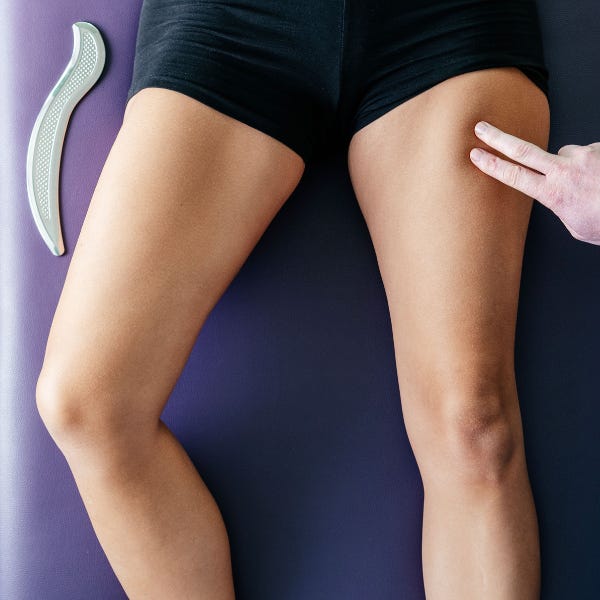
Pain is important, but it is not a precise measurement of tissue damage. Two people with similar findings on an X-ray can experience very different symptoms. One may have considerable pain and functional limitation, while the other remains active with little discomfort.
Knee pain can be influenced by several factors, including muscle strength, joint mobility, previous injury, activity level, sleep, stress, body weight, metabolic health and the amount of load recently placed on the joint. A sudden increase in walking, running, stairs, squatting or recreational activity may exceed the knee’s present capacity even when no major injury has occurred.
This does not mean pain should be ignored. Persistent pain, swelling, instability or loss of function deserves an appropriate assessment. However, it does mean that the presence of pain does not automatically require complete rest or surgery.
Many common knee complaints respond well to a combination of education, activity modification, progressive exercise and appropriate hands-on care.
1. Build strength around the knee
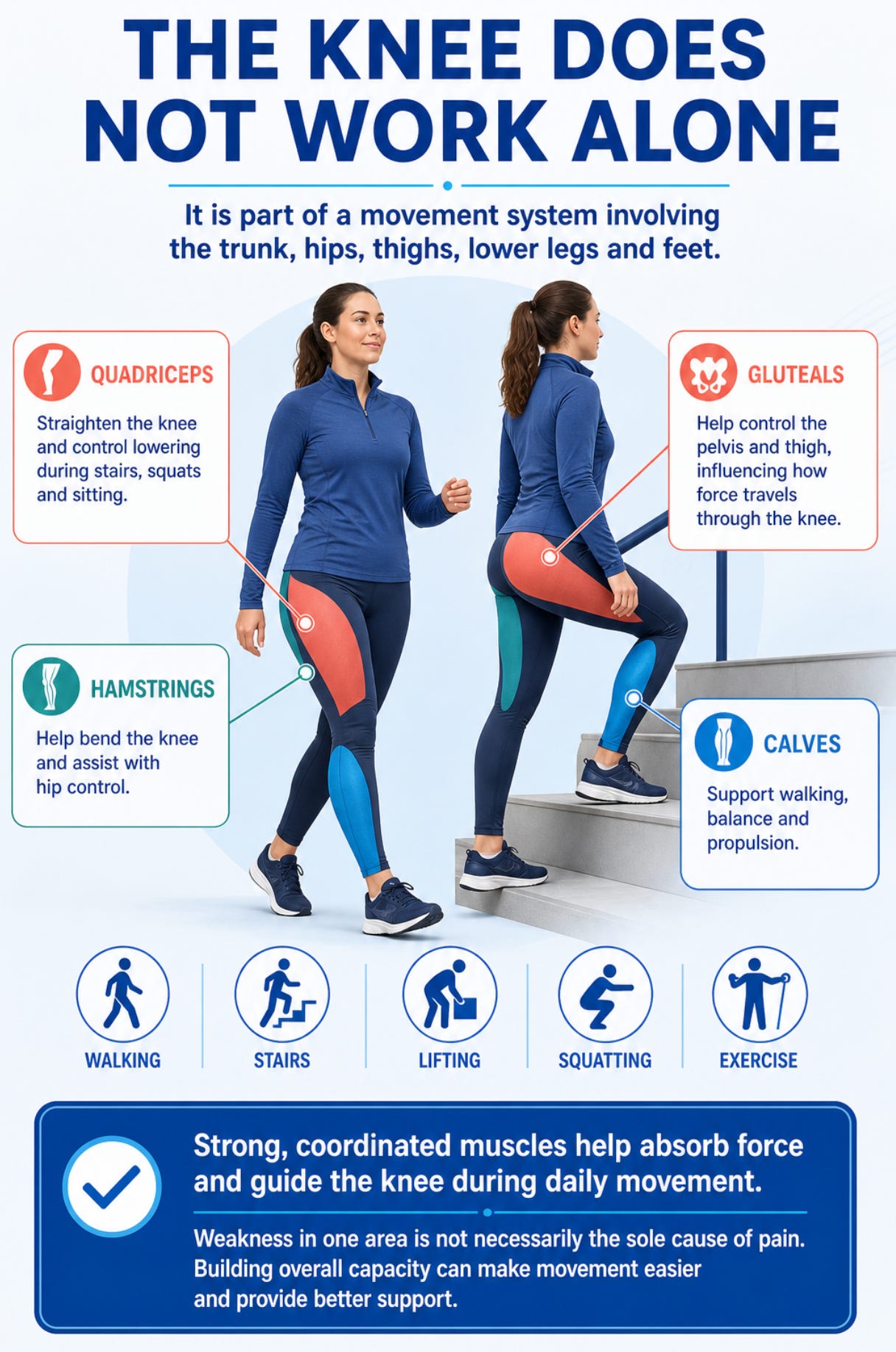
The knee does not work alone. It functions as part of a larger movement system involving the hips, thighs, lower legs, feet and trunk. When the muscles surrounding the knee are strong and coordinated, they help absorb force and control how the joint moves during walking, stairs, lifting, squatting and exercise.
The quadriceps at the front of the thigh help straighten the knee and control the body as it lowers during stairs, squats and sitting. The hamstrings at the back of the thigh assist with bending the knee and controlling the hip. The calf muscles contribute to walking, balance and propulsion. The gluteal muscles help control the position of the pelvis and thigh, which can influence how forces travel through the knee.
Weakness in one area does not necessarily mean that it is the sole cause of pain. However, improving the capacity of these muscle groups often makes daily movement easier and gives the knee more support.
Begin at the appropriate level
Effective strengthening does not require starting with deep squats, heavy weights or difficult lunges. The correct starting point depends on the person’s symptoms, confidence, mobility and current strength.
Early exercises might include:
Repeatedly standing from a higher chair
A shallow squat while holding a stable support
A short wall sit
A low step-up
A bridge for the hip and gluteal muscles
A controlled calf raise
Gentle hamstring strengthening
Isometric exercises in which the muscle contracts without substantial joint movement

An exercise should feel challenging enough to stimulate improvement without causing a significant flare. As the body adapts, resistance, repetitions, range of motion or exercise complexity can be increased gradually.
For example, a person might begin with a partial squat using a countertop for support. Once that becomes comfortable, the squat can become slightly deeper. Later, resistance can be added, followed by step exercises or carefully selected lunges.
The progression should be based on how the knee responds, not on an arbitrary schedule.
Strength is protective, but consistency matters
One intense workout will not meaningfully change knee capacity. Strength develops through repeated exposure over time. Two or three appropriately designed strengthening sessions each week may be more useful than occasional strenuous activity followed by long periods of inactivity.
Recovery is part of the process. Muscles need time to adapt, particularly when someone is returning to exercise after a long break.
2. Keep moving without overwhelming the joint
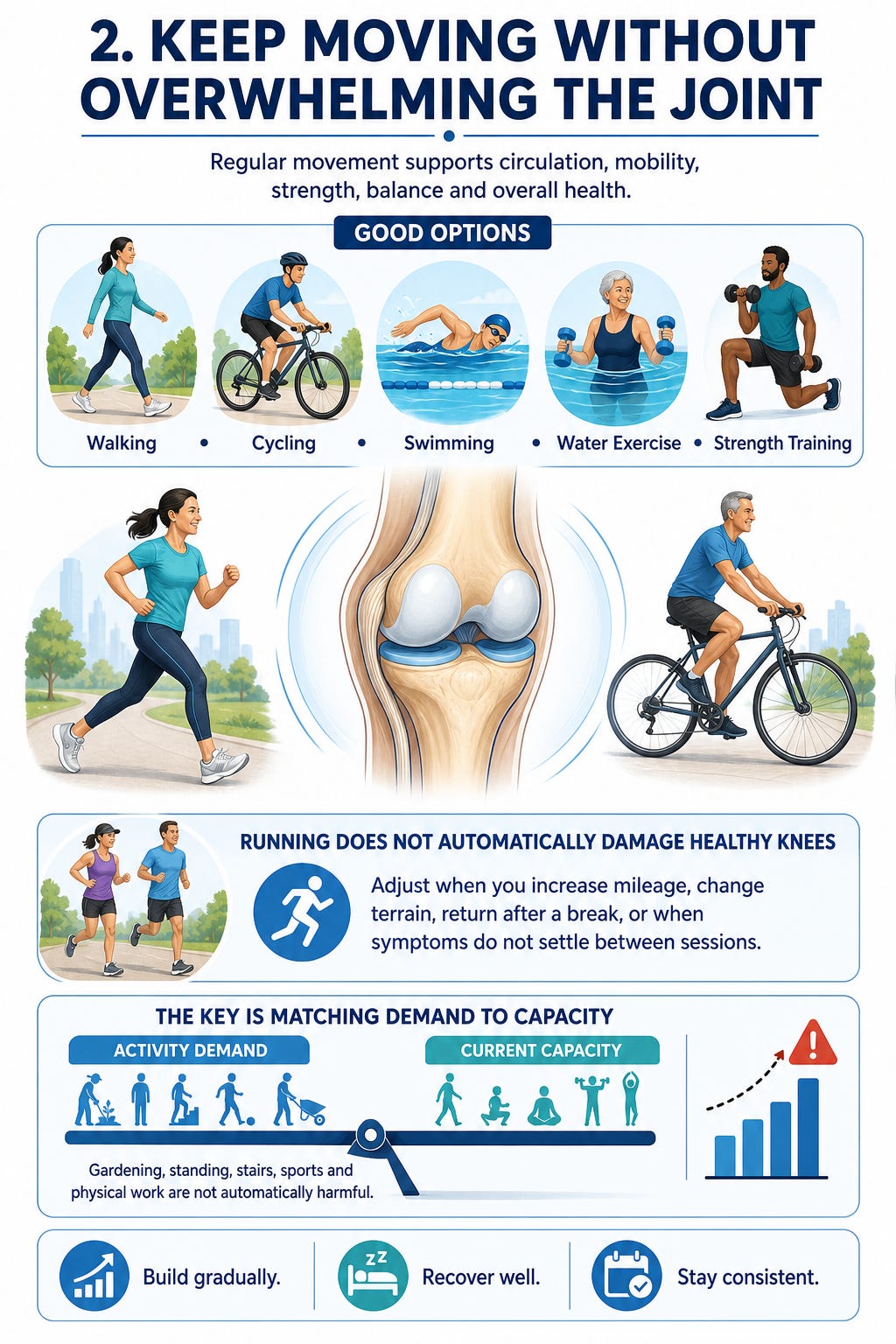
Regular movement supports circulation, mobility, muscle function, balance and general health. For many people, the greater long-term risk is not reasonable movement but gradually becoming more sedentary because of fear.
Walking, cycling, swimming, water exercise and strength training can all be helpful. The best activity is one that is appropriate for your present condition and sustainable enough to perform consistently.
Running does not automatically destroy healthy knees. However, running may need to be adjusted when a person has recently increased mileage, changed terrain, returned after a long break or developed symptoms that do not settle between sessions.
The same principle applies to gardening, prolonged standing, repetitive stairs, recreational sports and physically demanding work. The activity itself may not be inherently harmful; the issue may be a temporary mismatch between the amount of demand and the body’s current capacity.
Think about total load
Your knee responds to the combined amount of stress placed on it—not merely one exercise. A person may tolerate a workout well but become symptomatic when that workout is combined with a long workday, several flights of stairs, poor sleep and another demanding activity the following day.
Load can be adjusted by changing:
The number of exercise sessions
The length of each session
The intensity or resistance
The walking or running distance
The speed
The surface
The depth of a squat or lunge
The number of hills or stairs
The amount of recovery between sessions
Changing one factor at a time makes it easier to determine what the knee can currently tolerate.
Use lower-impact exercise strategically
Lower-impact does not mean ineffective. Cycling, swimming, pool walking and elliptical exercise can challenge the cardiovascular system while reducing some of the impact associated with running and jumping.
These activities may help a person remain fit while gradually rebuilding enough strength and tolerance for higher-impact activity. They can also be used between more demanding sessions to support recovery.
The goal is not necessarily to avoid impact forever. It is to select the appropriate level of impact for the current stage of recovery.
3. Understand the difference between acceptable discomfort and a warning sign
Patients often ask whether an exercise should be completely pain-free. The answer depends on the condition, the type of pain and what happens afterward.
A mild, temporary increase in familiar discomfort does not always mean that damage is occurring. In some rehabilitation programs, a small and controlled amount of discomfort may be acceptable when it settles promptly and does not cause a meaningful loss of function.
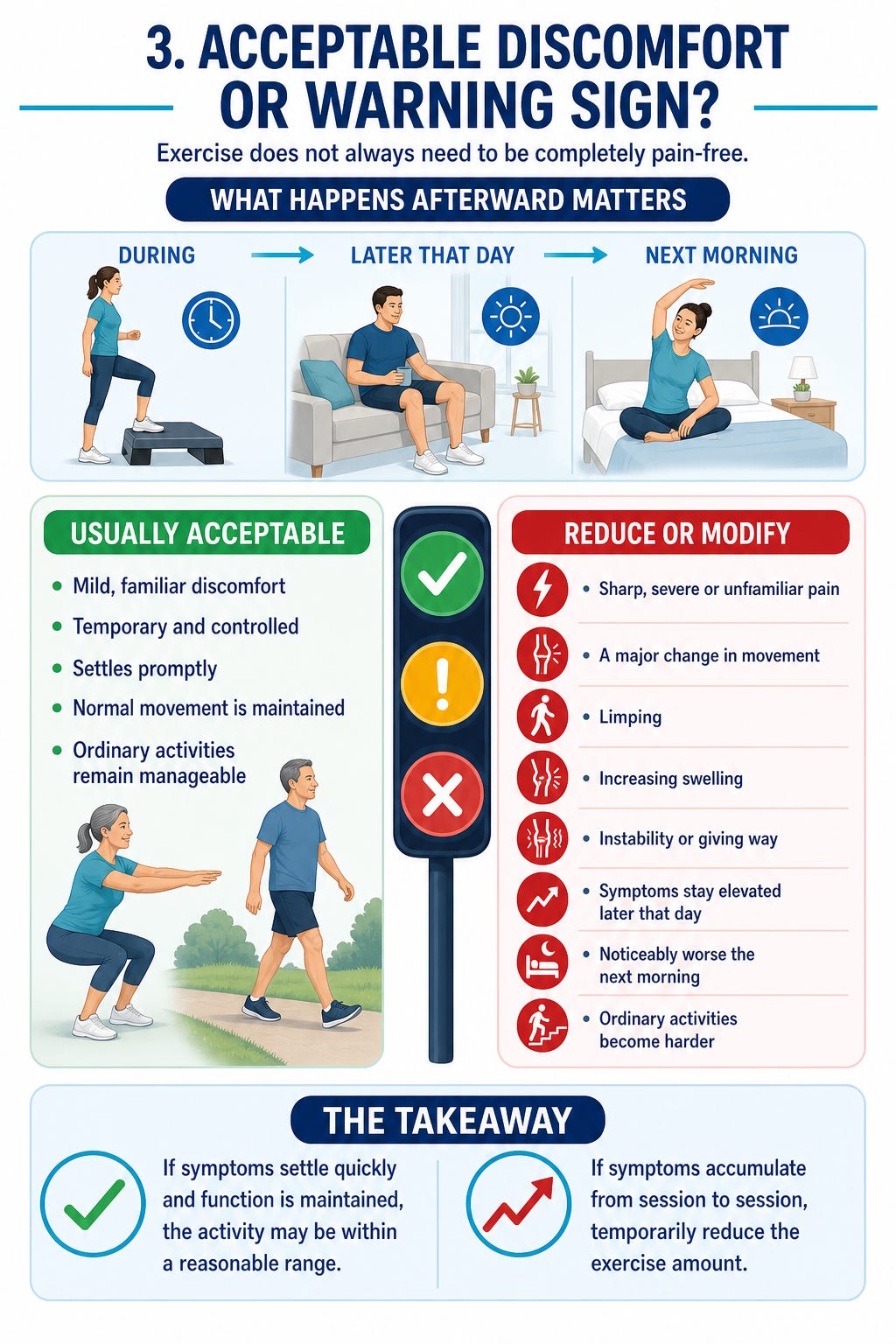
The response during the following hours and the next day is often more informative than the sensation during one repetition.
Consider reducing or modifying an activity when:
Pain becomes sharp, severe or unfamiliar
Your movement pattern changes substantially
You begin limping
Swelling increases
The knee feels unstable or repeatedly gives way
Symptoms remain significantly elevated later that day
The knee is noticeably worse the following morning
Your ability to perform ordinary activities declines
If symptoms settle quickly and normal function is maintained, the activity may have been within a reasonable range. If symptoms accumulate from one session to the next, the amount of exercise may need to be reduced temporarily.
Avoid the all-or-nothing cycle
A common pattern is to stop all activity during pain, feel slightly better, attempt too much at once and then experience another flare. This can lead to frustration and loss of confidence.
A more useful strategy is often to maintain a tolerable baseline of activity. Instead of cancelling a walk completely, it might be shortened. Instead of performing deep squats, a shallower version may be used. Instead of running, cycling or swimming might be substituted temporarily.
Modification allows the body to remain active while symptoms settle.
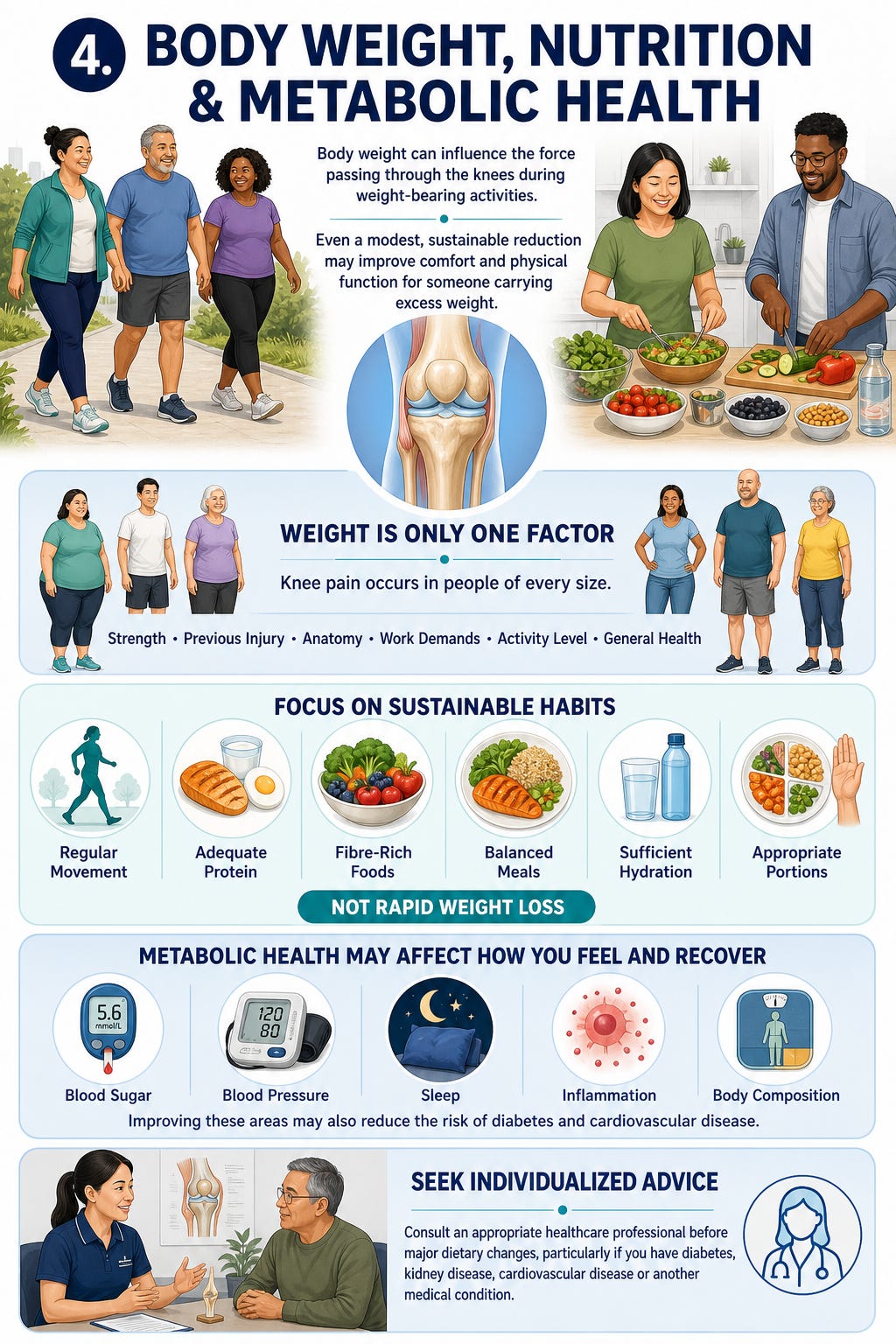
4. Consider body weight, nutrition and metabolic health
Body weight can influence the amount of force passing through the knees during walking, stairs and other weight-bearing activities. For someone carrying excess weight, even a modest and sustainable reduction may make movement more comfortable and improve physical function.
Knee pain occurs in people of every size, and weight is rarely the only factor involved. Strength, previous injury, anatomy, occupational demands, activity level and general health may all contribute.
The goal is not rapid weight loss. It is to support long-term health through realistic habits such as regular movement, adequate protein, fibre-rich foods, balanced meals, sufficient hydration and appropriate portion sizes.
Metabolic health may also matter. Blood sugar regulation, blood pressure, sleep, systemic inflammation and body composition can influence how a person feels and recovers. Improving these areas may support knee health while also reducing the risk of diabetes and cardiovascular disease.
Anyone considering major dietary changes, particularly someone with diabetes, kidney disease, cardiovascular disease or another medical condition, should seek individualized advice from an appropriate healthcare professional.
5. Pay attention to the kneecap
Pain around or behind the kneecap is common. It may be especially noticeable during stairs, squatting, prolonged sitting, kneeling or rising from a chair.
The kneecap sits within the quadriceps tendon and moves along the front of the knee as the joint bends and straightens. Its comfort can be influenced by the amount of load placed on the knee, the strength and coordination of the thigh and hip muscles, mobility, training habits and the total volume of repetitive activity.
Kneecap pain does not automatically mean that surgery is required. Many cases can be managed conservatively with an individualized exercise program, activity modification and gradual improvement in strength and movement tolerance.
Temporary changes might include reducing deep knee bending, limiting repeated stairs or avoiding sudden increases in running hills. These modifications should generally be paired with a plan for rebuilding capacity, not simply avoiding the activity indefinitely.
6. Do not overlook the hips, ankles and feet
The location of pain is not always the only area that deserves attention. Restrictions or weakness elsewhere in the movement chain can change how the knee is loaded.
For example, reduced ankle mobility may alter how someone squats or descends stairs. Hip weakness may affect control of the thigh during single-leg activities. Foot discomfort may cause a person to shift weight and walk differently.
This does not mean every knee problem originates elsewhere. It means that a comprehensive assessment should look beyond the painful area and consider how the entire lower limb moves.
Footwear may also matter. A worn-out or poorly fitting shoe can affect comfort, particularly when activity levels increase. There is no single perfect shoe for everyone, but footwear should generally feel comfortable, fit properly and suit the activity being performed.
7. Approach supplements realistically
Glucosamine, chondroitin, turmeric, curcumin and other supplements are frequently marketed for joint pain. Research findings are mixed, and these products do not consistently produce major improvements for everyone.
Some people report that a particular supplement helps them. Others notice no difference. A personal improvement may be meaningful, but supplements should not replace progressive exercise, healthy nutrition, sleep, weight management where appropriate or proper assessment of persistent symptoms.
“Natural” does not necessarily mean risk-free. Supplements may interact with prescription medication, affect bleeding, aggravate certain medical conditions or vary in quality between manufacturers.
Speak with a physician or pharmacist before starting a supplement if you:
Take blood thinners or multiple medications
Have diabetes, kidney disease or liver disease
Are pregnant or breastfeeding
Are preparing for surgery
Have a history of medication or supplement reactions
8. Recovery, sleep and stress are part of joint health
Exercise is only one part of adaptation. Sleep and recovery influence pain sensitivity, energy, muscle repair and the ability to tolerate activity.
Poor sleep can make pain feel more intense and reduce motivation to exercise. Persistent stress may also increase muscle tension and affect how the nervous system processes discomfort.
This does not mean knee pain is “in your head.” It means that pain is shaped by the entire health of the person, not only one structure on an imaging report.
A balanced plan may include improving sleep routines, spacing demanding activities, taking short movement breaks during prolonged sitting and using relaxation or breathing strategies when stress is high.
9. Know when knee pain needs assessment
Occasional mild discomfort after unfamiliar activity may settle with temporary modification. An assessment is appropriate when symptoms persist, recur or interfere with daily life.
Consider booking an appointment if you have:
Pain that is not improving
Recurrent swelling
Difficulty with stairs, walking or rising from a chair
Reduced knee movement
A feeling that the knee may give way
Pain that limits work, exercise or sleep
Symptoms following a sports or workplace injury
Uncertainty about which exercises are safe
A previous knee injury that is becoming troublesome again
Seek prompt medical assessment for:
Inability to bear weight following an injury
Significant or rapidly developing swelling
Obvious deformity
A hot, red and very painful joint
Knee pain accompanied by fever or systemic illness
True locking in which the knee cannot move normally
Repeated collapse or marked instability
New calf swelling, warmth or unexplained shortness of breath
Progressive neurological symptoms or substantial weakness
A personalized plan is better than a generic exercise list
Two people with knee pain may need very different approaches. One may benefit from improving quadriceps strength. Another may need better hip control, reduced training volume, improved ankle mobility or a more gradual return to activity.
A useful assessment considers:
How and when the symptoms began
The precise location and behaviour of the pain
Swelling, locking or instability
Previous injuries and treatment
Current activity and recent changes in activity
Strength, mobility and balance
Walking and functional movement
Work and recreational demands
General health, medication and relevant medical history
The patient’s goals and concerns
The purpose is not merely to name the painful structure. It is to understand what the knee currently tolerates and create a realistic path forward.
Healthy knees are supported by strong muscles, regular movement, gradual progression and adequate recovery. Pain should be respected, but fear of movement can also become a barrier to recovery.
You do not need to begin with intense exercise. Start with what you can manage, observe how your knee responds and progress in small steps. If symptoms persist or you are unsure how to begin, an individualized assessment can help remove uncertainty.
At Muscle and Joint Clinic, we help patients understand their symptoms and develop practical treatment and exercise plans based on their current abilities and personal goals.
This information is intended for general education and does not replace individualized medical assessment, diagnosis or treatment. Exercise recommendations should be modified for your health history and current condition.