


When a child starts limping after sports, complains of heel pain after running, or says their feet hurt first thing in the morning, many parents worry about a fracture, torn tendon, or a more serious problem. In many cases, the cause is something much more common: Sever’s disease, also known as calcaneal apophysitis.
Despite the name, Sever’s disease is not really a “disease” in the way most people think of one. It is a repetitive stress injury affecting the growth plate in the heel of a growing child or adolescent (Cleveland Clinic, 2025; Nemours KidsHealth, 2019). It is one of the most common causes of heel pain in active children, especially during growth spurts.
The good news is that it is usually temporary, treatable, and does not cause lasting damage when managed properly (Boston Children’s Hospital, 2026; Nemours KidsHealth, 2019).
What is Sever’s disease?
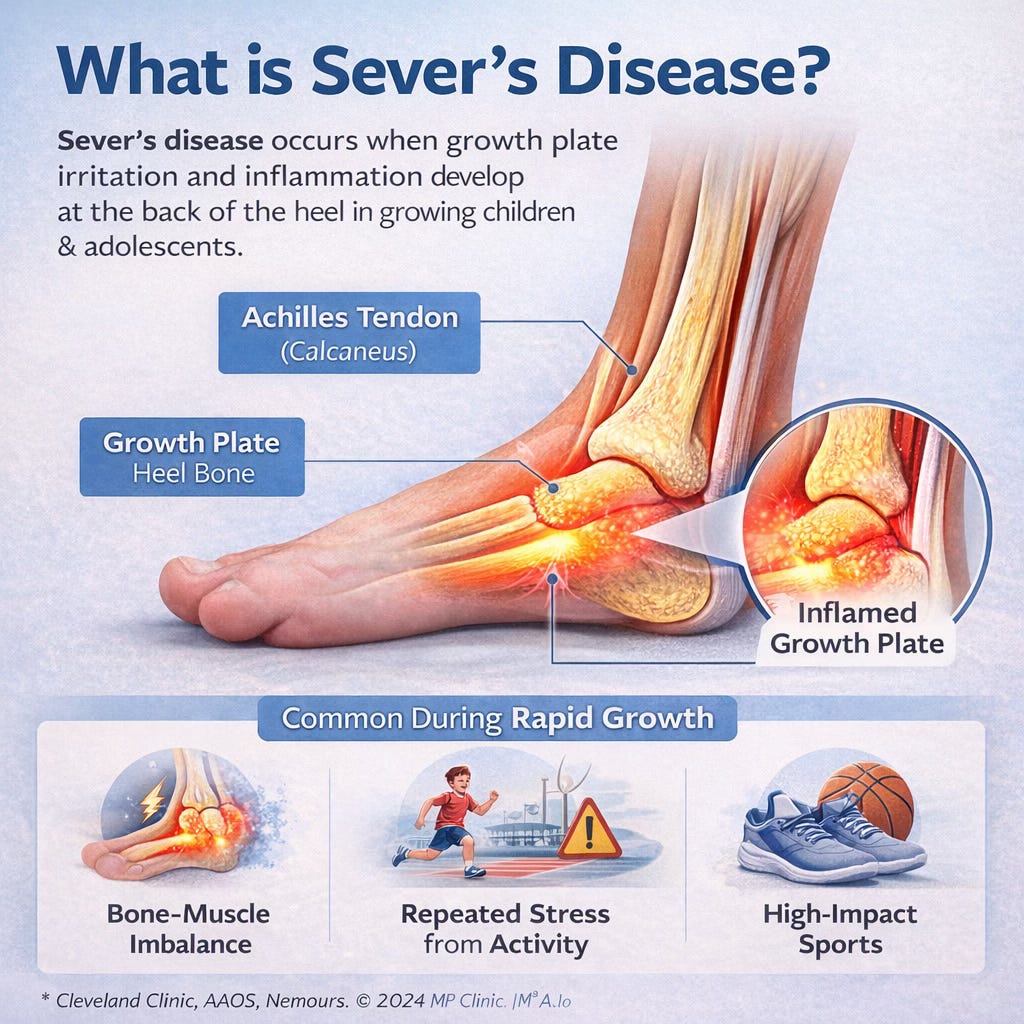
Sever’s disease happens when the growth plate at the back of the heel becomes irritated and inflamed. Growth plates are areas of cartilage near the ends of bones where growth occurs. In children and adolescents, these areas are softer and more vulnerable than mature bone, which is why they can become irritated with repeated stress (AAOS, 2026; Nemours KidsHealth, 2019).
In the heel, the Achilles tendon attaches near this growth plate. During periods of rapid growth, bones may grow faster than muscles and tendons, which can make the Achilles tendon feel relatively tight. That extra tension can pull on the heel growth plate during running, jumping, and other high-impact activities, leading to pain and inflammation (Boston Children’s Hospital, 2026; Cleveland Clinic, 2025).
Who gets it?
Sever’s disease most often affects children who are in a growth spurt, usually around ages 8 to 14, though exact timing can vary between boys and girls (Boston Children’s Hospital, 2026; Cleveland Clinic, 2025; Nemours KidsHealth, 2019). It is especially common in children who are active in sports that involve a lot of running and jumping, such as basketball, soccer, gymnastics, and track (AAOS, 2026; Nemours KidsHealth, 2019).
That said, it is not limited to elite athletes. Some less active children can develop it too, especially if they spend a lot of time on their feet, wear unsupportive shoes, have flat feet, or are carrying extra body weight (Cleveland Clinic, 2025).
Common signs and symptoms
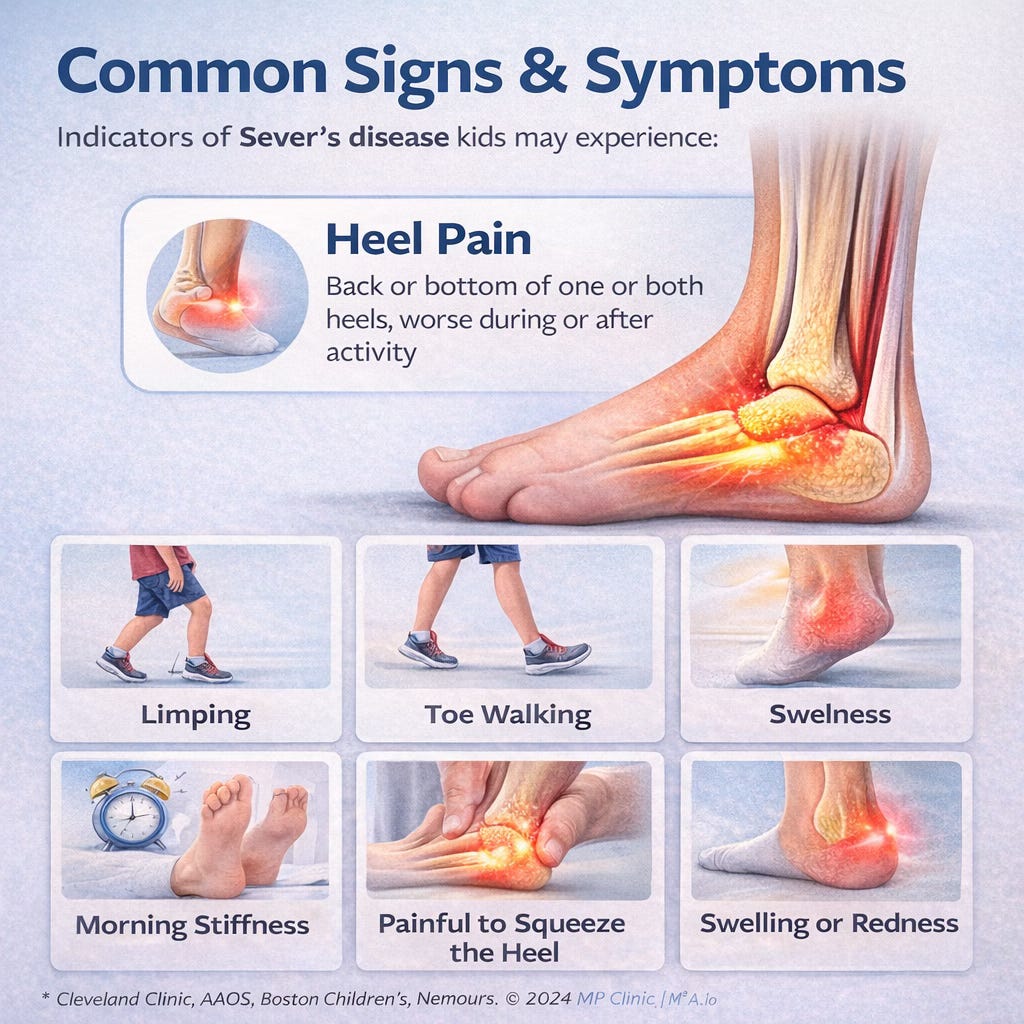
The classic symptom is heel pain, often at the back or bottom of the heel. Some children feel it in one heel, while others feel it in both. The pain is usually worse during or after activity and tends to improve with rest (Nemours KidsHealth, 2019; AAOS, 2026).
Other common features include limping, toe walking, stiffness first thing in the morning, swelling or redness around the heel, and pain when the heel is squeezed from the sides (Boston Children’s Hospital, 2026; Cleveland Clinic, 2025; Nemours KidsHealth, 2019). Some children may not describe it very clearly and instead just say they “don’t want to run” or that their heel “feels weird” after sports.
Why it happens during growth
One of the most important things to understand is that Sever’s disease is closely tied to growth. During adolescence, the body does not always grow evenly. Bones may lengthen quickly while muscles and tendons lag behind. This creates tension through the Achilles tendon and places extra stress on the heel growth plate (Boston Children’s Hospital, 2026; Cleveland Clinic, 2025).
That is why it often shows up in otherwise healthy, active kids during a busy sports season. It is not usually due to a single injury. Instead, it develops gradually from repeated strain over time (Cleveland Clinic, 2025).
How it is diagnosed
Sever’s disease is usually diagnosed through a clinical assessment, not through a major test. A healthcare provider will ask about the child’s symptoms, recent activity, and whether the pain worsens with sports or improves with rest. They will also examine the heel and foot, often pressing on the heel to identify where the pain is coming from (Boston Children’s Hospital, 2026; Cleveland Clinic, 2025).
In many cases, imaging is not necessary. X-rays often do not show Sever’s disease itself, because the problem is irritation of a growth plate rather than a broken bone. However, a doctor may order an X-ray if they want to rule out other issues, such as a fracture or another cause of heel pain (AAOS, 2026; Cleveland Clinic, 2025; Nemours KidsHealth, 2019).
What treatment usually looks like
Treatment is generally focused on reducing irritation and giving the heel time to settle down. The main strategies are fairly straightforward.
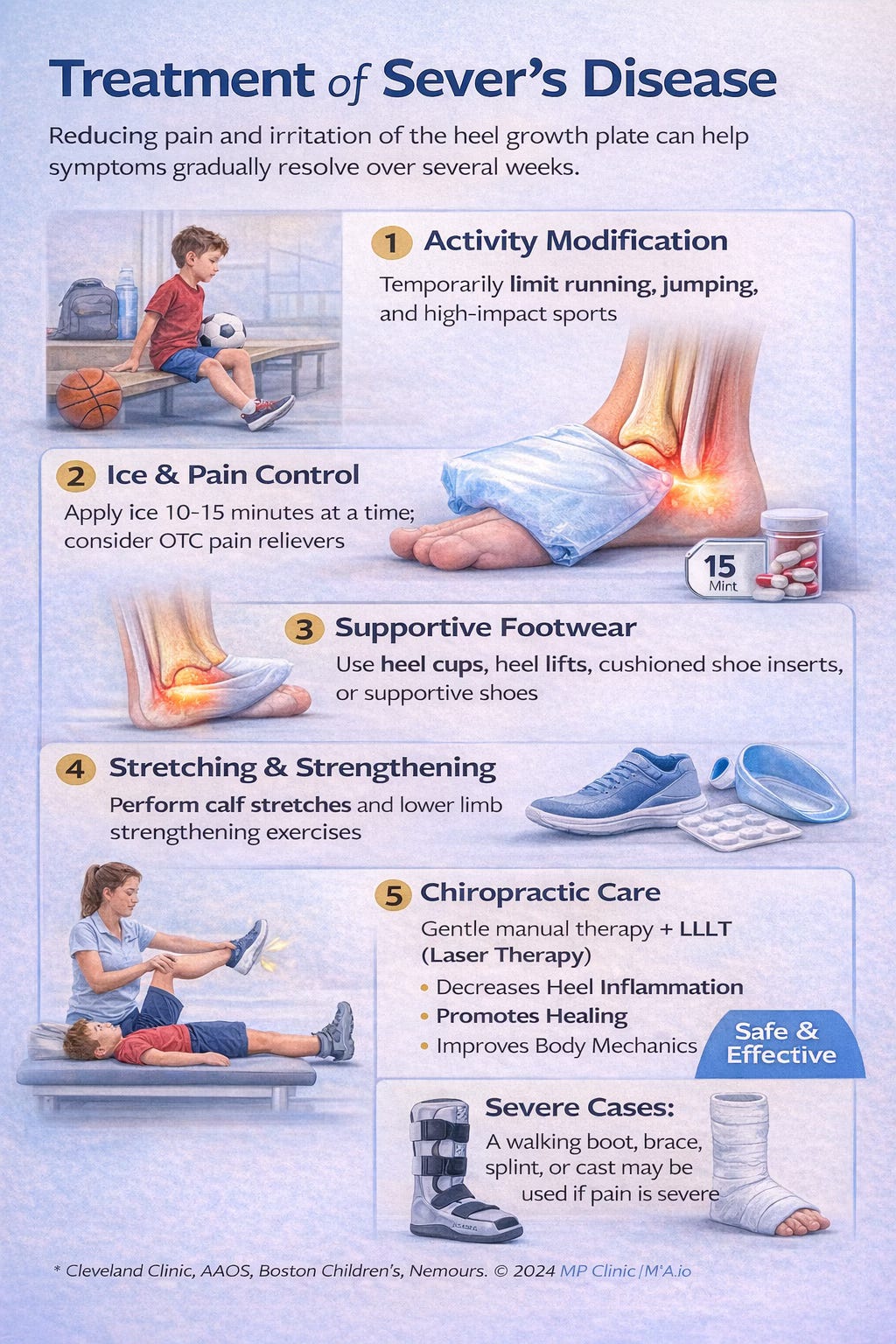
The first is activity modification. This usually means reducing or temporarily avoiding the movements that trigger pain, especially running and jumping. Depending on symptom severity, some children may need several days of reduced activity, while others may need several weeks. In more stubborn cases, symptoms can linger for a few months if the heel continues to be stressed (AAOS, 2026; Boston Children’s Hospital, 2026; Nemours KidsHealth, 2019).
The second is ice and pain control. Applying an ice pack for about 10 to 15 minutes at a time can help calm the irritation. Over-the-counter medications such as ibuprofen or acetaminophen may also be used when appropriate, following proper dosing guidance and medical advice (Cleveland Clinic, 2025; MyHealth Alberta, 2024; Nemours KidsHealth, 2019).
The third is supportive footwear and heel cushioning. Heel cups, heel lifts, shoe inserts, or cushioned shoes can help reduce stress on the heel. Shoes with good support are often recommended, while flat or unsupportive shoes may worsen symptoms (AAOS, 2026; MyHealth Alberta, 2024). Orthotics may also help the pain.
The fourth is stretching and strengthening. Because a tight Achilles tendon often contributes to the problem, calf stretching is commonly recommended. Physical therapy or a home exercise program may also help improve flexibility, lower limb strength, and overall load tolerance (Boston Children’s Hospital, 2026; Cleveland Clinic, 2025; MyHealth Alberta, 2024).
In more severe cases, when pain is bad enough to affect walking, a provider may recommend a walking boot, brace, splint, or even a short period of casting to reduce motion and allow the heel to calm down (AAOS, 2026; Cleveland Clinic, 2025; Nemours KidsHealth, 2019).
Can kids still play sports?
This depends on the child’s symptoms. In general, children should not continue activities that significantly worsen heel pain. Some may be able to stay active with modified participation, while others need a temporary break from sports until they can move comfortably again (AAOS, 2026; Boston Children’s Hospital, 2026).
A useful rule is that return to sport should happen when the activity no longer causes pain during or afterward. Pushing through severe pain tends to prolong the problem rather than speed recovery (Nemours KidsHealth, 2019).
How long does it last?
Most children improve within a few weeks to a few months, especially when the condition is identified early and activity is modified appropriately (Boston Children’s Hospital, 2026; Cleveland Clinic, 2025; Nemours KidsHealth, 2019). It can recur, especially if a child returns too quickly to intense sport or continues to wear poor footwear. But once the heel growth plate closes with maturity, Sever’s disease does not come back (AAOS, 2026; Nemours KidsHealth, 2019).
How to help prevent it from coming back
Prevention focuses on reducing excessive stress on the heel during growth. Good footwear matters. So do proper warm-ups, stretching, and paying attention to pain early instead of ignoring it. Heel cups or inserts may help some kids, especially those who participate in sports on hard surfaces. For children who are overweight, weight management may also reduce stress on the heel over time (Cleveland Clinic, 2025; MyHealth Alberta, 2024; Nemours KidsHealth, 2019).
The bigger point is that heel pain in growing kids should not simply be brushed off as “just soreness.” Early recognition often leads to a smoother recovery.
When to get it checked
Parents should consider having their child assessed if heel pain is causing limping, interfering with sport, not improving with rest, or becoming severe. Urgent evaluation is especially important if the pain is intense, worsening, or associated with symptoms that do not fit the usual pattern, such as significant swelling, inability to bear weight, or concern for a different injury (MyHealth Alberta, 2024).
How Chiropractic care can help
Chiropractic care may help children with Sever’s disease (calcaneal apophysitis) by reducing stress on the heel, improving lower limb mechanics, and supporting recovery while the irritated growth plate settles. A typical conservative approach may include gentle soft tissue therapy to address tight calf muscles, mobility work for the foot and ankle, guidance on calf stretching and strengthening, and biomechanical support such as heel lifts, heel cups, or orthotics to reduce tension through the Achilles tendon. Activity modification is also important, especially limiting running and jumping during painful flare-ups, while low-impact activity may still be encouraged when appropriate. Some clinics may also use adjunctive therapies such as kinesiology taping or low-level laser therapy to help manage pain and inflammation. Because Sever’s disease is usually a growth-related overuse condition, the goal of care is not only symptom relief, but also helping the child stay as active as possible in a safe, gradual, and well-supported way.
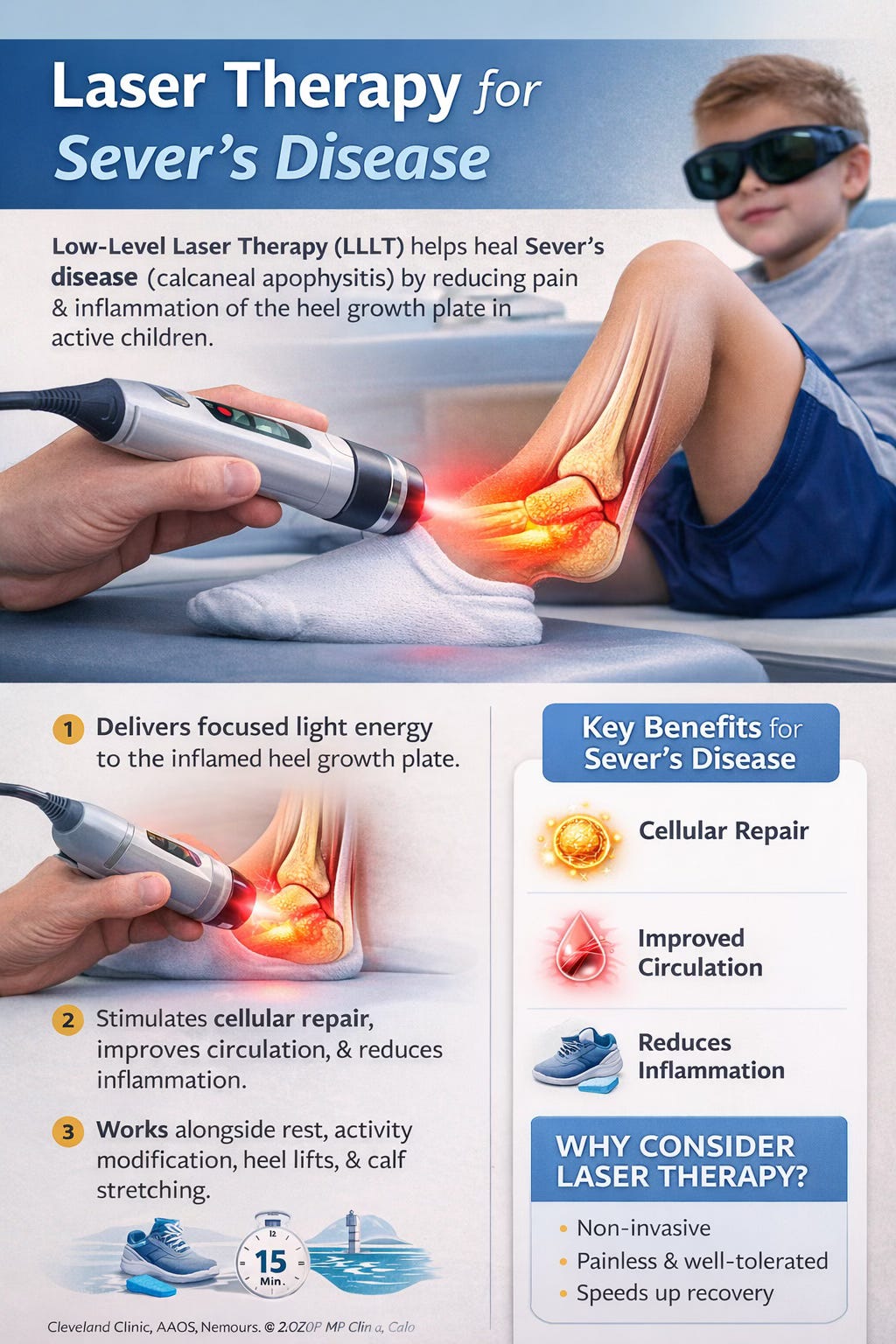
Laser therapy, particularly low-level laser therapy (LLLT) or photobiomodulation, can be a useful adjunct in managing Sever’s disease by helping reduce pain and inflammation at the heel growth plate without placing additional mechanical stress on the area. The treatment works by delivering light energy to the affected tissues, which may help stimulate cellular repair processes, improve circulation, and modulate inflammation. In clinical practice, many patients report a reduction in pain after a few sessions, allowing for a quicker return to comfortable movement and activity. Laser therapy is non-invasive, painless, and well-tolerated in children, making it a suitable option alongside primary treatments such as activity modification, calf stretching, and the use of heel lifts or supportive footwear. While it does not replace the need to address underlying biomechanical factors, it can help accelerate recovery and improve overall comfort during the healing process.
Final thoughts
Sever’s disease is common, frustrating, and painful, but it is also manageable. The condition is closely linked to growth, repetitive loading, and tendon tightness, especially in active kids. In most cases, the combination of rest from aggravating activities, supportive footwear, stretching, ice, and gradual return to activity works very well (AAOS, 2026; Boston Children’s Hospital, 2026; Cleveland Clinic, 2025).
For parents, coaches, and clinicians, the key message is simple: heel pain in a growing child deserves attention, but it is often treatable without anything invasive. With the right plan, most kids get back to doing what they love.
References
American Academy of Orthopaedic Surgeons. (2026). Sever’s disease. OrthoInfo. https://orthoinfo.aaos.org
Boston Children’s Hospital. (2026). Sever’s disease. https://www.childrenshospital.org
Cleveland Clinic. (2025, March 26). Sever’s disease (calcaneal apophysitis). https://my.clevelandclinic.org
MyHealth Alberta. (2024, October 24). Sever’s disease (calcaneal apophysitis) in children: Care instructions. https://myhealth.alberta.ca
Nemours KidsHealth. (2019, January). Sever’s disease. https://kidshealth.org