


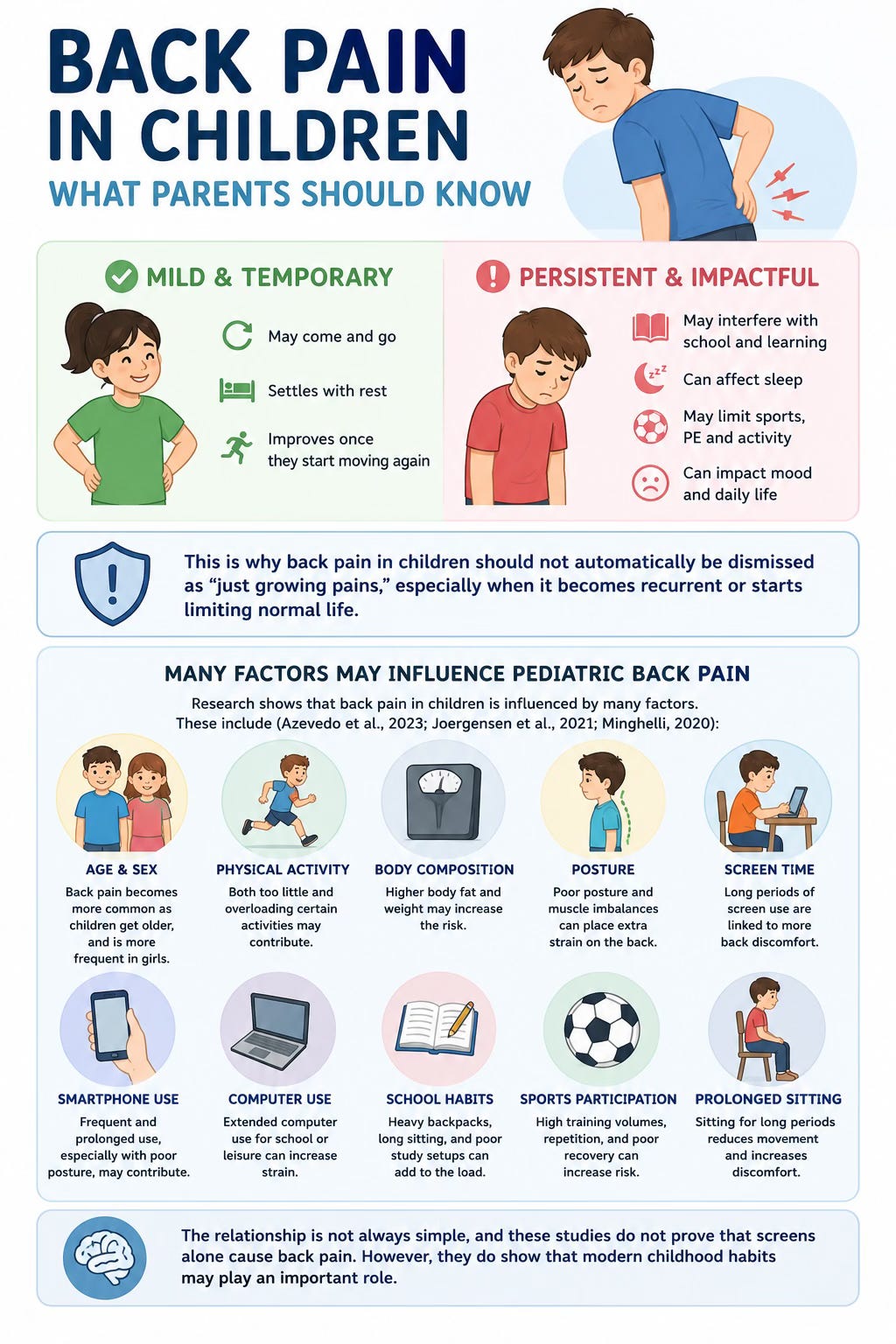
Back pain is often thought of as an adult problem, but children and teenagers can experience it too. In fact, research over the last several years has shown that spinal pain in young people is much more common than many parents realize. Neck pain, mid-back pain, and low back pain can appear during the school years, sometimes after sports, sometimes after prolonged sitting, and sometimes after long periods of phone, computer, or tablet use.
For many children, back pain is mild and temporary. It may come and go, settle with rest, or improve once they start moving again. For others, it can become more persistent and begin to interfere with school, sleep, sports, physical education, mood, and daily activity. This is why back pain in children should not automatically be dismissed as “just growing pains,” especially when it becomes recurrent or starts limiting normal life.
A growing body of evidence suggests that pediatric back pain is influenced by many factors. These can include age, sex, physical activity level, body composition, posture, screen time, smartphone use, computer use, school habits, sports participation, and prolonged sitting (Azevedo et al., 2023; Joergensen et al., 2021; Minghelli, 2020). The relationship is not always simple, and these studies do not prove that screens alone cause back pain. However, they do show that modern childhood habits may play an important role.
Back Pain in Young People Is Common
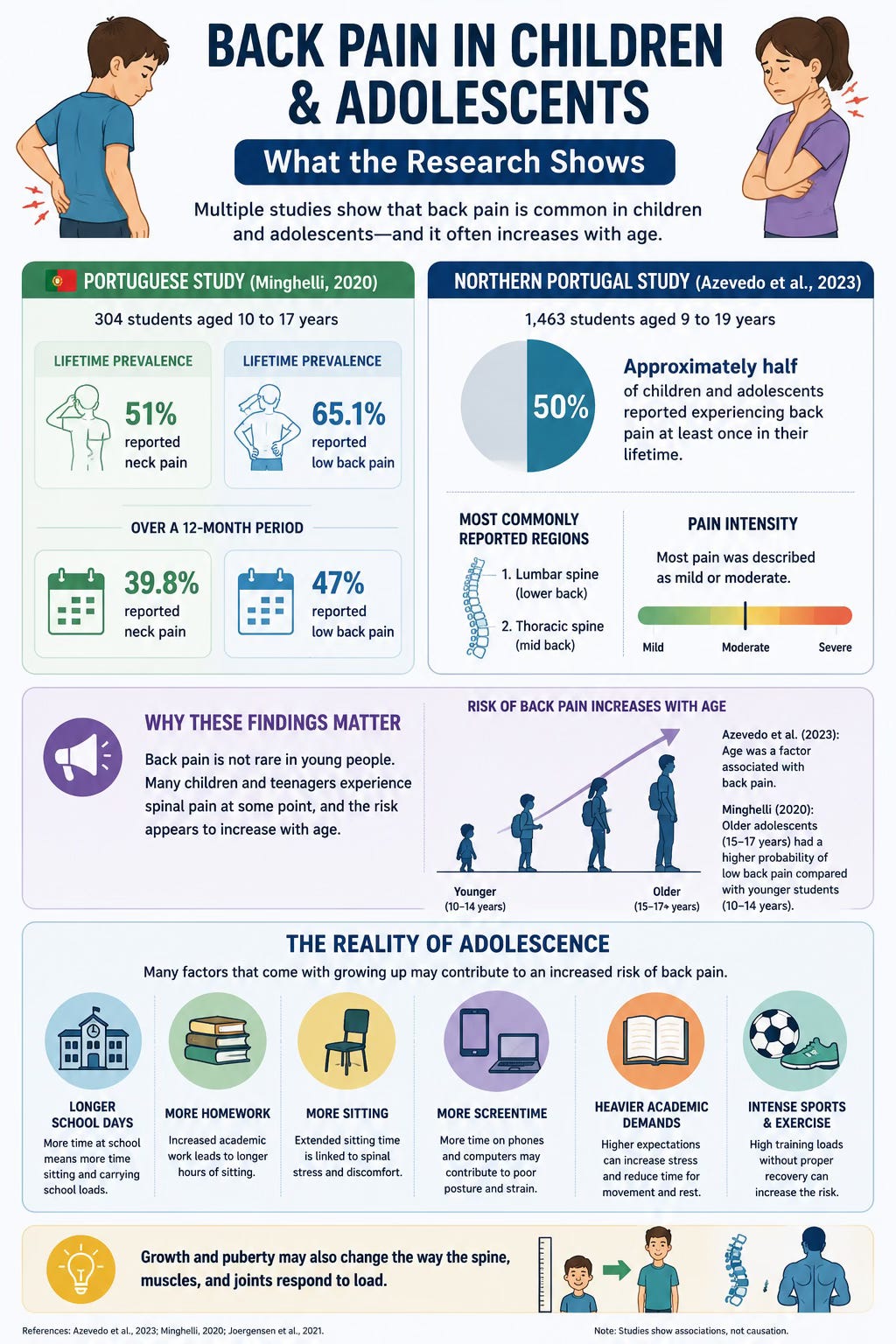
Several studies have reported high rates of back pain in children and adolescents. In a Portuguese study of 304 students aged 10 to 17, lifetime prevalence was 51% for neck pain and 65.1% for low back pain. Over a 12-month period, 39.8% reported neck pain and 47% reported low back pain (Minghelli, 2020).
A larger cross-sectional study from northern Portugal included 1,463 students aged 9 to 19. In that study, approximately half of the children and adolescents reported experiencing back pain at least once in their lifetime. The most commonly reported regions were the lumbar spine and thoracic spine, and most pain was described as mild or moderate in intensity (Azevedo et al., 2023).
These findings are important because they show that back pain is not rare in young people. Many children and teenagers experience spinal pain at some point, and the risk appears to increase with age. Azevedo and colleagues found that age was a factor associated with back pain, and Minghelli found that older adolescents between 15 and 17 years old had a higher probability of low back pain compared with younger students between 10 and 14 years old (Azevedo et al., 2023; Minghelli, 2020).
This may reflect the reality of adolescence. Older students often have longer school days, more homework, more time spent sitting, more time on phones and computers, heavier academic demands, and sometimes more intense sports or exercise schedules. Growth and puberty may also change the way the spine, muscles, and joints respond to load.
Smartphones, Computers, and Back Pain
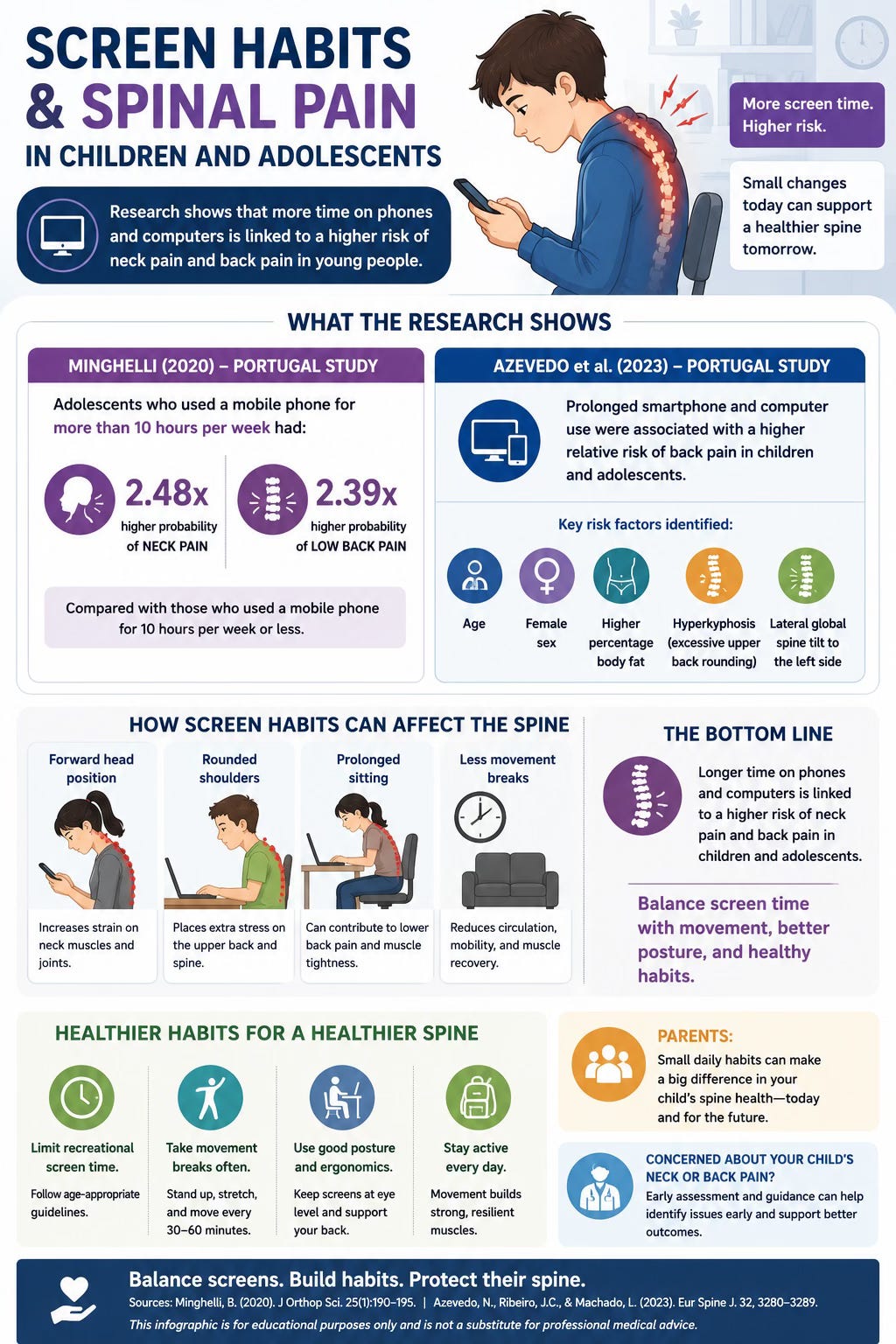
One of the strongest themes across these studies is the relationship between screen-based habits and spinal pain. In Minghelli’s study, adolescents who used a mobile phone for more than 10 hours per week had 2.48 times higher probability of neck pain and 2.39 times higher probability of low back pain compared with those who used a mobile phone for 10 hours per week or less (Minghelli, 2020).
Azevedo and colleagues also found that prolonged smartphone and computer use were associated with a higher relative risk of back pain in children and adolescents. Their study specifically identified prolonged smartphone use and computer use as risk factors, along with age, female sex, percentage body fat, hyperkyphosis, and lateral global spine tilt to the left side (Azevedo et al., 2023).
This does not mean every child who uses a phone or computer will develop back pain. The issue is more likely the combination of time, posture, repetition, and lack of movement variety. When children look down at a phone, sit curled over a laptop, or stay in one position for long periods, the neck, shoulders, mid-back, low back, and hips can become tired or irritated.
The problem is rarely one single screen session. It is the repeated pattern across the day. A child may look down at a phone before school, sit at a desk during class, use a laptop for homework, watch videos after school, game in the evening, and then look at a phone again before bed. Over time, these habits can add up.
Screen Time and Spinal Pain in Pre-Adolescents
A large Danish study published in BMC Musculoskeletal Disorders looked at 45,555 pre-adolescents from the Danish National Birth Cohort. These children were around 11 to 12 years old. The researchers examined screen time, physical activity, and spinal pain involving the neck, mid-back, and low back (Joergensen et al., 2021).
The study found a stepwise association between screen time and spinal pain. Compared with children who spent less than two hours per day in front of screens, children who spent six or more hours per day in front of screens had a substantially higher likelihood of severe spinal pain. For girls, six or more hours of daily screen time was associated with a relative risk ratio of 2.49 for severe spinal pain. For boys, it was associated with a relative risk ratio of 1.95 (Joergensen et al., 2021).
This is an important finding because it suggests a dose-response pattern. As screen time increased, the likelihood of spinal pain also increased. The association was stronger for severe pain than for moderate pain among children with the highest screen exposure (Joergensen et al., 2021).
However, it is important to be careful with how we interpret this. The Danish study was cross-sectional, which means it can show an association but cannot prove cause and effect. It is possible that high screen time contributes to spinal pain, but it is also possible that children with pain become less active and spend more time on screens. The authors themselves noted that future prospective studies are needed to better understand causality (Joergensen et al., 2021).
For parents, the practical takeaway is still useful: long, uninterrupted screen time is worth addressing when a child has neck or back pain.
Posture Matters, But Movement Matters More
Posture is often blamed for back pain, but the message needs to be balanced. Children do not need to sit perfectly straight all day, and it is not realistic to expect them to hold one “perfect” posture for hours. The spine is made to move.
That said, posture can still matter when certain positions are held for long periods. Minghelli found that students who sat with the spine in a poor position had 3.24 times greater odds of low back pain (Minghelli, 2020). Azevedo and colleagues also found that hyperkyphosis was associated with increased risk of back pain, and lateral global spine tilt to the left side was also associated with higher risk, although the number of students with this tilt was relatively small (Azevedo et al., 2023).
Hyperkyphosis refers to an increased rounding of the upper back. In children who spend long periods sitting, looking down, or using devices, this rounded posture may become more common. But posture should not be treated as a moral failure or something children should feel anxious about. A more helpful message is that the body likes variety. Sitting upright, leaning back, standing, stretching, walking, and changing position throughout the day are all useful.
Instead of constantly telling a child to “sit up straight,” it may be more effective to say, “Let’s change position,” “Take a quick movement break,” or “Bring the screen up a little higher.”
Physical Activity Can Be Protective
Physical activity is one of the most important factors to consider. Azevedo and colleagues found that practicing physical activity or sports regularly had a protective effect against back pain (Azevedo et al., 2023). Joergensen and colleagues found that physically inactive pre-adolescents were more likely to report severe spinal pain compared with moderately active children (Joergensen et al., 2021).
This makes sense clinically. Children who move regularly tend to develop better strength, endurance, coordination, balance, and confidence in their bodies. Regular movement may also help counterbalance long periods of sitting and screen use.
However, more is not always better. Azevedo and colleagues found that while sport and physical activity were generally protective, performing physical exercise for two to three hours per day increased the risk of back pain compared with zero to one hour per day (Azevedo et al., 2023). Joergensen and colleagues also discussed the possibility of a U-shaped relationship, where inactivity may increase risk, but very high levels of intense activity may also contribute to pain in some children (Joergensen et al., 2021).
This is an important point for parents of both inactive children and highly active young athletes. A child who does very little physical activity may need encouragement to move more. A child training intensely every day may need better load management, rest, recovery, strength work, and attention to technique.
The Surprising Finding About Video Games
One interesting finding from Azevedo’s study was that video game use appeared to have a protective effect. Specifically, video game use for two to three hours per day was associated with a reduced risk of back pain, although this result was based on a relatively small number of students (Azevedo et al., 2023).
This finding should be interpreted carefully. It does not mean children should be encouraged to play unlimited video games to prevent back pain. The authors noted the finding, but because the number of students in that category was small, it should not be overgeneralized.
One possible explanation is that video game use may involve more varied postures or more active engagement compared with passive screen use. Some gaming may also involve movement-based consoles or more frequent position changes. But for most families, the safest interpretation is still moderation. The goal is not to replace one type of screen time with another. The goal is to balance screen time with movement, sleep, outdoor activity, school demands, and family routines.
Body Composition and Back Pain
Azevedo and colleagues found that percentage body fat was associated with a higher risk of back pain in children and adolescents (Azevedo et al., 2023). Interestingly, body mass index was not the key factor in their analysis, but percentage body fat was.
This distinction matters. BMI is a broad measure and does not always tell the full story about body composition, strength, or fitness. Percentage body fat may better reflect some of the mechanical and metabolic factors that can influence musculoskeletal pain.
That said, this topic should be approached carefully with children. The goal should never be to shame a child about weight or appearance. The healthier and more useful focus is on building strength, improving fitness, increasing daily movement, improving sleep, eating well, and supporting overall health.
Why Back Pain in Children Should Not Be Ignored
Most pediatric back pain is not dangerous, but it can still affect a child’s quality of life. Azevedo and colleagues found that 20.8% of students who reported back pain also reported functional limitation related to that pain (Azevedo et al., 2023). This means that for some children, back pain is not just a minor complaint. It can interfere with normal activities.
Pain can also change behaviour. A child may stop participating in gym class, avoid sports, sit out at recess, become less active, or spend more time resting. Over time, this can lead to weakness, stiffness, reduced confidence, and more sensitivity to movement.
This is why early assessment and education can be helpful. The goal is not to medicalize every ache and pain. The goal is to identify children who need support and to help them return to healthy movement before pain becomes a recurring pattern.
When Parents Should Seek Assessment
Parents should consider having their child assessed if back pain is persistent, worsening, recurrent, interfering with school or sports, affecting sleep, or causing the child to avoid normal activities. Assessment is also important if pain follows a significant fall, collision, or injury.
Parents should seek medical attention more urgently if back pain is associated with fever, unexplained weight loss, night sweats, constant night pain, progressive worsening, numbness, weakness, changes in walking, bowel or bladder changes, unexplained fatigue, or pain in a very young child.
In many cases, the pain is mechanical and manageable with conservative care. But a proper assessment helps determine whether further medical investigation is needed.
How Chiropractic Care Can Help
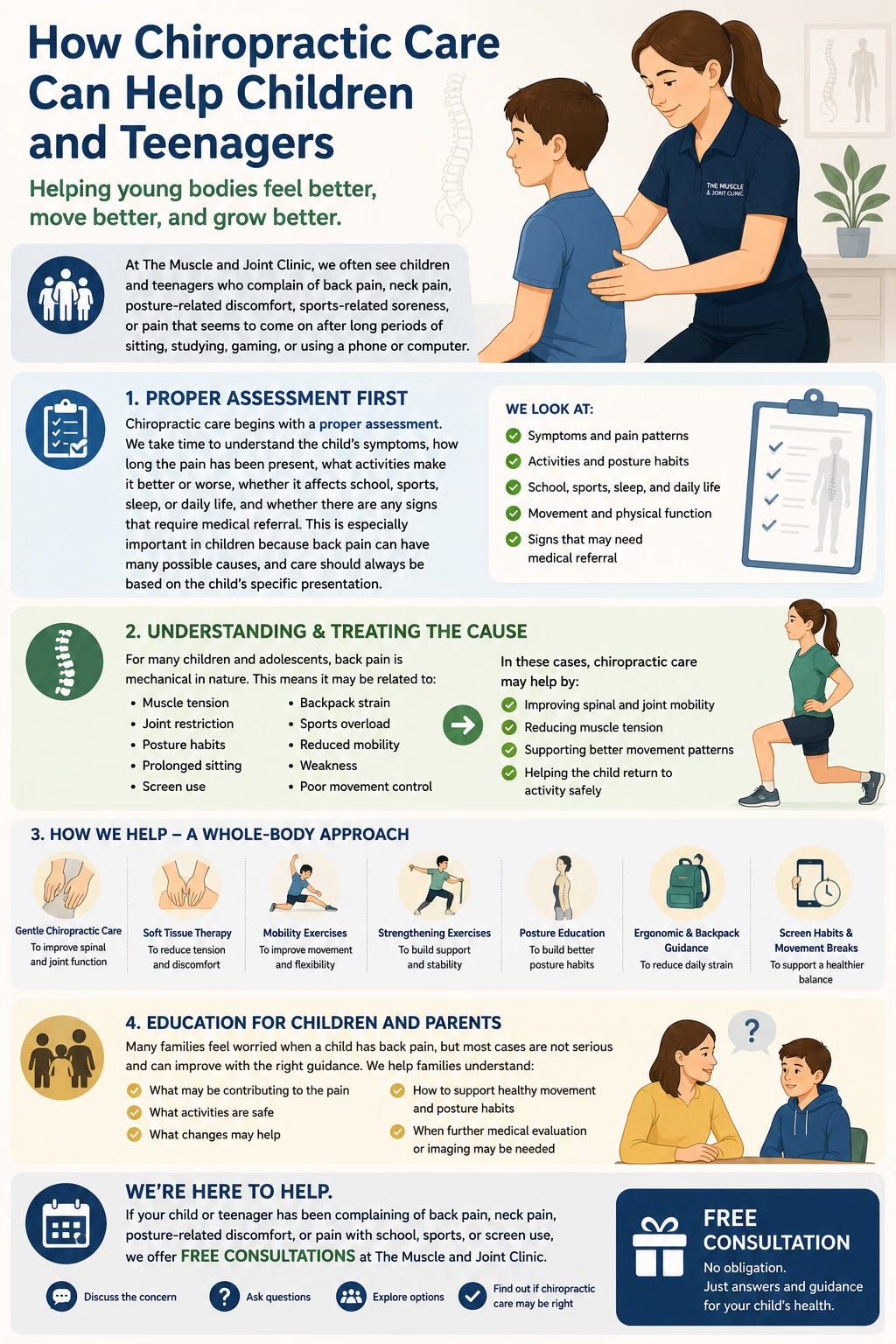
At The Muscle and Joint Clinic, we often see children and teenagers who complain of back pain, neck pain, posture-related discomfort, sports-related soreness, or pain that seems to come on after long periods of sitting, studying, gaming, or using a phone or computer.
Chiropractic care begins with a proper assessment. Before recommending treatment, we take time to understand the child’s symptoms, how long the pain has been present, what activities make it better or worse, whether it affects school, sports, sleep, or daily life, and whether there are any signs that require medical referral. This is especially important in children because back pain can have many possible causes, and care should always be based on the child’s specific presentation.
For many children and adolescents, back pain is mechanical in nature. This means it may be related to muscle tension, joint restriction, posture habits, prolonged sitting, screen use, backpack strain, sports overload, reduced mobility, weakness, or poor movement control. In these cases, chiropractic care may help by improving spinal and joint mobility, reducing muscle tension, supporting better movement patterns, and helping the child return to activity safely.
Treatment may include gentle chiropractic care, soft tissue therapy, mobility exercises, strengthening exercises, posture education, ergonomic advice, backpack guidance, and recommendations around screen habits and movement breaks. The goal is not simply to tell a child to “sit up straight.” The goal is to help them move better, feel better, understand their body, and develop habits that support long-term spinal health.
We also focus on education for both parents and children. Many families feel worried when a child has back pain, but most cases are not serious and can improve with the right guidance. We help families understand what may be contributing to the pain, what activities are safe, what changes may help, and when further medical evaluation or imaging may be needed.
If your child or teenager has been complaining of back pain, neck pain, posture-related discomfort, or pain with school, sports, or screen use, we offer free consultations at The Muscle and Joint Clinic. A consultation is an opportunity to discuss the concern, ask questions, and determine whether chiropractic care may be appropriate.
Practical Tips for Parents
A helpful first step is to look at the child’s daily routine. How much time are they spending sitting? How much time are they spending on a phone or computer? Are they physically active most days? Are they sleeping well? Are they carrying a heavy backpack? Are they avoiding sports or gym class because of pain?
Children should be encouraged to take regular movement breaks during homework, gaming, studying, and recreational screen use. Even a short break every 20 to 30 minutes can help reduce prolonged static loading.
Phones should be brought closer to eye level when possible, rather than always bending the neck down toward the lap. Laptops can be raised for longer work sessions, and an external keyboard or mouse can make the setup more comfortable.
Physical activity should be encouraged in a positive way. Children do not need to become elite athletes. They need regular opportunities to walk, run, play, strengthen, stretch, and move in different ways.
Parents should also avoid fear-based language. Telling a child that their spine is “bad” or that they are “damaging their back” can create unnecessary worry. A better message is that the body is strong, movement is healthy, and small habit changes can make a big difference.
The Bottom Line
Back pain in children and adolescents is common. Research from Portugal and Denmark shows that spinal pain is associated with factors such as age, female sex, prolonged smartphone and computer use, high screen time, physical inactivity, posture, and body composition (Azevedo et al., 2023; Joergensen et al., 2021; Minghelli, 2020).
This does not mean screens are the only cause, and it does not mean children need to avoid technology completely. The more balanced message is that children need movement variety, regular physical activity, healthy screen habits, supportive school and homework setups, and early assessment when pain persists.
Most children with back pain do not have a serious condition, but their pain still deserves attention. With the right education, movement, and care, many children and teens can feel better, stay active, and build healthier habits for the future.
Disclaimer
This article is for general educational and informational purposes only and is not intended to replace individualized medical advice, diagnosis, or treatment. Back pain in children and adolescents can have many possible causes, and recommendations should always be based on a proper clinical assessment.
If your child has severe, worsening, persistent, recurrent, or unusual back pain, or if symptoms are associated with fever, unexplained weight loss, night pain, numbness, weakness, changes in walking, bowel or bladder changes, or a significant injury, please seek assessment from a qualified health professional.
A free consultation at The Muscle and Joint Clinic is an opportunity to discuss your child’s concern, ask questions, and determine whether a full assessment or referral may be appropriate. It does not replace a complete examination or medical evaluation when one is needed.
References
Azevedo, N., Ribeiro, J. C., & Machado, L. (2023). Back pain in children and adolescents: A cross-sectional study. European Spine Journal, 32, 3280–3289. https://doi.org/10.1007/s00586-023-07751-z
Joergensen, A. C., Strandberg-Larsen, K., Andersen, P. K., Hestbaek, L., & Andersen, A.-M. N. (2021). Spinal pain in pre-adolescence and the relation with screen time and physical activity behavior. BMC Musculoskeletal Disorders, 22, Article 393. https://doi.org/10.1186/s12891-021-04263-z
Minghelli, B. (2020). Musculoskeletal spine pain in adolescents: Epidemiology of non-specific neck and low back pain and risk factors. Journal of Orthopaedic Science, 25(5), 776–780. https://doi.org/10.1016/j.jos.2019.10.008