

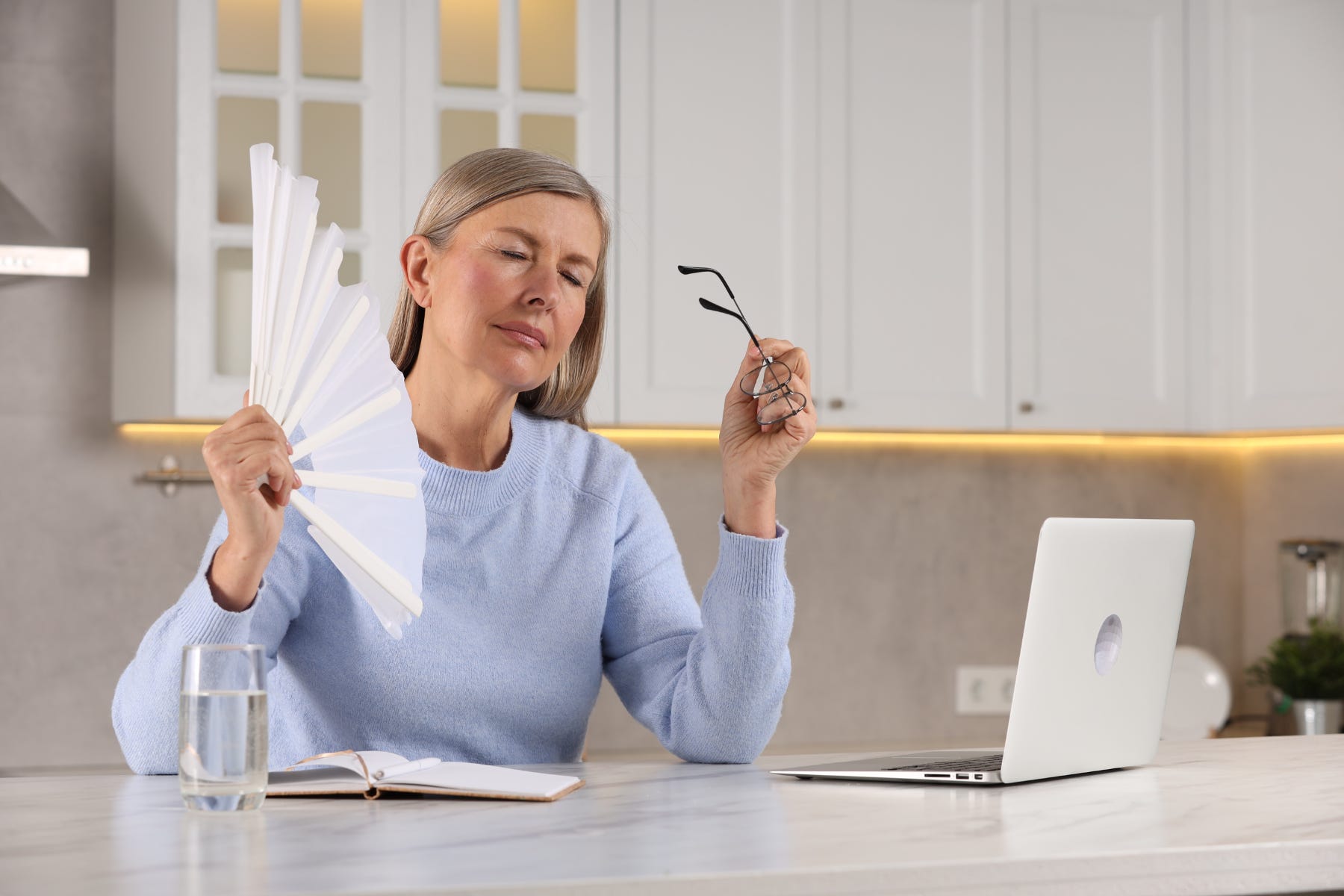
Menopause is a normal life transition, but that does not mean it is always easy. Many people associate menopause with hot flashes, sleep changes, mood changes, brain fog, fatigue, and changes in weight. These symptoms can be frustrating and disruptive, but there is another area that often receives less attention: the muscles, joints, bones, tendons, ligaments, and overall movement system.
During perimenopause, menopause, and post-menopause, many women begin to notice new aches and pains. Some describe morning stiffness that was not there before. Others notice joint discomfort, muscle soreness, reduced strength, slower recovery after exercise, or feeling less mobile than they used to. For some, activities that once felt easy, walking, climbing stairs, lifting, exercising, gardening, or getting up from the floor, may start to feel harder.
These changes are increasingly being discussed under the term Musculoskeletal Syndrome of Menopause. This term refers to a group of muscle, joint, tendon, ligament, cartilage, and bone-related symptoms that may occur during the menopausal transition. The Canadian Menopause Society notes that this cluster can include joint pain, joint stiffness, frozen shoulder, and changes affecting bone, muscle, tendon, cartilage, ligament, and adipose tissue.
Menopause Is Normal, But Symptoms Still Matter
Menopause is often described as a natural transition, and that is true. However, calling something natural should not lead people to ignore symptoms that affect their quality of life. Sleep disruption, pain, stiffness, weakness, and reduced confidence with movement can have a real impact on work, family life, exercise, mood, and independence.
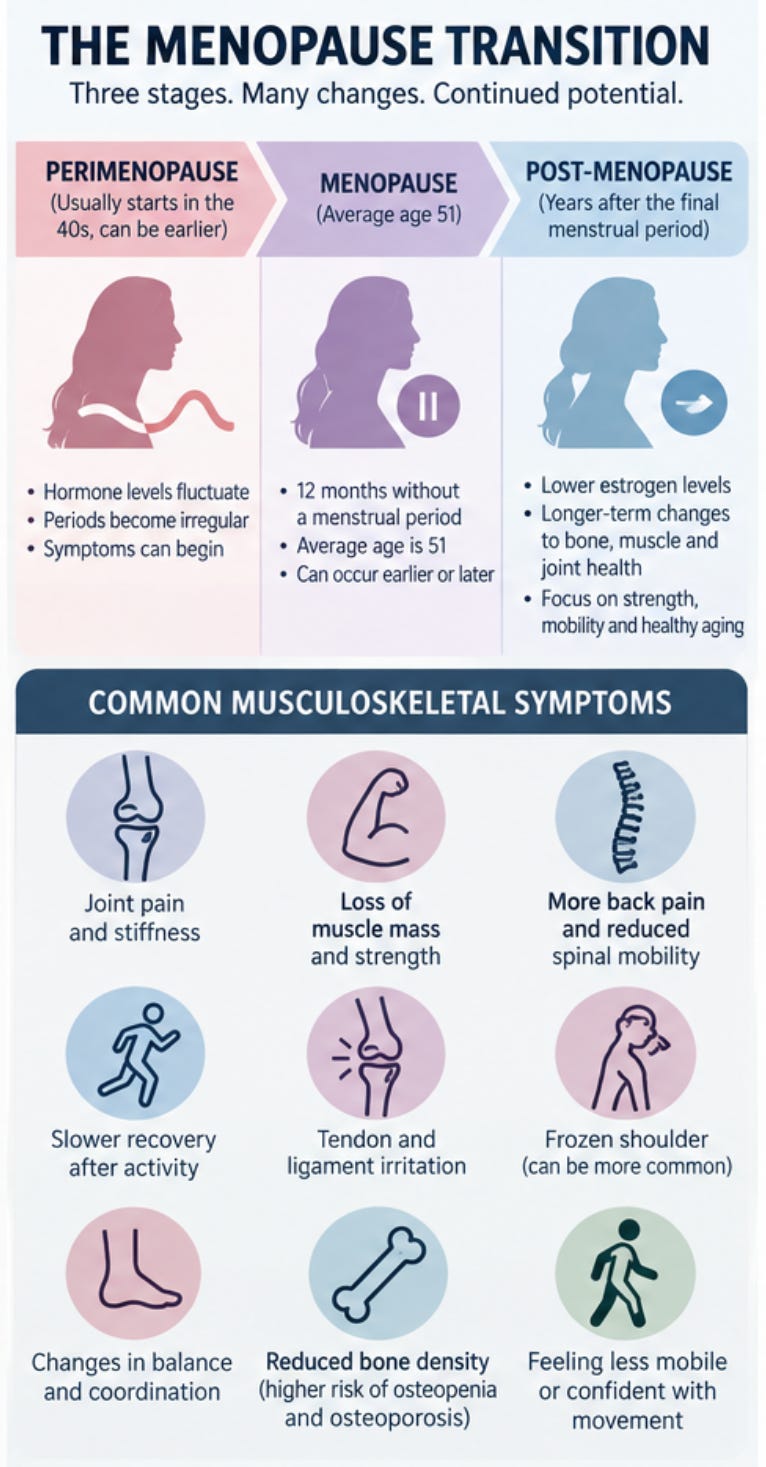
The average age of menopause is often reported around 51, although the timing varies. Menopause before age 45 is generally considered early, while menopause before age 40 is considered premature. Some people also enter menopause suddenly because of surgery, medications, chemotherapy, or other medical factors. The Canadian Chiropractic Association describes menopause as a major biological milestone that can affect physical health, mental health, work, relationships, and long-term wellness.
It is also important to recognize that menopause is not one single moment for most people. Perimenopause can begin years before the final menstrual period. Hormonal changes may fluctuate during this stage, and symptoms may come and go. Post-menopause refers to the years after menopause, when longer-term issues such as bone density, strength, mobility, and cardiovascular health become especially important.
Why Muscles and Joints Can Feel Different During Menopause
Estrogen has effects throughout the body, including the musculoskeletal system. As estrogen levels change and eventually decline, some women may notice changes in joint comfort, soft tissue sensitivity, muscle mass, tendon health, and bone density. A recent review in Climacteric describes musculoskeletal syndrome of menopause as a collection of symptoms influenced by estrogen changes, including arthralgia, loss of muscle mass, loss of bone density, and progression of osteoarthritis.
This does not mean every ache or pain during menopause is caused by menopause. That point is important. A sore knee may be related to osteoarthritis, a meniscus issue, a previous injury, a change in training, footwear, weight changes, or reduced strength. Shoulder pain may be related to rotator cuff irritation, frozen shoulder, posture, sleep position, or repetitive strain. Low back pain may be related to spinal joints, discs, muscles, hip mobility, stress, or activity changes.
Menopause may be one part of the picture, but it should not become a catch-all explanation. A proper musculoskeletal assessment still matters.
Common Musculoskeletal Symptoms During Midlife
Many women describe a general sense that their body feels different. The symptoms may be mild at first and easy to dismiss. Over time, they may become more noticeable.
Joint stiffness is common. Some people feel stiff when they wake up, after sitting, or when starting movement after rest. The hands, knees, hips, shoulders, neck, and low back may all be affected. Muscle aches can also occur, sometimes without a clear injury. People may feel sore after activities that previously caused no problem.
Strength changes may also become noticeable. Carrying groceries, climbing stairs, lifting laundry baskets, exercising, or getting up from a low chair may feel more difficult. This can be related to reduced muscle mass, decreased activity, poor sleep, pain inhibition, or reduced confidence with movement.
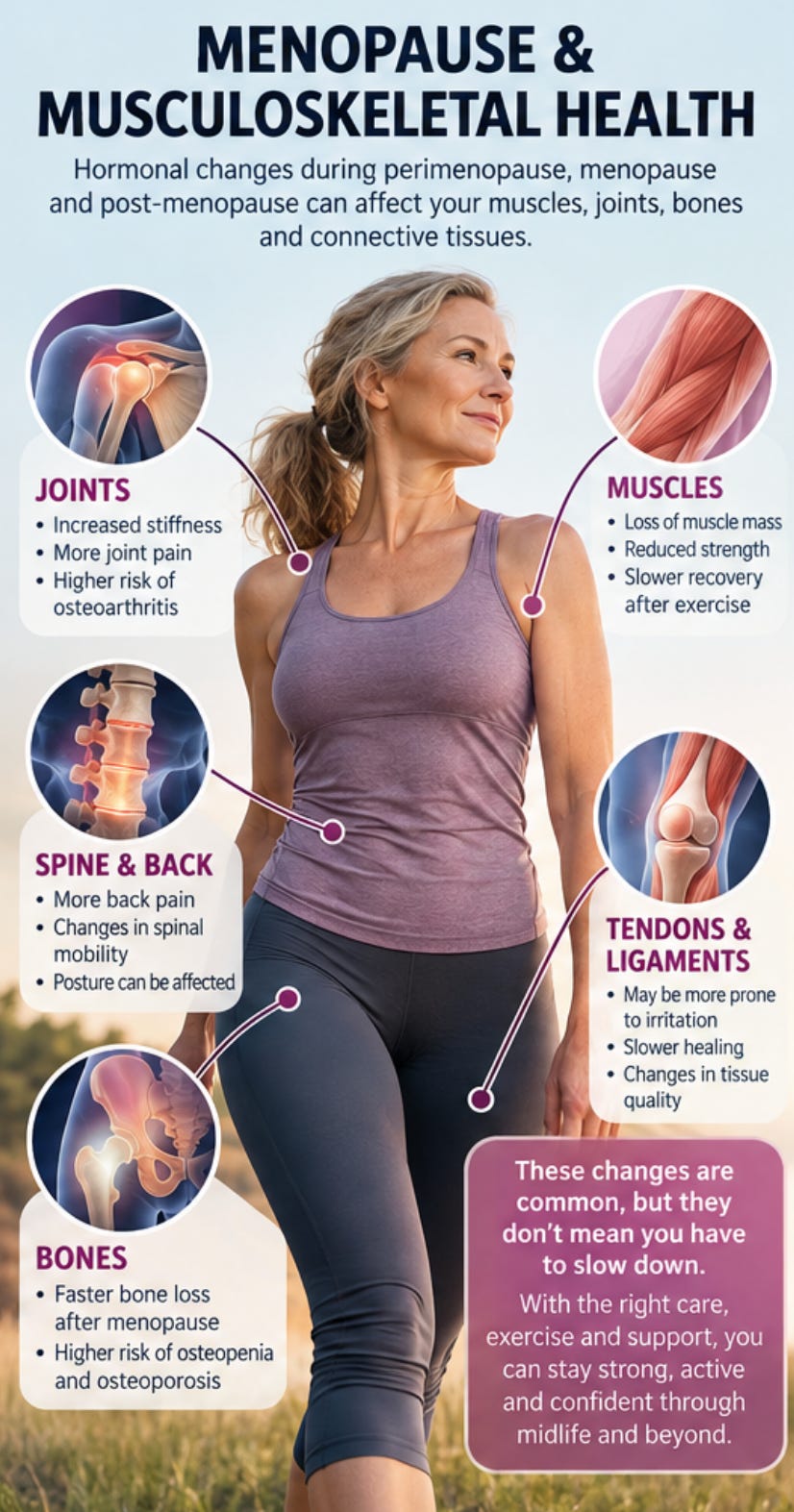
Mobility changes can also appear. A person may notice reduced shoulder range of motion, tighter hips, more back stiffness, or a sense that movement requires more effort. Balance and coordination can also become important, especially as people move into later midlife and beyond.
Bone Health Becomes More Important
One of the most important long-term musculoskeletal concerns after menopause is bone health. Estrogen plays a role in maintaining bone density. After menopause, bone loss can accelerate, increasing the risk of osteopenia and osteoporosis.
Osteoporosis matters because it can increase fracture risk. A fall that may have caused only a bruise in earlier years can become more serious when bone density is reduced. This is why weight-bearing activity, resistance training, balance exercise, adequate nutrition, vitamin D status, and medical screening may all become important parts of care.
Chiropractors do not diagnose or treat menopause itself, but they can play a role in recognizing risk factors, modifying care when bone density is a concern, encouraging appropriate exercise, and referring for further assessment when needed.
Muscle Strength Is Not Optional
One of the biggest messages for midlife health is that strength training matters. It is not only for athletes, bodybuilders, or people trying to change their appearance. Strength training supports joints, helps maintain muscle mass, improves function, supports bone health, and may reduce the risk of falls later in life.
During midlife, muscle loss can slowly accumulate if it is not actively addressed. This can affect metabolism, posture, balance, joint loading, and independence. The phrase “move like it matters” is appropriate because movement is not simply about fitness. It is about preserving the ability to live well.
Resistance training can include weights, machines, resistance bands, bodyweight exercises, Pilates-style strengthening, supervised rehabilitation, or functional training. The best program is the one that is safe, progressive, realistic, and sustainable.
For someone who is deconditioned, in pain, or nervous about exercise, the starting point may be very simple. Sit-to-stand exercises, step-ups, wall push-ups, band rows, bridges, heel raises, and gentle mobility work can be enough to begin rebuilding confidence.
Movement Helps More Than Just Pain
Physical activity can help support more than joints and muscles. Regular movement can improve sleep quality, mood, energy, balance, cardiovascular health, and overall function. For many women, movement also helps them feel more in control during a stage of life that can otherwise feel unpredictable.
That does not mean every person should push through pain. Pain is information. The goal is to find the right dose of movement. Too little movement can lead to stiffness, weakness, and loss of confidence. Too much too soon can flare symptoms. A good plan respects both sides.
This is where individualized care matters. Two people may both be going through menopause and both have knee pain, but their needs may be completely different. One may need strengthening. Another may need mobility work. Another may need load management. Another may need medical investigation. Another may need reassurance and a gradual return to activity.
The Role of Chiropractic Care
Chiropractic care is not about treating menopause itself. Menopause is a normal biological transition, not a condition that needs to be “fixed” by spinal treatment. The role of chiropractic care is different.
Chiropractors are musculoskeletal health professionals. During perimenopause, menopause, and post-menopause, chiropractic care may help patients understand and manage pain, stiffness, mobility limitations, and movement-related concerns. The Canadian Chiropractic Association states that chiropractic care during this stage may include strategies to manage musculoskeletal pain and stiffness, improve movement and physical function, and identify when further assessment or referral may be appropriate.
At The Muscle and Joint Clinic, that may include assessing the spine, hips, knees, shoulders, muscles, joints, movement patterns, balance, strength, posture, and activity tolerance. Care may include hands-on treatment, soft tissue therapy, joint mobilization or manipulation when appropriate, exercise prescription, strengthening, stretching, ergonomic advice, and guidance around daily movement.
The goal is not simply temporary pain relief. The bigger goal is helping patients move better, stay active, preserve strength, and feel confident using their body.
Not Every Pain Is “Just Menopause”
One of the risks during midlife is that symptoms may be dismissed. A woman may be told that pain, fatigue, stiffness, or reduced function is just part of aging or just part of menopause. That can lead to missed opportunities for proper assessment and treatment.
Some pain may be related to menopause-associated changes. Some may be related to osteoarthritis, tendinopathy, inflammatory arthritis, nerve irritation, frozen shoulder, spinal stenosis, disc-related pain, or another condition. Some symptoms may also be influenced by stress, sleep disruption, reduced activity, or changes in body composition.
A careful clinical history and physical exam can help separate these possibilities. This matters because treatment should be based on the actual presentation, not assumptions.
When Further Assessment May Be Needed
Most musculoskeletal aches and pains are not dangerous, but certain symptoms should be assessed more carefully. These may include unexplained weight loss, fever, night sweats, progressive night pain, unexplained fracture, new neurological symptoms, significant weakness, major trauma, severe unrelenting pain, or symptoms that do not follow a typical musculoskeletal pattern.
The Canadian Chiropractic Guidelines emphasize that menopause-related symptoms, regional musculoskeletal problems, and other health conditions can coexist. They also highlight the importance of identifying concerning features that may require referral or further medical assessment.
This is especially important after menopause because issues such as osteoporosis, inflammatory disease, cancer history, cardiovascular concerns, and neurological symptoms may change how a clinician approaches assessment and treatment.
Practical Movement Priorities Through Midlife
A strong midlife movement plan should include several pieces.
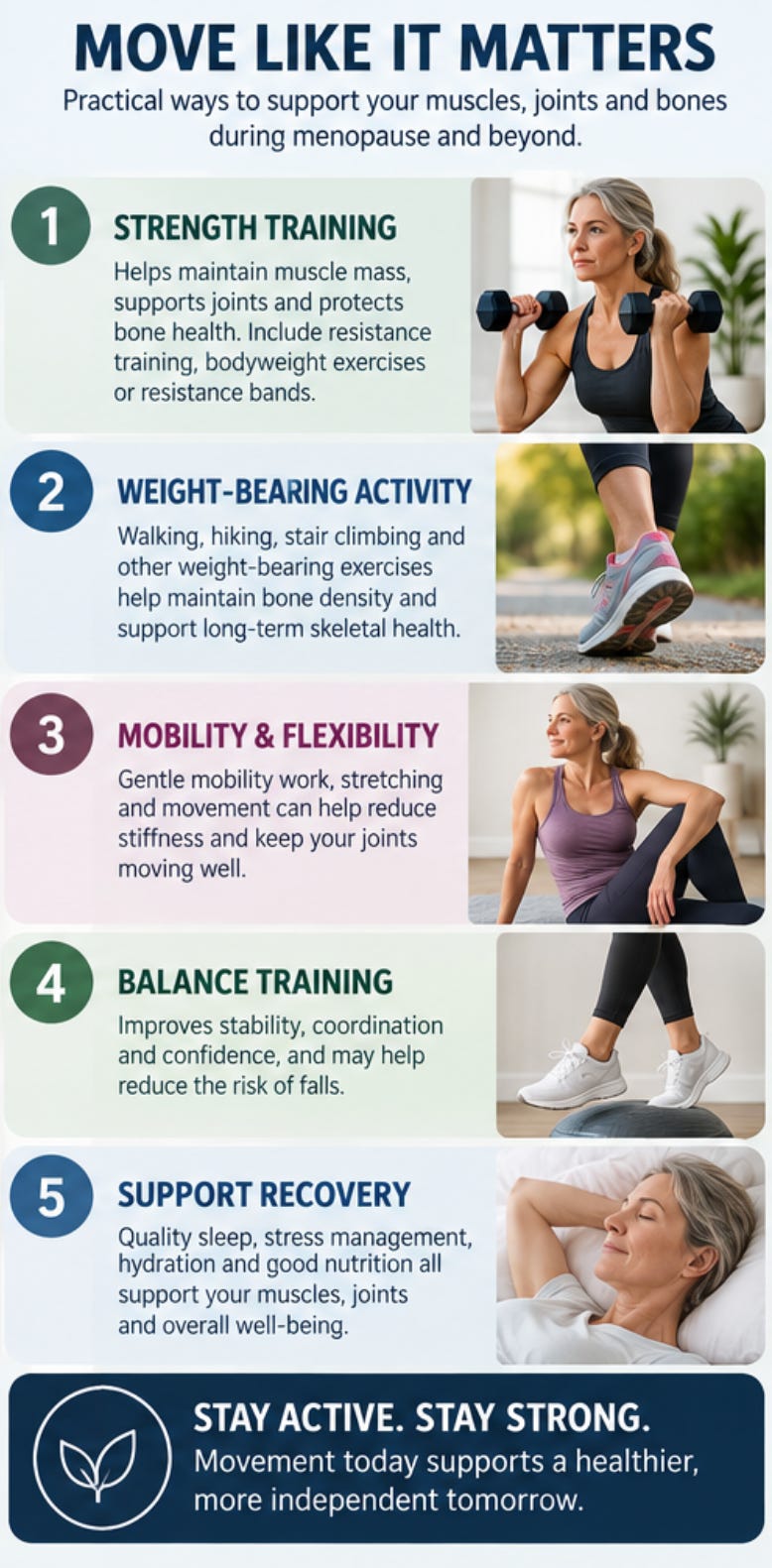
Strength training is essential. This helps maintain muscle mass, support joints, and protect long-term function. Weight-bearing exercise is also important for bone health. This may include walking, stair climbing, resistance training, and other activities where the body works against gravity.
Mobility work helps maintain joint range of motion and reduce stiffness. Balance training becomes increasingly important with age and can be built into simple exercises. Cardiovascular activity supports heart health, energy, and endurance.
Recovery also matters. Sleep disruption is common during menopause, and poor sleep can increase pain sensitivity, reduce energy, and make exercise harder. A plan that ignores sleep, stress, and recovery is incomplete.
Nutrition should also be considered. Adequate protein intake supports muscle maintenance. Calcium and vitamin D are important for bone health. Patients with concerns about hormone therapy, supplements, bone density, or menopause symptoms should discuss those issues with their physician, nurse practitioner, gynecologist, naturopathic doctor, pharmacist, or another qualified healthcare provider.
How We Can Help at The Muscle and Joint Clinic
At The Muscle and Joint Clinic, we help patients who are dealing with neck pain, back pain, hip pain, knee pain, shoulder pain, stiffness, reduced mobility, headaches, and movement-related concerns. For women in perimenopause, menopause, or post-menopause, we take a practical approach.
We assess what hurts, how it behaves, what movements are limited, what activities are affected, and what goals matter to the patient. We also consider whether symptoms may require referral, imaging, medical assessment, or coordinated care with another provider.
Treatment may include chiropractic care, physiotherapy, massage therapy, acupuncture, soft tissue therapy, mobility work, strengthening exercises, posture and ergonomic guidance, and education about safe movement. The focus is helping patients move with more confidence and stay active through midlife and beyond.
The Bottom Line
Menopause is natural, but pain, stiffness, weakness, and loss of mobility should not be ignored. The menopausal transition can affect the musculoskeletal system, but every symptom still deserves a proper assessment.
The most important message is simple: movement matters. Strength matters. Bone health matters. Mobility matters. Confidence matters.
If you are noticing new joint pain, stiffness, muscle aches, back pain, neck pain, shoulder problems, or reduced strength during midlife, support is available. Chiropractic care can be part of a broader healthcare plan to help manage musculoskeletal symptoms, improve function, and keep you moving.
To book an appointment or a free consultation, visit:
References
Canadian Chiropractic Association. (2026, September 25). Menopause & musculoskeletal health: “Move like it matters” through midlife & beyond. https://chiropractic.ca/menopause-msk-health-guide/
Canadian Chiropractic Guidelines. (2026). Menopause & musculoskeletal health. https://www.canadianchiropracticguidelines.ca/guidance/menopause-musculoskeletal-health/
Canadian Menopause Society. (2026). Menopause symptoms. https://www.canadianmenopausesociety.org/professionals/menopause-hub/symptoms/
Harper, J. C., Phillips, S., Biswakarma, R., Yasmin, E., Saridogan, E., Radhakrishnan, S., & Davies, M. C. (2024). The musculoskeletal syndrome of menopause. Climacteric. https://pubmed.ncbi.nlm.nih.gov/39077777/
Migliore, S., & Taylor, H. S. (2025). Joint pain and menopause. Menopause. https://pmc.ncbi.nlm.nih.gov/articles/PMC12915535/
Szoeke, C., et al. (2026). Musculoskeletal manifestations of perimenopause: A systematic review and meta-analysis of 93,021 women. JBJS Open Access. https://pubmed.ncbi.nlm.nih.gov/41523660/