


For many Canadians, snow shovelling is just another part of winter life. It can feel like a simple chore, grab a shovel, clear the driveway, move on with your day. But every winter, we see a spike in back pain, shoulder injuries, knee strains, and even cardiac events linked to snow shovelling.
Shovelling snow is far more physically demanding than most people realize, and doing it improperly or too aggressively can place significant stress on your body.
Why snow shovelling is harder than it looks
Snow shovelling combines several risk factors into one activity: lifting, twisting, pushing, working in cold temperatures, and often rushing to “get it over with.” Cold weather causes muscles to tighten and blood vessels to constrict, which can increase the risk of strains and cardiovascular stress.
To put it in perspective, repeatedly lifting even small amounts of snow adds up quickly. Over a short period of time, your body may be moving hundreds, or even thousands, of kilograms of snow. This makes shovelling comparable to a demanding workout performed on uneven, slippery ground.
Timing matters more than you think
One of the biggest contributors to injury is waiting too long to shovel. Freshly fallen snow is lighter and easier to move than snow that has partially melted, refrozen, or been compacted. Shovelling early and more frequently reduces physical strain and lowers injury risk.
Equally important is mindset. Shovelling often interrupts busy schedules, leading people to rush, lift too much at once, or ignore warning signs from their body.
Prepare your body before you shovel
Snow shovelling is strenuous physical activity, so preparation matters.
Before heading outside:
Do a brief warm-up with gentle movements for your arms, legs, hips, and back
Dress in layers that allow movement and help regulate body temperature
Wear supportive, slip-resistant footwear
Use gloves that provide warmth and good grip
If you have underlying health conditions, especially heart disease, arthritis, or chronic back pain, it’s wise to speak with a healthcare professional before taking on heavy shovelling.
Choosing the right shovel
Not all shovels are created equal. Using the wrong shovel can significantly increase strain on your back, shoulders, and wrists.
A good snow shovel should:
Be lightweight but sturdy
Have a handle long enough to reduce forward bending
Allow a neutral wrist position
Have a blade size appropriate for lifting smaller amounts of snow
Large push-style shovels are useful for clearing light snow, but smaller blades are safer when lifting or throwing snow.
Shovelling technique: small changes, big impact
How you shovel matters just as much as how much you shovel.
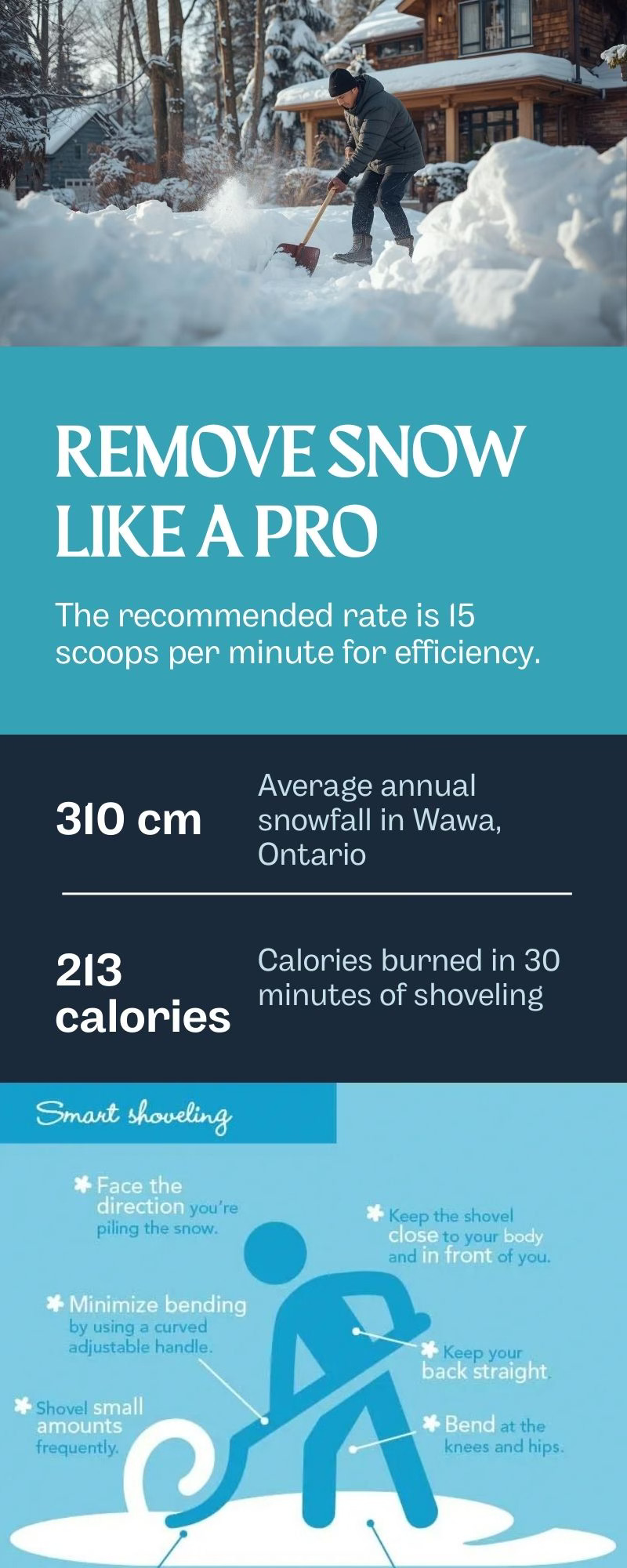
Key technique tips include:
Push snow whenever possible instead of lifting
If lifting is necessary, take smaller loads
Bend at the knees and hips, not the lower back
Keep the shovel close to your body
Turn your feet in the direction you’re moving instead of twisting at the waist
Avoid throwing snow over your shoulder
Shovelling should be done at a steady pace. Take breaks, stay hydrated, and listen to your body. Pain, dizziness, or unusual shortness of breath are signs to stop immediately.
Protecting your shoulders and knees
Snow shovelling places repetitive stress on the shoulders, particularly when lifting or throwing heavy snow. This can aggravate rotator cuff injuries or shoulder arthritis. Similarly, uneven footing and repetitive bending can strain the knees and hips, especially in individuals with pre-existing joint issues.
Strength, mobility, and proper movement patterns all play a role in reducing this risk.
When to stop and when to seek help
Shovelling can be good exercise, but it should never come at the expense of your health. Stop immediately if you experience:
Sharp or worsening pain
Chest discomfort
Lightheadedness
Severe fatigue
If pain or stiffness lingers after shovelling, it may be a sign that your body needs support, not just rest.
How Muscle & Joint Clinic can help
Winter injuries don’t have to become long-term problems. Our multidisciplinary team is here to help you stay active and recover safely.
Physiotherapy can help address acute strains, improve strength and flexibility, and retrain proper lifting and movement mechanics to prevent future injuries.
Chiropractic care focuses on restoring joint mobility and alignment in the spine and extremities, helping reduce stiffness and improve movement efficiency after winter-related strain.
Naturopathic care can support recovery through inflammation management, nutrition guidance, and strategies to improve resilience during physically demanding seasons.
Together, our team works to not only treat injuries, but help prevent them.
Shovel Safe!
Snow shovelling is a reality of Canadian winters, but injuries don’t have to be. With proper preparation, equipment, technique, and pacing, you can protect your back, joints, and overall health.
If winter activities leave you sore, stiff, or injured, early assessment and care can make a significant difference. Our team at Muscle & Joint Clinic is here to help you move safely, no matter the season.
Disclaimer:
This article is for educational purposes only and does not replace individualized medical advice. Always consult a qualified healthcare professional before engaging in strenuous physical activity, particularly if you have pre-existing health conditions or injuries.