

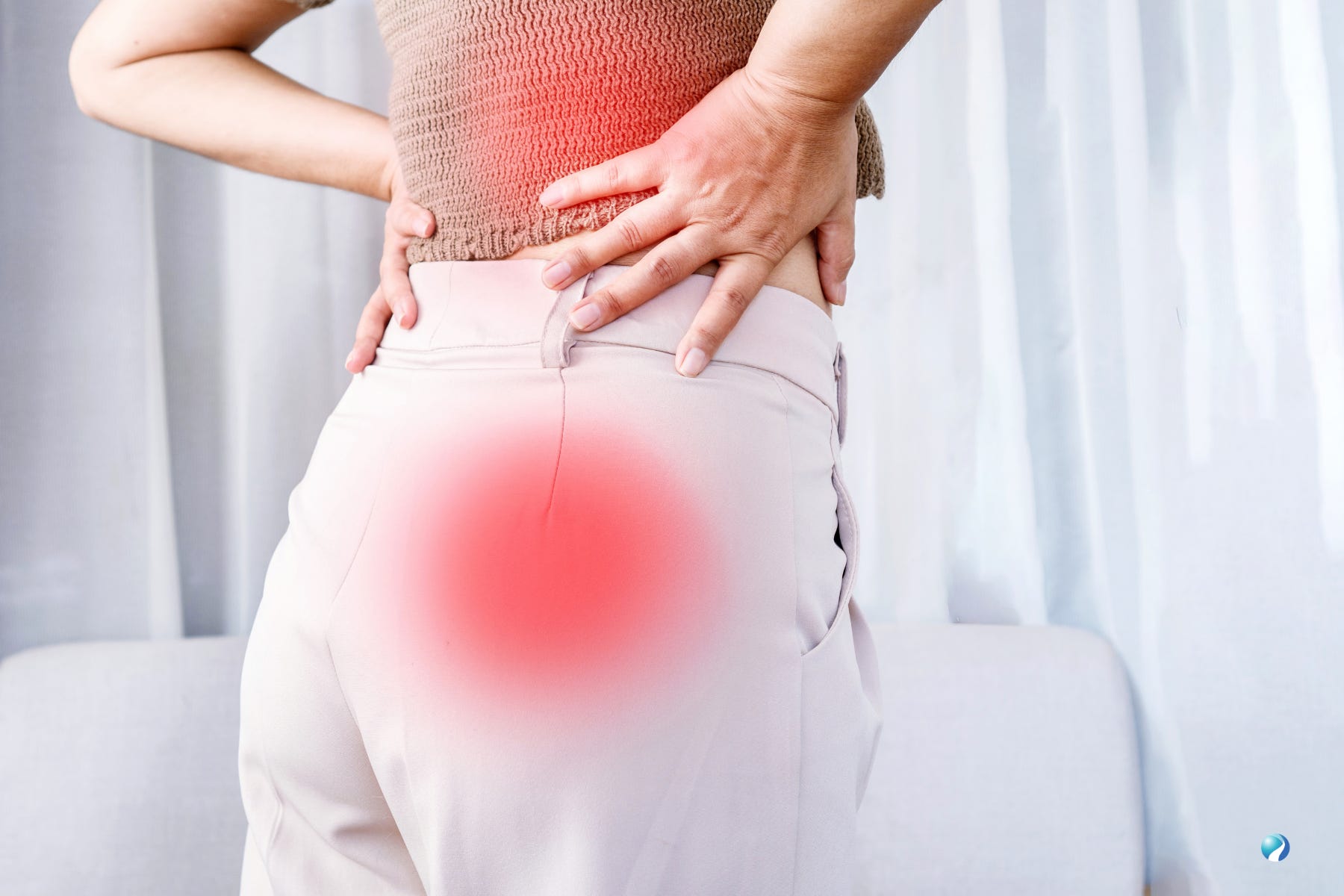
Pain travelling from the lower back or buttock into the leg is commonly described as sciatica. It may feel sharp, burning or electric and can sometimes be accompanied by numbness, tingling or weakness.
One important point is that sciatica is not a diagnosis by itself. It describes a pattern of symptoms that may have several possible causes. Identifying the source of the symptoms is important because an exercise that helps one person may aggravate another person’s condition.
At the Muscle & Joint Clinic, we assess how symptoms began, where they travel, what movements aggravate or relieve them, and whether there are any changes in strength, sensation or reflexes. This information helps us determine whether conservative treatment is appropriate and which exercises may be safest.
What Causes Sciatica?
The sciatic nerve is the body’s largest nerve. It is formed by nerve roots that leave the lower spine and eventually travel through the buttock and down the leg. Sciatic symptoms may develop when one of these nerve roots, or the sciatic nerve itself, is irritated or compressed.
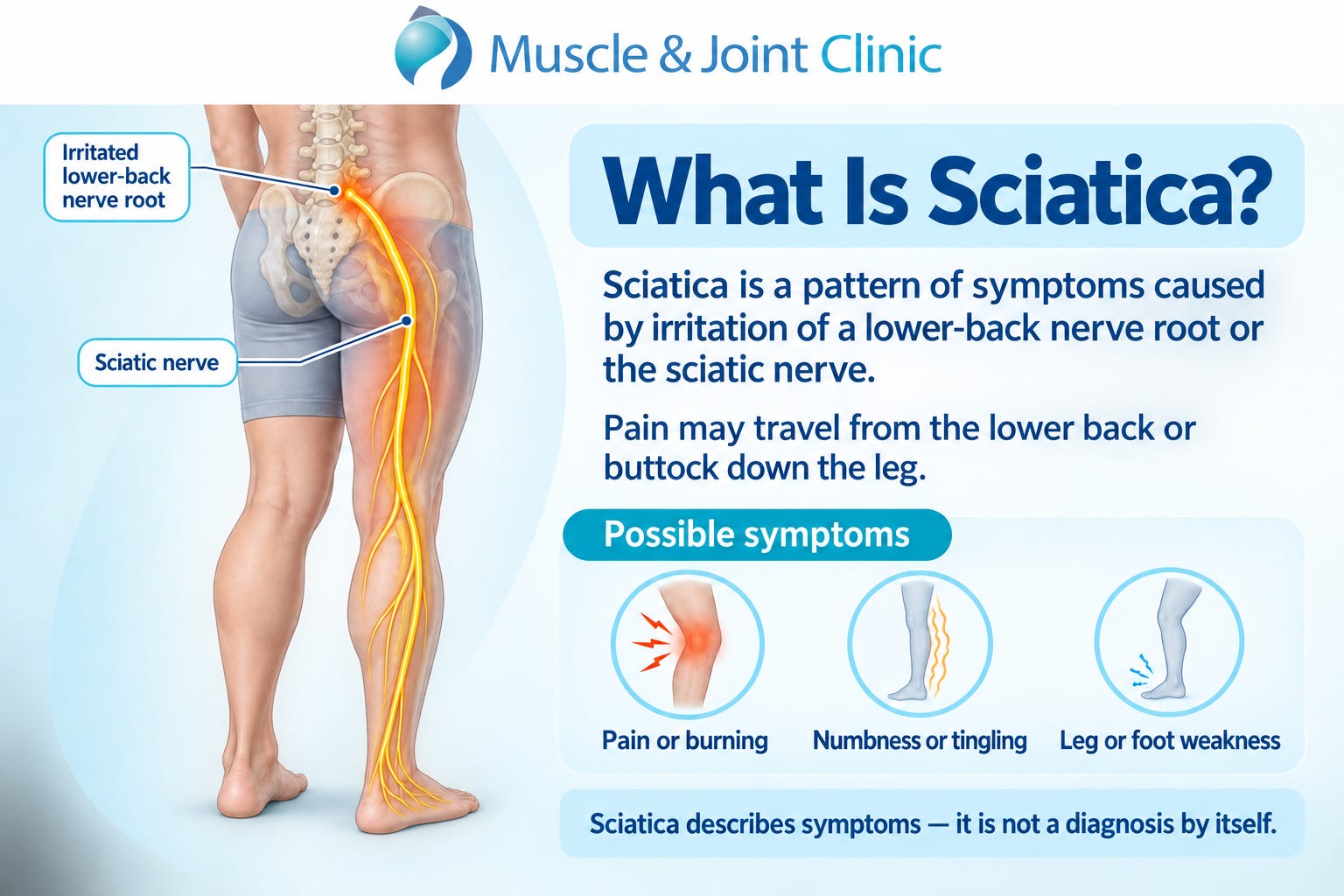
A lumbar disc injury or herniation may irritate a nearby nerve root. Age-related changes such as spinal stenosis or osteoarthritis can reduce the space available for the nerves. In other cases, muscles or other structures in the buttock may irritate the sciatic nerve, sometimes referred to as deep gluteal syndrome.
These conditions can produce similar symptoms but may respond differently to movement. For example, repeated backward bending may help some people with disc-related symptoms but aggravate someone whose symptoms are related to spinal stenosis. This is why treatment and exercise recommendations should be based on an individual assessment rather than symptoms alone.
Who Can Develop Sciatic Symptoms?
Sciatica can affect people at many stages of life. Younger adults may develop symptoms after lifting, sports, repetitive bending or a sudden injury. Older adults may be more likely to experience symptoms related to degenerative changes or narrowing around the spinal nerves.
People with physically demanding jobs may be exposed to repeated lifting, twisting, carrying or prolonged standing. However, symptoms can also occur in people who spend much of the day sitting at a desk or driving.
Prolonged postures, sudden increases in physical activity, repetitive loading, reduced conditioning and previous episodes of back pain may all contribute. Genetics and individual anatomy can also influence a person’s susceptibility to disc degeneration or narrowing around the nerves.
Can Sciatica Be Prevented?
Not every episode is preventable, but maintaining regular physical activity may improve the body’s capacity to manage everyday demands. A balanced program may include strengthening, cardiovascular activity, mobility exercises and gradual exposure to lifting or other work-related movements.
Changing positions regularly can also be helpful. If you sit for long periods, consider taking brief movement breaks rather than waiting until stiffness or pain becomes severe. When lifting, keep the object close to your body, use your hips and knees, and avoid combining heavy lifting with sudden twisting whenever possible.
There is no single “perfect” posture that must be maintained throughout the day. The ability to change positions and move comfortably is often more valuable than trying to hold one rigid posture for several hours.
How Can a Chiropractor Help?
A chiropractor can assess the spine, hips and lower extremities while also evaluating muscle strength, sensation, reflexes and movements that change the symptoms. If necessary, the chiropractor may recommend further medical assessment or diagnostic imaging.
When conservative care is appropriate, treatment may involve education, activity modification, manual therapy, spinal mobilization or manipulation, and an individualized exercise program. The objective is not simply to provide temporary relief, but to help the patient restore movement, build physical capacity and return to meaningful daily activities.
The World Health Organization recommends a person-centred approach to chronic primary low back pain. Depending on the individual, care may include education, exercise, certain physical therapies such as spinal manipulation or massage, psychological interventions and appropriate medications. These options are generally intended to be selected and combined according to the patient’s needs rather than used as isolated treatments.
Exercises That May Be Used for Sciatic Symptoms
The following exercises are commonly included in rehabilitation programs, but they are not appropriate for every person or every cause of sciatica. An exercise should not cause pain to travel farther down the leg or produce new numbness, tingling or weakness.
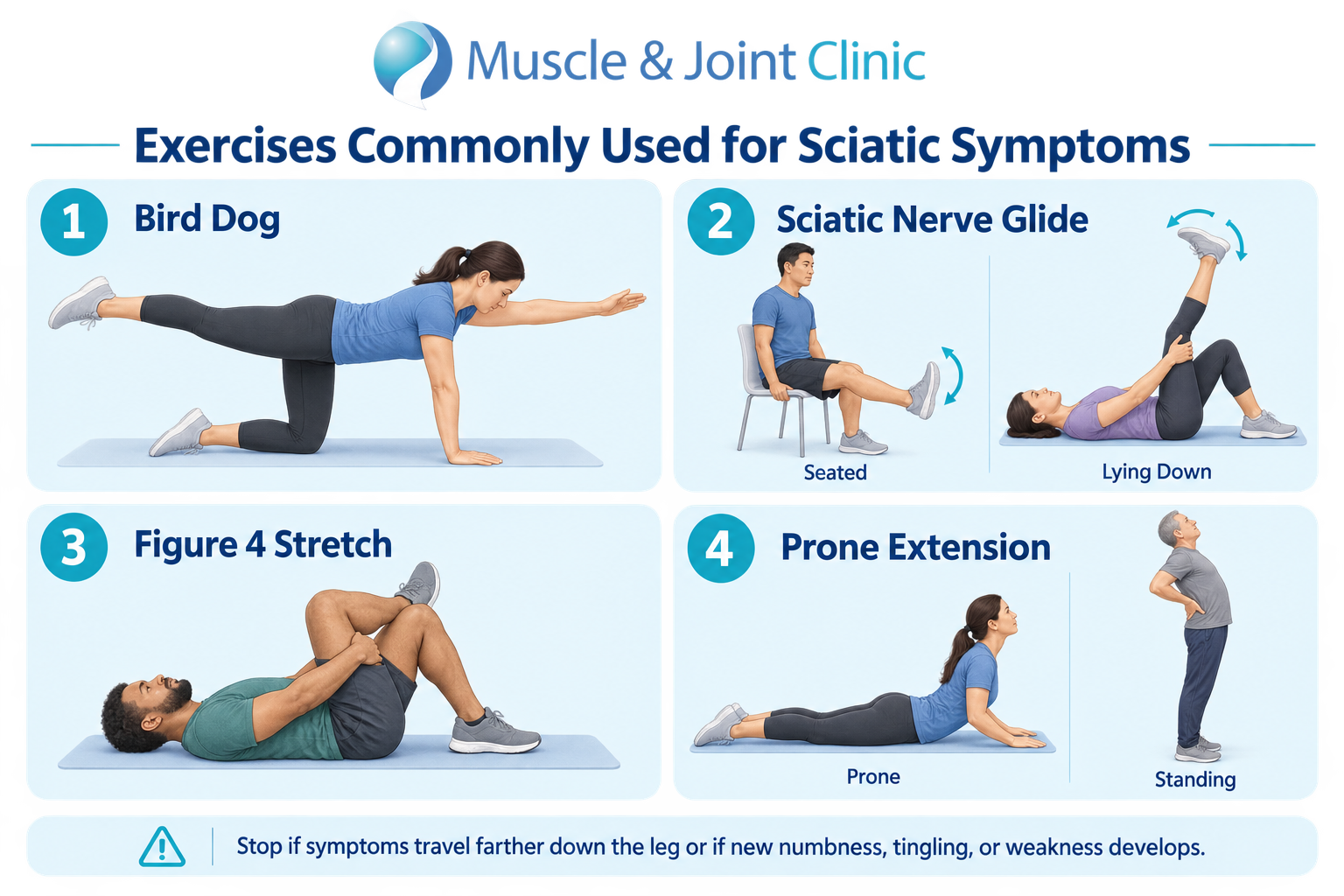
Bird Dog
The bird dog is used to develop trunk control and coordination. Begin on your hands and knees with your spine in a comfortable, neutral position. Slowly extend one leg behind you while reaching the opposite arm forward. Avoid twisting your trunk or excessively arching your lower back.
Hold the position briefly before returning to the starting position and changing sides. The movement should be controlled, and the goal is stability rather than lifting the arm or leg as high as possible.
Gentle Sciatic Nerve Glide
A nerve glide is intended to move the nerve gently through the surrounding tissues. It should not be treated as an aggressive hamstring stretch.
While seated upright, slowly straighten one knee as you lift your head and look slightly upward. Then bend the knee while gently lowering your chin. Move between the two positions comfortably without holding the end position.
Stop if the movement increases leg pain, numbness or tingling. Nerve glides should feel gentle and should not be forced.
Figure-Four Stretch
This exercise may be used when tightness around the hip or buttock is contributing to discomfort. Lie on your back with both knees bent. Place one ankle across the opposite thigh, creating a figure-four position. If comfortable, gently draw the supporting thigh toward your body until you feel a mild stretch in the buttock.
Do not force the position or continue if it increases symptoms travelling down the leg.
Prone Extension
Prone extension exercises are sometimes used when backward bending reduces or centralizes leg symptoms. Begin by lying on your stomach and resting on your forearms. If this position is comfortable, you may gradually press through your hands to lift your upper body while keeping your hips relaxed.
This exercise is not appropriate for everyone. Stop if the pain travels farther into the buttock, thigh, calf or foot. If leg symptoms move closer to the lower back, this may represent a more favourable response, but the exercise should still be reviewed with a healthcare professional.
When Should You Seek Immediate Medical Attention?
Most episodes of sciatic pain can be assessed through routine care, but certain symptoms require urgent medical attention. Seek immediate assessment if you experience a new loss of bowel or bladder control, numbness around the groin or inner thighs, rapidly worsening leg weakness, symptoms affecting both legs, severe pain following significant trauma, fever with back pain or unexplained weight loss.
Progressive foot drop or increasing difficulty walking should also be assessed promptly.
The Right Exercise Depends on the Cause
Sciatica does not have a universal exercise program. The direction of movement, type of exercise and appropriate starting level depend on the suspected cause, symptom behaviour and the individual’s physical capacity.
The goal is to find movements that reduce or centralize symptoms, restore confidence and gradually improve the ability to sit, stand, walk, work and exercise. If an activity repeatedly causes symptoms to travel farther down the leg, it may need to be modified or temporarily avoided.
If back or leg pain is affecting your sleep, work or daily activities, the team at the Muscle & Joint Clinic can assess your symptoms and develop an individualized treatment and rehabilitation plan.
References
World Health Organization. WHO Guideline for Non-Surgical Management of Chronic Primary Low Back Pain in Adults in Primary and Community Care Settings. 2023. View the WHO guideline.
This article is provided for general educational purposes. It is not intended to diagnose a condition, prescribe treatment or replace an assessment by a qualified healthcare professional. Stop an exercise and seek professional advice if it worsens radiating pain or causes new numbness, tingling or weakness.