


Firefighters do some of the most physically demanding work there is. They lift heavy equipment, work in awkward positions, carry patients, and often stay on long rotating shifts. It is not surprising that neck pain, back pain, shoulder pain, and other musculoskeletal problems are common in this group. A new 2026 study in Chiropractic & Manual Therapieslooked at what happened when manual therapy was brought directly to firefighters at their stations instead of making them find time to seek care elsewhere.
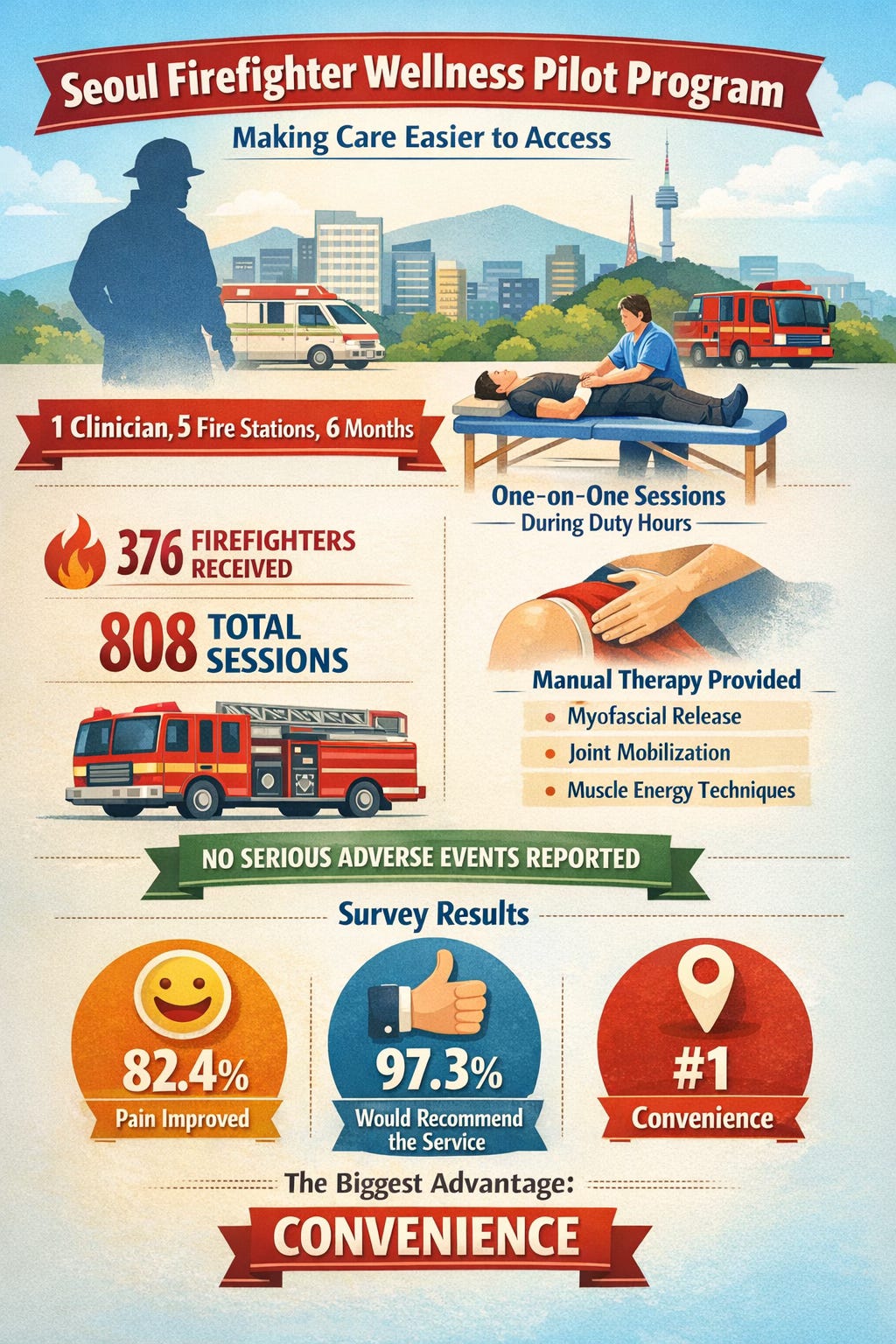
The idea was simple: make care easier to access. In the Seoul pilot program, one clinician rotated through five fire stations over six months and provided one-on-one sessions during duty hours. In total, 376 firefighters received 808 sessions. Most visits included manual therapy techniques such as myofascial release, joint mobilization, and muscle energy techniques, and no serious adverse events were reported. Among survey respondents, 82.4% said their pain scores improved, 97.3% said they would recommend the service, and the biggest advantage they reported was convenience.
That finding matters more than it may seem at first. Many people do not avoid treatment because they do not care about their health. They avoid treatment because life gets in the way. Work schedules are packed. Pain gets normalized. Appointments feel hard to fit in. By the time someone finally gets help, the issue may have already become more stubborn. This firefighter program highlights something we see every day in clinic: when care is easier to access, people are more likely to use it.
It is also a reminder that manual therapy is not just about short-term relief. In the study, the service was designed to help firefighters stay functional enough to continue doing demanding work. The authors were careful not to overclaim. This was a retrospective service analysis, not a randomized trial, and it relied heavily on self-reported outcomes. That means the study cannot prove cause and effect. Still, it does show that an on-site manual therapy model was feasible, well accepted, and associated with meaningful short-term symptom improvement in a high-risk working population.
For patients, the takeaway is not that everyone needs treatment at work. The bigger message is that recovery often improves when care is timely, practical, and matched to the demands of real life. Whether someone is a firefighter, nurse, warehouse worker, tradesperson, parent, or commuter, musculoskeletal pain tends to respond best when it is addressed early and consistently rather than left to flare up again and again. The same study also noted that firefighters with longer service tended to use the program more often, while those with shorter service reported slightly greater pain reduction. That may reflect differences in workload, chronicity, scheduling, or how long symptoms had been building.
Another useful point is that the treatment model was not based on one single technique. Sessions were individualized after physical evaluation, and the clinician often used a combination of soft-tissue work and mobilization-based care. That fits with the broader direction of evidence-informed musculoskeletal care: assessment matters, treatment should be tailored, and manual therapy often works best as part of a larger plan that includes movement, exercise, and load management. A 2020 systematic review in the same journal also noted that manual therapies can positively affect people with musculoskeletal pain, though outcomes depend on the condition, context, and overall treatment plan.
At our clinic, this is exactly how we think about care. Manual therapy can help reduce pain, improve movement, and calm down irritated tissues, but it is usually one part of the picture. Lasting improvement often comes from combining hands-on treatment with the right exercises, education, pacing strategies, and activity modification. In other words, the goal is not just to feel better for a day. The goal is to help people move better, function better, and stay active in the things that matter to them.
The firefighter study also points to something patients sometimes forget: pain does not have to become severe before you seek help. If getting out of the car hurts, if mornings are getting stiffer, if your shoulder keeps flaring up after work, or if your back pain keeps cycling on and off, that is often the right time to deal with it. Waiting until pain becomes constant usually makes the road back longer.
The authors noted that the program expanded the following year from five stations to fifteen, which suggests the organization saw enough value to keep going. More rigorous research is still needed, especially studies with objective functional outcomes and longer follow-up, but this early report adds to an important idea: bringing practical musculoskeletal care closer to people’s daily lives may help them recover sooner and manage pain more effectively.
For patients, that is encouraging. Good care does not always have to be complicated. Sometimes the biggest difference comes from making treatment accessible, individualized, and consistent.
Bottom line: if pain is starting to affect your work, workouts, sleep, or daily routine, it is worth addressing early. The sooner we understand what is driving it, the easier it often is to build a plan that helps you recover and stay active.
Reference
Park, S., & Jang, B.-H. (2026). On-site manual therapy for firefighters in Seoul: Six-month utilization and outcome from a retrospective service analysis and web-based survey. Chiropractic & Manual Therapies. Advance online publication. https://link.springer.com/article/10.1186/s12998-026-00640-4