

For many people, driving feels harmless. It is just sitting, right? But from a musculoskeletal perspective, sitting in a car is very different from sitting in a chair at home or at a desk. The position of the steering wheel, the reach to the pedals, the angle of the hips, the vibration from the road, and the tendency to stay still for long periods can all place stress on the body. Over time, that stress can build into stiffness, pain, and irritation that affects not only your commute, but also your sleep, workouts, workday, and overall quality of life.
At the Muscle and Joint Clinic, we often see patients with neck pain, low back pain, shoulder tension, hip tightness, headaches, and even numbness or discomfort down the legs that seem worse after driving. Sometimes patients think the problem is the gym, sleeping position, or office chair, but their car setup is quietly adding strain every day.
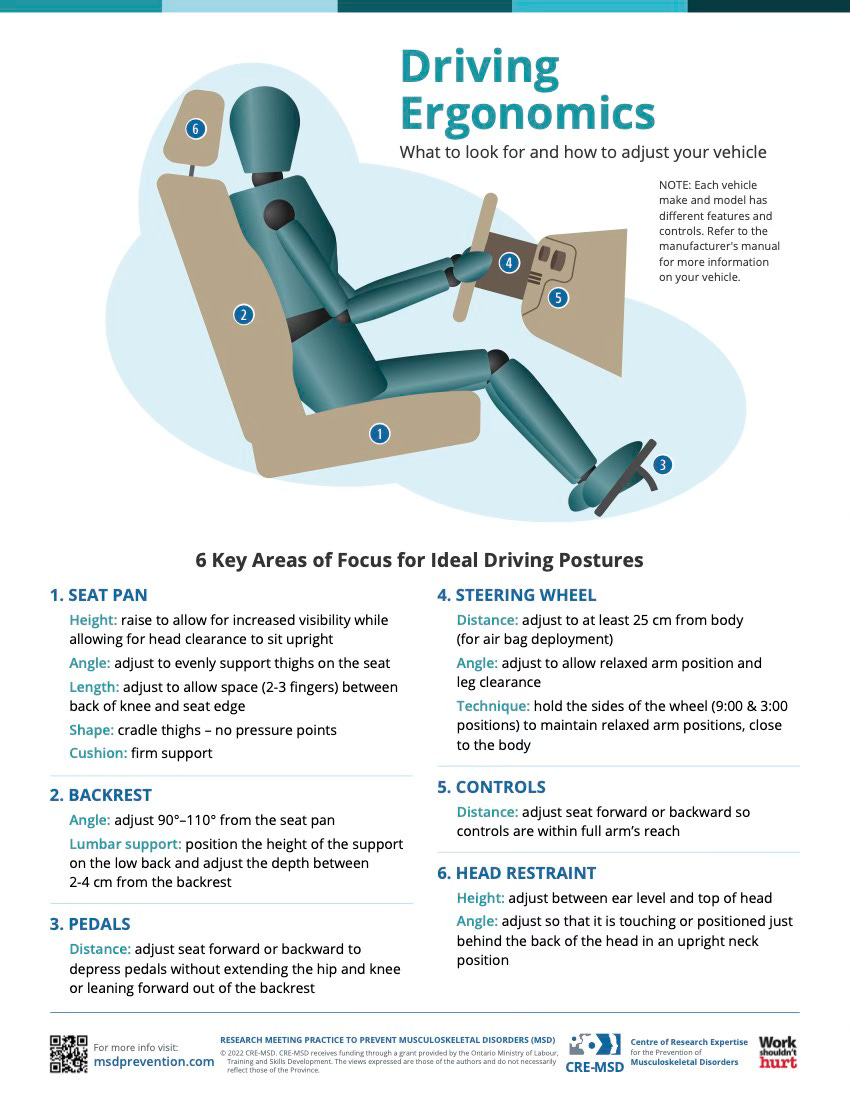
The good news is that a few small adjustments can make a big difference.
Driving posture matters because the body is working in a very specific way behind the wheel. Your arms are raised higher than they would be at a desk. One foot is constantly working the pedals. Your head needs to stay upright while your eyes scan the road, mirrors, dashboard, and blind spots. On top of that, your body is absorbing vibration, braking forces, acceleration, and the stress of traffic. The Canadian Centre for Occupational Health and Safety notes that prolonged driving can contribute to discomfort such as low back pain, stiff neck, sore shoulders, and foot cramps, especially when posture is poor or the seat is not adjusted properly (Canadian Centre for Occupational Health and Safety [CCOHS], 2025).
One of the biggest problems with driving is that even a decent posture becomes uncomfortable if you stay in it too long. There is no perfect static posture for hours at a time. The body likes movement. That is why people often feel more sore during long commutes, road trips, or delivery-based work. Even people with well-adjusted seats can become stiff if they do not change position or take breaks.
So what should good driving posture look like?
A good setup starts with the seat. You want to sit high enough to see clearly over the steering wheel without hunching, but not so high that your head is too close to the roof. Ideally, the seat should support the full length of your back and most of your thighs. There should be a small gap between the front edge of the seat and the back of your knees so circulation is not restricted. If the seat is too long, it can put pressure behind the knees. If it is too short, your thighs may not feel well supported.
Next is seat distance. You should be close enough to fully press the pedals with your whole foot, not just your toes, without having to reach or slide forward. If you feel like you have to point your foot excessively, lock your knee, or lean away from the backrest to brake, the seat may be too far back. If you feel cramped and your knees are too bent, you may be too close.
The angle of the backrest matters too. Many people either sit bolt upright or recline too far back. A slight recline is usually more comfortable and less stressful on the spine than a rigid 90-degree angle, but too much recline can push the head and neck forward and make the shoulders work harder. The goal is to allow the full back to stay supported while still keeping the arms comfortable on the wheel.
Lumbar support is also important. If your vehicle has built-in lumbar support, adjust it until you feel even support in the natural curve of the low back. If your car does not have it, a small lumbar cushion or even a rolled towel can help. The key is gentle support, not aggressive pressure.
The steering wheel should be positioned so you can reach it comfortably with relaxed shoulders and slightly bent elbows. You should not have to round your shoulders forward or lock your elbows to hold the wheel. The CCOHS recommends maintaining about 25 to 30 cm, or roughly 10 to 12 inches, between the centre of the steering wheel and your chest to improve safety in the event of airbag deployment (CCOHS, 2025). In general, your hands should be low enough that your shoulders are not elevated the whole time you drive.
Your head restraint matters more than many people realize. It is not just something to lean your head on. It is there to reduce the risk of whiplash in a collision. Ideally, the top of the head restraint should be level with the top of your head or at least not lower than ear height. It should also sit fairly close behind the head rather than several inches away.
Mirrors should be adjusted after your seat is set. If you change the seat later, the mirrors may need to be redone. Poor mirror positioning can encourage repeated neck twisting and awkward head movements, especially during lane changes or reversing.
Another major issue is what happens when people turn the vehicle into a mobile office. Using a laptop in the car, leaning forward to type, twisting to grab items, or sitting parked in a poor position for long periods can place even more strain on the neck, shoulders, and back. If work must be done from a vehicle, it is usually better to keep it brief, use equipment that reduces awkward reaching, and get out to move whenever possible. In general, a proper desk setup is much better than trying to work from the driver’s seat.
Large vehicles bring their own ergonomic challenges. SUVs, vans, trucks, and work vehicles may require repeated climbing in and out. If drivers jump down from a cab repeatedly instead of using proper steps and handholds, the extra impact can stress the hips, knees, ankles, and back over time. Controlled movement and three points of contact are much better than rushing.
There are also times when the vehicle itself may be part of the problem. Some people simply do not fit well in certain cars. A vehicle with limited headroom, awkward pedal placement, poor lumbar support, or a steering wheel that does not telescope may force the body into less-than-ideal positions. If someone spends a lot of time driving for work, vehicle ergonomics should be taken seriously, not treated as a luxury.
At our clinic, we encourage patients to think about driving the same way they think about desk ergonomics, workout form, or sleep posture. If you are in your car every day, that position becomes part of your repetitive loading pattern. If it is a poor setup, it can contribute to recurring pain even if treatment helps temporarily.
A few practical habits can help a lot. Adjust your seat before you start driving, not while moving. Change your posture slightly during long trips. Relax your grip on the wheel when safe to do so. At red lights, gently reset your shoulders and neck. On longer drives, try to stop every one to two hours to get out, walk, and stretch. Even a short break can reduce stiffness. If you notice symptoms like numbness, leg pain, low back pain, neck tension, headaches, or shoulder discomfort after driving, it may be worth having your movement, posture, and driving setup assessed.
The bottom line is simple: driving may seem passive, but it places real physical demands on the body. Poor driving posture can gradually contribute to pain and fatigue, while better setup and regular movement can help reduce unnecessary strain. If your body feels worse after commuting, road trips, or long days in the car, it may not just be “getting older” or “sleeping funny.” Your vehicle setup may be part of the picture.
If you have been dealing with back pain, neck tension, headaches, hip tightness, or driving-related discomfort, a thorough assessment can help identify what is contributing and what changes may help. Sometimes the solution is not only treatment, it is also changing the positions your body repeats every day.
References
Canadian Centre for Occupational Health and Safety. (2025, February 4). Driving and ergonomics. Government of Canada.
Centre of Research Expertise for the Prevention of Musculoskeletal Disorders. (2022). Driving ergonomics: What to look for and how to adjust your vehicle.
Dorsey, G. E., as cited in GEICO. (2026, March 19). Why your driving posture matters. GEICO.
Phillips, C. (2024, August 22). Understanding car ergonomics: How design impacts comfort and safety. Ergonomic Health Solutions.
Posturite. (n.d.). Car ergonomics checklist. Posturite.
Disclaimer: This article is intended for general educational and informational purposes only and does not constitute medical advice, diagnosis, or treatment. Reading this article does not create a practitioner-patient relationship. If you are experiencing severe pain, numbness, weakness, worsening symptoms, or have concerns about your health or ability to drive safely, please seek assessment from a qualified healthcare professional.